Deep learning-driven topology optimization for heat dissipation of integrated electrical components using dual temperature gradient learning and MMC method

IF 3.6 3区 材料科学 Q2 ENGINEERING, MECHANICAL International Journal of Mechanics and Materials in Design Pub Date : 2023-10-03 DOI:10.1007/s10999-023-09676-3
Qi Xu, Zunyi Duan, Hongru Yan, Dongling Geng, Hongze Du, Jun Yan, Haijiang Li
{"title":"Deep learning-driven topology optimization for heat dissipation of integrated electrical components using dual temperature gradient learning and MMC method","authors":"Qi Xu,&nbsp;Zunyi Duan,&nbsp;Hongru Yan,&nbsp;Dongling Geng,&nbsp;Hongze Du,&nbsp;Jun Yan,&nbsp;Haijiang Li","doi":"10.1007/s10999-023-09676-3","DOIUrl":null,"url":null,"abstract":"<div><p>Highly integrated electrical components produce intensive heat while in use, which will seriously impact their performance if not properly designed. In this study, an end-to-end heat dissipation structure topology optimization prediction framework considering physical mechanisms was established by using the convolutional neural network (CNN) and the moving morphable components (MMC) method. Aiming at the sparsity of physical field matrix caused by the initial component distribution in MMC method, a CNN model was established taking the temperature gradient information of both homogeneous material and initial component layout as input. Compared with other seven input forms, the CNN model in this study considers both the initial component layout and the physical field information of the structure, which can predict the topology configuration of heat dissipation structure more accurately. In addition, an improved penalty mean square error (PMSE) function was proposed by introducing a penalty factor, which improved the prediction ability of the CNN model on the structural boundary and ensured more accurate and efficient structural heat dissipation performance. Several 2D and 3D numerical examples verified the effectiveness of the proposed framework and the dual temperature gradient input model. The overall framework provides a new method for the innovative and efficient heat dissipation structure topology optimization in packaging structure of electronic equipment.</p></div>","PeriodicalId":593,"journal":{"name":"International Journal of Mechanics and Materials in Design","volume":"20 2","pages":"291 - 316"},"PeriodicalIF":3.6000,"publicationDate":"2023-10-03","publicationTypes":"Journal Article","fieldsOfStudy":null,"isOpenAccess":false,"openAccessPdf":"","citationCount":"0","resultStr":null,"platform":"Semanticscholar","paperid":null,"PeriodicalName":"International Journal of Mechanics and Materials in Design","FirstCategoryId":"88","ListUrlMain":"https://link.springer.com/article/10.1007/s10999-023-09676-3","RegionNum":3,"RegionCategory":"材料科学","ArticlePicture":[],"TitleCN":null,"AbstractTextCN":null,"PMCID":null,"EPubDate":"","PubModel":"","JCR":"Q2","JCRName":"ENGINEERING, MECHANICAL","Score":null,"Total":0}
引用次数: 0

Abstract

Highly integrated electrical components produce intensive heat while in use, which will seriously impact their performance if not properly designed. In this study, an end-to-end heat dissipation structure topology optimization prediction framework considering physical mechanisms was established by using the convolutional neural network (CNN) and the moving morphable components (MMC) method. Aiming at the sparsity of physical field matrix caused by the initial component distribution in MMC method, a CNN model was established taking the temperature gradient information of both homogeneous material and initial component layout as input. Compared with other seven input forms, the CNN model in this study considers both the initial component layout and the physical field information of the structure, which can predict the topology configuration of heat dissipation structure more accurately. In addition, an improved penalty mean square error (PMSE) function was proposed by introducing a penalty factor, which improved the prediction ability of the CNN model on the structural boundary and ensured more accurate and efficient structural heat dissipation performance. Several 2D and 3D numerical examples verified the effectiveness of the proposed framework and the dual temperature gradient input model. The overall framework provides a new method for the innovative and efficient heat dissipation structure topology optimization in packaging structure of electronic equipment.
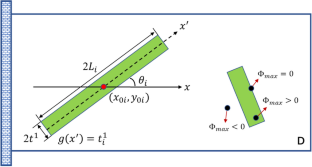
Abstract Image

查看原文
分享 分享
微信好友 朋友圈 QQ好友 复制链接
本刊更多论文
利用双温度梯度学习和 MMC 方法,为集成电子元件的散热进行深度学习驱动的拓扑优化
高度集成的电气元件在使用过程中会产生大量热量,如果设计不当,将严重影响其性能。本研究利用卷积神经网络(CNN)和移动可变形组件(MMC)方法,建立了考虑物理机制的端到端散热结构拓扑优化预测框架。针对 MMC 方法中初始元件分布导致的物理场矩阵稀疏性,以均质材料和初始元件布局的温度梯度信息为输入,建立了 CNN 模型。与其他七种输入形式相比,本研究的 CNN 模型同时考虑了初始元件布局和结构的物理场信息,能更准确地预测散热结构的拓扑配置。此外,通过引入惩罚因子,提出了改进的惩罚均方误差(PMSE)函数,提高了 CNN 模型对结构边界的预测能力,确保结构散热性能更加准确高效。多个二维和三维数值实例验证了所提框架和双温度梯度输入模型的有效性。整体框架为电子设备封装结构中创新、高效的散热结构拓扑优化提供了一种新方法。
本文章由计算机程序翻译,如有差异,请以英文原文为准。
求助全文
约1分钟内获得全文 去求助
来源期刊
International Journal of Mechanics and Materials in Design
International Journal of Mechanics and Materials in Design ENGINEERING, MECHANICAL-MATERIALS SCIENCE, MULTIDISCIPLINARY
CiteScore
6.00
自引率
5.40%
发文量
41
审稿时长
>12 weeks
期刊介绍: It is the objective of this journal to provide an effective medium for the dissemination of recent advances and original works in mechanics and materials'' engineering and their impact on the design process in an integrated, highly focused and coherent format. The goal is to enable mechanical, aeronautical, civil, automotive, biomedical, chemical and nuclear engineers, researchers and scientists to keep abreast of recent developments and exchange ideas on a number of topics relating to the use of mechanics and materials in design. Analytical synopsis of contents: The following non-exhaustive list is considered to be within the scope of the International Journal of Mechanics and Materials in Design: Intelligent Design: Nano-engineering and Nano-science in Design; Smart Materials and Adaptive Structures in Design; Mechanism(s) Design; Design against Failure; Design for Manufacturing; Design of Ultralight Structures; Design for a Clean Environment; Impact and Crashworthiness; Microelectronic Packaging Systems. Advanced Materials in Design: Newly Engineered Materials; Smart Materials and Adaptive Structures; Micromechanical Modelling of Composites; Damage Characterisation of Advanced/Traditional Materials; Alternative Use of Traditional Materials in Design; Functionally Graded Materials; Failure Analysis: Fatigue and Fracture; Multiscale Modelling Concepts and Methodology; Interfaces, interfacial properties and characterisation. Design Analysis and Optimisation: Shape and Topology Optimisation; Structural Optimisation; Optimisation Algorithms in Design; Nonlinear Mechanics in Design; Novel Numerical Tools in Design; Geometric Modelling and CAD Tools in Design; FEM, BEM and Hybrid Methods; Integrated Computer Aided Design; Computational Failure Analysis; Coupled Thermo-Electro-Mechanical Designs.
期刊最新文献
Data-driven artificial neural network predictive design of heat transfer rate in a hybrid nanofluid dynamics and heat transfer over a circular disc used in photovoltaic thermal systems Nonlocal thermoelastic response of semiconductor media with double porosity under photothermal excitation Design of a 3D printed wheelchair cushion for offloading using functionally graded materials and novel FEM topology optimization Buckling analysis of piezoelectric nano-laminated plates with flexoelectric and surface effects Study on MLS meshless method for linear bending and free vibration of piezolaminated stiffened plates
×
引用
GB/T 7714-2015
复制
MLA
复制
APA
复制
导出至
BibTeX EndNote RefMan NoteFirst NoteExpress
×
×
提示
您的信息不完整,为了账户安全,请先补充。
现在去补充
×
提示
您因"违规操作"
具体请查看互助需知
我知道了
×
提示
现在去查看 取消
×
提示
确定
0
微信
客服QQ
Book学术公众号 扫码关注我们
反馈
×
意见反馈
请填写您的意见或建议
请填写您的手机或邮箱
已复制链接
已复制链接
快去分享给好友吧!
我知道了
×
扫码分享
扫码分享
Book学术官方微信
Book学术文献互助
Book学术文献互助群
群 号:604180095
Book学术
文献互助 智能选刊 最新文献 互助须知 联系我们:info@booksci.cn
Book学术提供免费学术资源搜索服务,方便国内外学者检索中英文文献。致力于提供最便捷和优质的服务体验。
Copyright © 2023 Book学术 All rights reserved.
ghs 京公网安备 11010802042870号 京ICP备2023020795号-1





