{"title":"Efficacy and Safety of Direct Oral Anticoagulants in Pediatric Venous Thromboembolism: A Systematic Review and Meta-Analysis.","authors":"Yu Geng, Chang Meng, Tong Gao, Siyuan Li, Lei Bi, Yintang Wang, Ping Zhang","doi":"10.1007/s12098-023-04952-8","DOIUrl":null,"url":null,"abstract":"<p><strong>Objectives: </strong>To assess the efficacy and safety of direct oral anticoagulants (DOACs) in comparison to standard-of-care (SOC) anticoagulants in the management and prophylaxis of thromboembolic events in pediatric populations.</p><p><strong>Methods: </strong>A comprehensive search of electronic databases was conducted to identify relevant studies published between January 1, 2015, and December 18, 2022. A meta-analysis was undertaken to evaluate the effect of DOACs on clinically significant endpoints, employing trial-level data with harmonized endpoint definitions. The primary outcome was venous thromboembolism (VTE). Odds ratios (ORs) with 95% confidence intervals (CIs) were calculated. The study was registered with INPLASY (2022120065).</p><p><strong>Results: </strong>Three studies encompassing 934 subjects were included. The incidence of VTE was reduced in patients administered DOACs compared to those on SOC anticoagulants (OR 0.41 [95% CI 0.19-0.93], I² = 0%, P = 0.03). No significant differences were observed between the DOAC and SOC groups in all-cause mortality (OR 0.50 [95% CI 0.07-3.59], I² = 0%, P = 0.35) or serious adverse events (OR 0.75 [95% CI 0.50-1.12], I² = 0%, P = 0.16). The risk of major bleeding (OR 0.50 [95% CI 0.13-1.87], I² = 44%, P = 0.30) and clinically relevant non-major bleeding (OR 1.23 [95% CI 0.50-3.00], I² = 0%, P = 0.65) exhibited no significant differences between the groups.</p><p><strong>Conclusions: </strong>DOACs are associated with a reduced risk of VTE in pediatric patients without increasing the risk of bleeding, all-cause mortality, or serious adverse events when compared to SOC anticoagulants. DOACs may be an alternative for the treatment and prevention of thromboembolic events in the pediatrics.</p>","PeriodicalId":13320,"journal":{"name":"Indian Journal of Pediatrics","volume":" ","pages":"369-375"},"PeriodicalIF":2.0000,"publicationDate":"2025-04-01","publicationTypes":"Journal Article","fieldsOfStudy":null,"isOpenAccess":false,"openAccessPdf":"","citationCount":"0","resultStr":null,"platform":"Semanticscholar","paperid":null,"PeriodicalName":"Indian Journal of Pediatrics","FirstCategoryId":"3","ListUrlMain":"https://doi.org/10.1007/s12098-023-04952-8","RegionNum":4,"RegionCategory":"医学","ArticlePicture":[],"TitleCN":null,"AbstractTextCN":null,"PMCID":null,"EPubDate":"2023/12/20 0:00:00","PubModel":"Epub","JCR":"Q2","JCRName":"PEDIATRICS","Score":null,"Total":0}
引用次数: 0
Abstract
Objectives: To assess the efficacy and safety of direct oral anticoagulants (DOACs) in comparison to standard-of-care (SOC) anticoagulants in the management and prophylaxis of thromboembolic events in pediatric populations.
Methods: A comprehensive search of electronic databases was conducted to identify relevant studies published between January 1, 2015, and December 18, 2022. A meta-analysis was undertaken to evaluate the effect of DOACs on clinically significant endpoints, employing trial-level data with harmonized endpoint definitions. The primary outcome was venous thromboembolism (VTE). Odds ratios (ORs) with 95% confidence intervals (CIs) were calculated. The study was registered with INPLASY (2022120065).
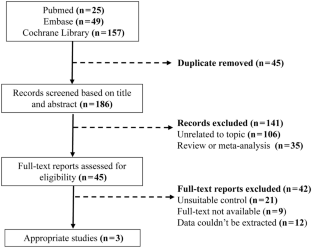
Results: Three studies encompassing 934 subjects were included. The incidence of VTE was reduced in patients administered DOACs compared to those on SOC anticoagulants (OR 0.41 [95% CI 0.19-0.93], I² = 0%, P = 0.03). No significant differences were observed between the DOAC and SOC groups in all-cause mortality (OR 0.50 [95% CI 0.07-3.59], I² = 0%, P = 0.35) or serious adverse events (OR 0.75 [95% CI 0.50-1.12], I² = 0%, P = 0.16). The risk of major bleeding (OR 0.50 [95% CI 0.13-1.87], I² = 44%, P = 0.30) and clinically relevant non-major bleeding (OR 1.23 [95% CI 0.50-3.00], I² = 0%, P = 0.65) exhibited no significant differences between the groups.
Conclusions: DOACs are associated with a reduced risk of VTE in pediatric patients without increasing the risk of bleeding, all-cause mortality, or serious adverse events when compared to SOC anticoagulants. DOACs may be an alternative for the treatment and prevention of thromboembolic events in the pediatrics.
期刊介绍:
Indian Journal of Pediatrics (IJP), is an official publication of the Dr. K.C. Chaudhuri Foundation. The Journal, a peer-reviewed publication, is published twelve times a year on a monthly basis (January, February, March, April, May, June, July, August, September, October, November, December), and publishes clinical and basic research of all aspects of pediatrics, provided they have scientific merit and represent an important advance in knowledge. The Journal publishes original articles, review articles, case reports which provide new information, letters in relation to published articles, scientific research letters and picture of the month, announcements (meetings, courses, job advertisements); summary report of conferences and book reviews.



 京公网安备 11010802042870号
京ICP备2023020795号-1
京公网安备 11010802042870号
京ICP备2023020795号-1

 分享
分享
 求助内容:
求助内容: 应助结果提醒方式:
 扫码关注我们
