E. A. Vtorushina, M. G. Kulkov, G. T. Salakhidinova, R. I. Butyrin, A. E. Aliev, I. R. Nigametzyanov, M. N. Vtorushin, M. Yu. Yakovlev, A. G. Kopytov
{"title":"Comparative Analysis of High-Viscosity Oils from the Khanty-Mansi Autonomous Okrug and the Naftalan Oil Field to Assess Their Balneological Potential","authors":"E. A. Vtorushina, M. G. Kulkov, G. T. Salakhidinova, R. I. Butyrin, A. E. Aliev, I. R. Nigametzyanov, M. N. Vtorushin, M. Yu. Yakovlev, A. G. Kopytov","doi":"10.1134/S0965544123060282","DOIUrl":null,"url":null,"abstract":"<p>The physicochemical properties, fractional composition, structural-group composition, molecular composition, and the content of individual SARA fractions were characterized for high-viscosity naphthenic crude oils of the Pokur Formation produced in Khanty-Mansi Autonomous Okrug (KhMAO), Russia in comparison with therapeutic oil from the Naftalan oil field, Azerbaijan. All the tested oil samples exhibited high density (0.922– 0.956 g/cm<sup>3</sup>), high boiling points (164–199°C), high molecular weights (302–424 g/mol), and low paraffin content (0.04–0.42 wt %). The greatest similarity in terms of compositions was observed between the samples from the Naftalan and KhMAO-1 oil fields. The SARA analysis revealed a high content of resins and asphaltenes in crude oils from the KhMAO-2 field. This explains the distinctive features of the fractional composition (examined by SimDis simulated distillation) and structural-group composition (n–d–M method) of this sample, specifically its higher content of unevaporated residue (i.e., components that boil above 500°C), higher concentrations of naphthenic and aromatic carbons, and increased ring numbers in ring structures. GC/MS characterization of the molecular composition showed, for all samples, identical sets of adamantane and its homologues, as well as sesquiterpanes, steranes, tricyclic terpanes, aromatic steroids, and, to some extent, naphthalenes. The paraffin-naphthenic fractions of the Naftalan and KhMAO-1 oils consisted mostly of isoprenoid alkanes, and phenanthrenes predominated among the aromatic fractions of these samples. Furthermore, the Naftalan and KhMAO-1 crude oils were similar in the concentrations of adamantanes and decalines. The revealed similarity in the molecular, structural-group, and fractional compositions and in the SARA analysis between the KhMAO and Naftalan crude oils offers good opportunities for alternative uses of the Pokur high-viscosity oils from the KhMAO oil fields as analogs of Naftalan oil and promising raw materials for the production of therapeutic products for the purposes of balneology and practical health care.</p>","PeriodicalId":725,"journal":{"name":"Petroleum Chemistry","volume":"63 9","pages":"1027 - 1038"},"PeriodicalIF":1.1000,"publicationDate":"2023-12-22","publicationTypes":"Journal Article","fieldsOfStudy":null,"isOpenAccess":false,"openAccessPdf":"","citationCount":"0","resultStr":null,"platform":"Semanticscholar","paperid":null,"PeriodicalName":"Petroleum Chemistry","FirstCategoryId":"5","ListUrlMain":"https://link.springer.com/article/10.1134/S0965544123060282","RegionNum":4,"RegionCategory":"工程技术","ArticlePicture":[],"TitleCN":null,"AbstractTextCN":null,"PMCID":null,"EPubDate":"","PubModel":"","JCR":"Q3","JCRName":"CHEMISTRY, ORGANIC","Score":null,"Total":0}
引用次数: 0
Abstract
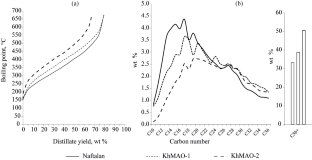
The physicochemical properties, fractional composition, structural-group composition, molecular composition, and the content of individual SARA fractions were characterized for high-viscosity naphthenic crude oils of the Pokur Formation produced in Khanty-Mansi Autonomous Okrug (KhMAO), Russia in comparison with therapeutic oil from the Naftalan oil field, Azerbaijan. All the tested oil samples exhibited high density (0.922– 0.956 g/cm3), high boiling points (164–199°C), high molecular weights (302–424 g/mol), and low paraffin content (0.04–0.42 wt %). The greatest similarity in terms of compositions was observed between the samples from the Naftalan and KhMAO-1 oil fields. The SARA analysis revealed a high content of resins and asphaltenes in crude oils from the KhMAO-2 field. This explains the distinctive features of the fractional composition (examined by SimDis simulated distillation) and structural-group composition (n–d–M method) of this sample, specifically its higher content of unevaporated residue (i.e., components that boil above 500°C), higher concentrations of naphthenic and aromatic carbons, and increased ring numbers in ring structures. GC/MS characterization of the molecular composition showed, for all samples, identical sets of adamantane and its homologues, as well as sesquiterpanes, steranes, tricyclic terpanes, aromatic steroids, and, to some extent, naphthalenes. The paraffin-naphthenic fractions of the Naftalan and KhMAO-1 oils consisted mostly of isoprenoid alkanes, and phenanthrenes predominated among the aromatic fractions of these samples. Furthermore, the Naftalan and KhMAO-1 crude oils were similar in the concentrations of adamantanes and decalines. The revealed similarity in the molecular, structural-group, and fractional compositions and in the SARA analysis between the KhMAO and Naftalan crude oils offers good opportunities for alternative uses of the Pokur high-viscosity oils from the KhMAO oil fields as analogs of Naftalan oil and promising raw materials for the production of therapeutic products for the purposes of balneology and practical health care.
期刊介绍:
Petroleum Chemistry (Neftekhimiya), founded in 1961, offers original papers on and reviews of theoretical and experimental studies concerned with current problems of petroleum chemistry and processing such as chemical composition of crude oils and natural gas liquids; petroleum refining (cracking, hydrocracking, and catalytic reforming); catalysts for petrochemical processes (hydrogenation, isomerization, oxidation, hydroformylation, etc.); activation and catalytic transformation of hydrocarbons and other components of petroleum, natural gas, and other complex organic mixtures; new petrochemicals including lubricants and additives; environmental problems; and information on scientific meetings relevant to these areas.
Petroleum Chemistry publishes articles on these topics from members of the scientific community of the former Soviet Union.




 京公网安备 11010802042870号
京ICP备2023020795号-1
京公网安备 11010802042870号
京ICP备2023020795号-1

 分享
分享
 求助内容:
求助内容: 应助结果提醒方式:
 扫码关注我们
