{"title":"Exemplar or facilitator: An exploration of the lived experience of nurse mentors supporting the adaptation of internationally educated nurses","authors":"Carly Smith, Peter Cantillon","doi":"10.1111/tct.13702","DOIUrl":null,"url":null,"abstract":"<div>\n \n \n <section>\n \n <h3> Introduction</h3>\n \n <p>Deficits in nursing workforces have led to major increases in overseas recruitment in many countries. Internationally educated nurses recruited within Ireland must complete an adaptation programme before they can practice nursing, a process contingent on the support from nurse mentors. However, it is becoming progressively difficult to identify nurses willing to act as mentors, threatening viability of overseas nurse recruitment. This research set out to address this problem by exploring the lived experiences of nurse mentors during the adaptation programme.</p>\n </section>\n \n <section>\n \n <h3> Methods</h3>\n \n <p>An interpretative phenomenological analysis research design was utilised to explore the experiences of nurse mentors. Semi-structured interviews were conducted with a maximum variance sample of 11 nurse mentors. The data were subjected to an Interpretive Phenomenological Analysis (IPA) sequential analytical approach yielding integrative themes.</p>\n </section>\n \n <section>\n \n <h3> Results</h3>\n \n <p>The lived experiences of participants coalesced into three conceptual themes, mentor identity, sustainability, and learner socialisation. Participants who self-identified as ‘mentor exemplars’ expressed more negative perceptions of the role when compared with nurses who positioned themselves as ‘mentor facilitators’. Nurse mentors were challenged by the complexities of intercultural dissonance and insufficient time and training for their mentoring role because of the pressures of clinical service.</p>\n </section>\n \n <section>\n \n <h3> Conclusion</h3>\n \n <p>Although mentorship is essential for the integration of internationally educated nurses, the sustainability of the mentorship role is contingent on how it is supported through training and protected within busy clinical environments. Critically, nurse mentors need to learn how to conceptualise their role as one of facilitating the development of others rather than presenting themselves as exemplary role models.</p>\n </section>\n </div>","PeriodicalId":47324,"journal":{"name":"Clinical Teacher","volume":"21 2","pages":""},"PeriodicalIF":1.2000,"publicationDate":"2024-01-02","publicationTypes":"Journal Article","fieldsOfStudy":null,"isOpenAccess":false,"openAccessPdf":"https://onlinelibrary.wiley.com/doi/epdf/10.1111/tct.13702","citationCount":"0","resultStr":null,"platform":"Semanticscholar","paperid":null,"PeriodicalName":"Clinical Teacher","FirstCategoryId":"1085","ListUrlMain":"https://asmepublications.onlinelibrary.wiley.com/doi/10.1111/tct.13702","RegionNum":0,"RegionCategory":null,"ArticlePicture":[],"TitleCN":null,"AbstractTextCN":null,"PMCID":null,"EPubDate":"","PubModel":"","JCR":"Q4","JCRName":"MEDICINE, RESEARCH & EXPERIMENTAL","Score":null,"Total":0}
引用次数: 0
Abstract
Introduction
Deficits in nursing workforces have led to major increases in overseas recruitment in many countries. Internationally educated nurses recruited within Ireland must complete an adaptation programme before they can practice nursing, a process contingent on the support from nurse mentors. However, it is becoming progressively difficult to identify nurses willing to act as mentors, threatening viability of overseas nurse recruitment. This research set out to address this problem by exploring the lived experiences of nurse mentors during the adaptation programme.
Methods
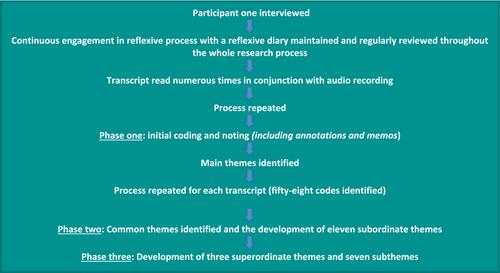
An interpretative phenomenological analysis research design was utilised to explore the experiences of nurse mentors. Semi-structured interviews were conducted with a maximum variance sample of 11 nurse mentors. The data were subjected to an Interpretive Phenomenological Analysis (IPA) sequential analytical approach yielding integrative themes.
Results
The lived experiences of participants coalesced into three conceptual themes, mentor identity, sustainability, and learner socialisation. Participants who self-identified as ‘mentor exemplars’ expressed more negative perceptions of the role when compared with nurses who positioned themselves as ‘mentor facilitators’. Nurse mentors were challenged by the complexities of intercultural dissonance and insufficient time and training for their mentoring role because of the pressures of clinical service.
Conclusion
Although mentorship is essential for the integration of internationally educated nurses, the sustainability of the mentorship role is contingent on how it is supported through training and protected within busy clinical environments. Critically, nurse mentors need to learn how to conceptualise their role as one of facilitating the development of others rather than presenting themselves as exemplary role models.
期刊介绍:
The Clinical Teacher has been designed with the active, practising clinician in mind. It aims to provide a digest of current research, practice and thinking in medical education presented in a readable, stimulating and practical style. The journal includes sections for reviews of the literature relating to clinical teaching bringing authoritative views on the latest thinking about modern teaching. There are also sections on specific teaching approaches, a digest of the latest research published in Medical Education and other teaching journals, reports of initiatives and advances in thinking and practical teaching from around the world, and expert community and discussion on challenging and controversial issues in today"s clinical education.