Constitutive Relationship Study of Laves Phase NbCr2/Nb Two-Phase Alloy Using Modified J-C Model and Back Propagation Neural Network Model

IF 2 4区 材料科学 Q3 MATERIALS SCIENCE, MULTIDISCIPLINARY Journal of Materials Engineering and Performance Pub Date : 2023-11-16 DOI:10.1007/s11665-023-08941-y
Jiancong JiangFeng, Shiqiang Lu, Xuan Xiao, Kelu Wang, Liping Deng
{"title":"Constitutive Relationship Study of Laves Phase NbCr2/Nb Two-Phase Alloy Using Modified J-C Model and Back Propagation Neural Network Model","authors":"Jiancong JiangFeng,&nbsp;Shiqiang Lu,&nbsp;Xuan Xiao,&nbsp;Kelu Wang,&nbsp;Liping Deng","doi":"10.1007/s11665-023-08941-y","DOIUrl":null,"url":null,"abstract":"<div><p>The Laves phase NbCr<sub>2</sub>/Nb two-phase alloy has received significant research interest as a potential high-temperature structural material. Based on isothermal and constant strain rate compression experiments conducted on the alloy within a temperature range of 1000 -1200 °C and strain rate range of 0.001-0.1 s<sup>−1</sup>, the flow stress constitutive relationship of the alloy was established using the J-C model and BP artificial neural network model, respectively. It was found that the conventional J-C model fails to describe the flow stress softening behavior of the alloy. In contrast, the modified J-C model provides a better prediction of the flow stress softening phenomenon and accurately characterizes the flow stress behavior of the alloy, it exhibits high prediction accuracy as indicated by the correlation coefficient (<i>R</i>) of 0.9902, average absolute relative error (<i>AARE</i>) of 8.773% and mean relative error (<i>MRE</i>) of 7.389%. The flow stress behavior of the alloy can be more accurately characterized using the constitutive relationship built by the BP neural network model. The model exhibits higher prediction accuracy with <i>R</i> of 0.9998, <i>AARE</i> of 2.232% and <i>MRE</i> of 0.870%. The results demonstrate that the BP neural network model has superior capability in predicting the flow stress behavior of the alloy. The established flow stress constitutive relationship can provide more accurate and reliable fundamental data with respect to flow stress for finite element simulations of forging deformation process of the Laves phase NbCr<sub>2</sub>/Nb two-phase alloy. In addition, it serves as theoretical basis for rational design of forging process and accurate calculation of the deformation force of the alloy.</p></div>","PeriodicalId":644,"journal":{"name":"Journal of Materials Engineering and Performance","volume":"33 24","pages":"13941 - 13953"},"PeriodicalIF":2.0000,"publicationDate":"2023-11-16","publicationTypes":"Journal Article","fieldsOfStudy":null,"isOpenAccess":false,"openAccessPdf":"","citationCount":"0","resultStr":null,"platform":"Semanticscholar","paperid":null,"PeriodicalName":"Journal of Materials Engineering and Performance","FirstCategoryId":"88","ListUrlMain":"https://link.springer.com/article/10.1007/s11665-023-08941-y","RegionNum":4,"RegionCategory":"材料科学","ArticlePicture":[],"TitleCN":null,"AbstractTextCN":null,"PMCID":null,"EPubDate":"","PubModel":"","JCR":"Q3","JCRName":"MATERIALS SCIENCE, MULTIDISCIPLINARY","Score":null,"Total":0}
引用次数: 0

Abstract

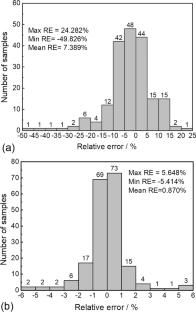
The Laves phase NbCr2/Nb two-phase alloy has received significant research interest as a potential high-temperature structural material. Based on isothermal and constant strain rate compression experiments conducted on the alloy within a temperature range of 1000 -1200 °C and strain rate range of 0.001-0.1 s−1, the flow stress constitutive relationship of the alloy was established using the J-C model and BP artificial neural network model, respectively. It was found that the conventional J-C model fails to describe the flow stress softening behavior of the alloy. In contrast, the modified J-C model provides a better prediction of the flow stress softening phenomenon and accurately characterizes the flow stress behavior of the alloy, it exhibits high prediction accuracy as indicated by the correlation coefficient (R) of 0.9902, average absolute relative error (AARE) of 8.773% and mean relative error (MRE) of 7.389%. The flow stress behavior of the alloy can be more accurately characterized using the constitutive relationship built by the BP neural network model. The model exhibits higher prediction accuracy with R of 0.9998, AARE of 2.232% and MRE of 0.870%. The results demonstrate that the BP neural network model has superior capability in predicting the flow stress behavior of the alloy. The established flow stress constitutive relationship can provide more accurate and reliable fundamental data with respect to flow stress for finite element simulations of forging deformation process of the Laves phase NbCr2/Nb two-phase alloy. In addition, it serves as theoretical basis for rational design of forging process and accurate calculation of the deformation force of the alloy.
Abstract Image

查看原文
分享 分享
微信好友 朋友圈 QQ好友 复制链接
本刊更多论文
使用修正的 J-C 模型和反向传播神经网络模型研究拉夫相 NbCr2/Nb 两相合金的构效关系
Laves相NbCr2/Nb两相合金作为一种潜在的高温结构材料受到了广泛的关注。在温度为1000 ~ 1200℃、应变速率为0.001 ~ 0.1 s−1的等温和恒应变速率压缩实验的基础上,分别采用J-C模型和BP人工神经网络模型建立了合金的流变应力本构关系。结果表明,传统的J-C模型不能很好地描述合金的流变应力软化行为。修正后的J-C模型能较好地预测合金流变应力软化现象,准确表征合金流变应力行为,预测精度较高,相关系数(R)为0.9902,平均绝对相对误差(AARE)为8.773%,平均相对误差(MRE)为7.389%。利用BP神经网络模型建立的本构关系可以更准确地表征合金的流变应力行为。模型具有较高的预测精度,R为0.9998,AARE为2.232%,MRE为0.870%。结果表明,BP神经网络模型具有较好的预测合金流变应力行为的能力。建立的流变应力本构关系可为Laves相NbCr2/Nb两相合金锻造变形过程的有限元模拟提供更为准确可靠的流变应力基础数据。为合理设计锻造工艺和准确计算合金变形力提供理论依据。
本文章由计算机程序翻译,如有差异,请以英文原文为准。
求助全文
约1分钟内获得全文 去求助
来源期刊
Journal of Materials Engineering and Performance
Journal of Materials Engineering and Performance 工程技术-材料科学:综合
CiteScore
3.90
自引率
13.00%
发文量
1120
审稿时长
4.9 months
期刊介绍: ASM International''s Journal of Materials Engineering and Performance focuses on solving day-to-day engineering challenges, particularly those involving components for larger systems. The journal presents a clear understanding of relationships between materials selection, processing, applications and performance. The Journal of Materials Engineering covers all aspects of materials selection, design, processing, characterization and evaluation, including how to improve materials properties through processes and process control of casting, forming, heat treating, surface modification and coating, and fabrication. Testing and characterization (including mechanical and physical tests, NDE, metallography, failure analysis, corrosion resistance, chemical analysis, surface characterization, and microanalysis of surfaces, features and fractures), and industrial performance measurement are also covered
期刊最新文献
Special Issue on Advances in Dissimilar Welding: Integrating Computational Techniques for Enhanced Joint Performance The Influence of the Application of Electromagnetic Fields of Low Intensity during Gas Metal Arc Welding of AL6XN-Inconel 600 Dissimilar Welds Effect of Process Parameters on Force, Torque, Surface Morphology, and Hardness of Friction Stir-Welded AA2024 Alloy Plates Coprecipitation and Properties of Conversion Nano-layers Formed on Steel Plates during Iron Phosphating with Molybdate and Magnesium Nitrate Additives Influence of Low-SiC Content on the Tribological and Electrical Properties of Cu Composites Produced by Spark Plasma Sintering
×
引用
GB/T 7714-2015
复制
MLA
复制
APA
复制
导出至
BibTeX EndNote RefMan NoteFirst NoteExpress
×
×
提示
您的信息不完整,为了账户安全,请先补充。
现在去补充
×
提示
您因"违规操作"
具体请查看互助需知
我知道了
×
提示
现在去查看 取消
×
提示
确定
0
微信
客服QQ
Book学术公众号 扫码关注我们
反馈
×
意见反馈
请填写您的意见或建议
请填写您的手机或邮箱
已复制链接
已复制链接
快去分享给好友吧!
我知道了
×
扫码分享
扫码分享
Book学术官方微信
Book学术文献互助
Book学术文献互助群
群 号:604180095
Book学术
文献互助 智能选刊 最新文献 互助须知 联系我们:info@booksci.cn
Book学术提供免费学术资源搜索服务,方便国内外学者检索中英文文献。致力于提供最便捷和优质的服务体验。
Copyright © 2023 Book学术 All rights reserved.
ghs 京公网安备 11010802042870号 京ICP备2023020795号-1





