Tuğba Semerci Sevimli, Aynaz Ghorbani, Bahar Demir Cevizlidere, Burcugül Altuğ, Murat Sevimli
{"title":"Boric Acid Affects the Expression of DNA Double-Strand Break Repair Factors in A549 Cells and A549 Cancer Stem Cells: An In Vitro Study.","authors":"Tuğba Semerci Sevimli, Aynaz Ghorbani, Bahar Demir Cevizlidere, Burcugül Altuğ, Murat Sevimli","doi":"10.1007/s12011-024-04082-y","DOIUrl":null,"url":null,"abstract":"<p><p>DNA double-strand break (DSB) repair genes interact with tumor stemness- and resistance-associated processes in cancer stem cells (CSCs). Therefore, targeting DNA DSB genes in cancer treatment is important for the CSC phenotype. Although the anti-cancer effect of boric acid (BA) has been studied, its effect on DNA DSB is unclear. Moreover, no studies investigate BA's effects on DNA DSB of lung cancer stem cells (LC-SCs). To fill the gap, we aimed to assess the effects of BA on A549 cancer stem cells. CSCs were isolated from human non-small cell lung cancer cells (A549) and characterized by flow cytometry. Different concentrations of BA (at doses ranging from 1 to 100 mM) were applied to cancer stem cells. Cytotoxic activities were determined using the cell viability assay (MTT assay) at 24 and 48 h. Expression levels of DNA DSB genes that BRCA1, BRCA2, RAD51, KU70/80, ATM, and XRCC4 were evaluated by RT-qPCR. Additionally, immunofluorescence staining analysis was exploited for caspase-3 and E-cadherin. ATM expression increased significantly (p < 0.001). No significant change was observed in the expression of other genes. Moreover, BA up-regulated caspase-3 and E-cadherin expression. Consequently, we can say that BA affects DNA DSB and the apoptotic abilities of LC-SCs.</p>","PeriodicalId":8917,"journal":{"name":"Biological Trace Element Research","volume":" ","pages":"5017-5024"},"PeriodicalIF":3.6000,"publicationDate":"2024-11-01","publicationTypes":"Journal Article","fieldsOfStudy":null,"isOpenAccess":false,"openAccessPdf":"https://www.ncbi.nlm.nih.gov/pmc/articles/PMC11442501/pdf/","citationCount":"0","resultStr":null,"platform":"Semanticscholar","paperid":null,"PeriodicalName":"Biological Trace Element Research","FirstCategoryId":"99","ListUrlMain":"https://doi.org/10.1007/s12011-024-04082-y","RegionNum":3,"RegionCategory":"生物学","ArticlePicture":[],"TitleCN":null,"AbstractTextCN":null,"PMCID":null,"EPubDate":"2024/2/17 0:00:00","PubModel":"Epub","JCR":"Q2","JCRName":"BIOCHEMISTRY & MOLECULAR BIOLOGY","Score":null,"Total":0}
引用次数: 0
Abstract
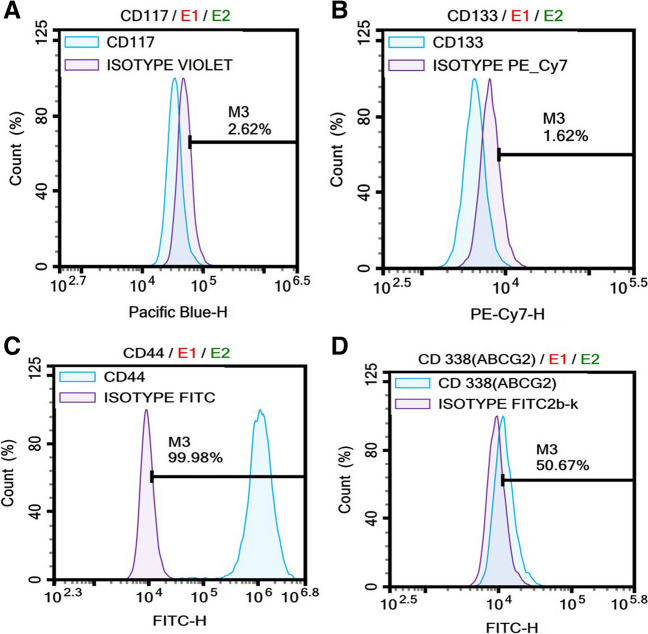
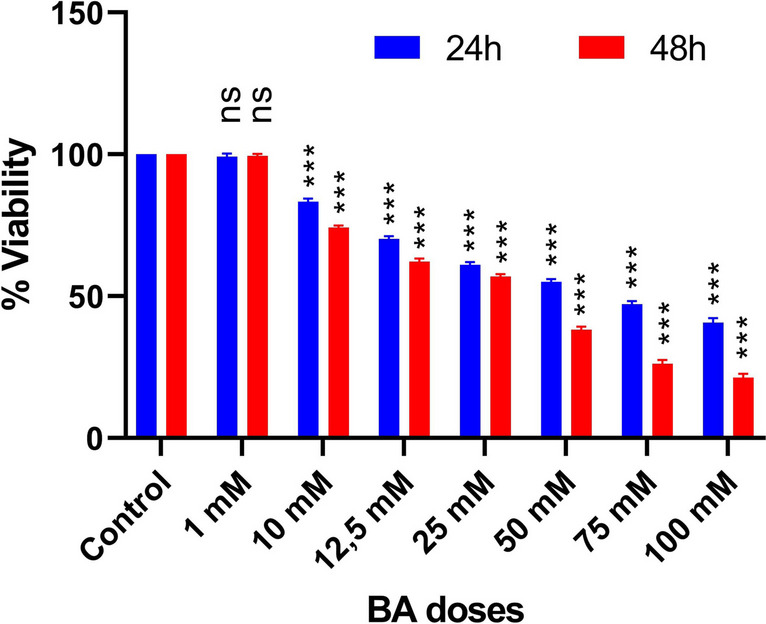
DNA double-strand break (DSB) repair genes interact with tumor stemness- and resistance-associated processes in cancer stem cells (CSCs). Therefore, targeting DNA DSB genes in cancer treatment is important for the CSC phenotype. Although the anti-cancer effect of boric acid (BA) has been studied, its effect on DNA DSB is unclear. Moreover, no studies investigate BA's effects on DNA DSB of lung cancer stem cells (LC-SCs). To fill the gap, we aimed to assess the effects of BA on A549 cancer stem cells. CSCs were isolated from human non-small cell lung cancer cells (A549) and characterized by flow cytometry. Different concentrations of BA (at doses ranging from 1 to 100 mM) were applied to cancer stem cells. Cytotoxic activities were determined using the cell viability assay (MTT assay) at 24 and 48 h. Expression levels of DNA DSB genes that BRCA1, BRCA2, RAD51, KU70/80, ATM, and XRCC4 were evaluated by RT-qPCR. Additionally, immunofluorescence staining analysis was exploited for caspase-3 and E-cadherin. ATM expression increased significantly (p < 0.001). No significant change was observed in the expression of other genes. Moreover, BA up-regulated caspase-3 and E-cadherin expression. Consequently, we can say that BA affects DNA DSB and the apoptotic abilities of LC-SCs.
期刊介绍:
Biological Trace Element Research provides a much-needed central forum for the emergent, interdisciplinary field of research on the biological, environmental, and biomedical roles of trace elements. Rather than confine itself to biochemistry, the journal emphasizes the integrative aspects of trace metal research in all appropriate fields, publishing human and animal nutritional studies devoted to the fundamental chemistry and biochemistry at issue as well as to the elucidation of the relevant aspects of preventive medicine, epidemiology, clinical chemistry, agriculture, endocrinology, animal science, pharmacology, microbiology, toxicology, virology, marine biology, sensory physiology, developmental biology, and related fields.



 京公网安备 11010802042870号
京ICP备2023020795号-1
京公网安备 11010802042870号
京ICP备2023020795号-1

 分享
分享
 求助内容:
求助内容: 应助结果提醒方式:
 扫码关注我们
