Drying properties, color characteristics, microstructure, and modeling of ginger cubes dried using electrohydrodynamic, electrohydrodynamic-hot air, and hot air methods
{"title":"Drying properties, color characteristics, microstructure, and modeling of ginger cubes dried using electrohydrodynamic, electrohydrodynamic-hot air, and hot air methods","authors":"Ahmet Polat, Nazmi Izli","doi":"10.1007/s00231-024-03459-y","DOIUrl":null,"url":null,"abstract":"<p>This study investigates the drying of ginger cubes using three different techniques: electrohydrodynamic drying, electrohydrodynamic-hot air drying, and hot air drying. The main objective is to assess how these drying methods affect drying times, effective diffusion coefficients, color, and microstructure. Additionally, the study includes fitting ten different thin-layer models to the experimental data for mathematical analysis. It was observed that increasing temperature and voltage values led to a reduction in the drying times of the ginger samples. After conducting statistical tests, it was determined that the Midilli et al. and Wang and Singh models were the most suitable for describing the experimental drying curves. Effective diffusion coefficient values increased with the rise in temperature and voltage values. The <i>L*</i> values of the dried ginger samples decreased due to temperature and voltage applications. Notably, ginger samples dried using the electrohydrodynamic method exhibited better preservation of their original appearance, particularly in terms of microstructure and starch particle integrity, compared to other drying methods. The findings of the study suggest that integrating electrohydrodynamic technology with hot air drying reduces overall drying time. This innovative approach shows promise for producing high-quality end products in the future.</p>","PeriodicalId":12908,"journal":{"name":"Heat and Mass Transfer","volume":"21 1","pages":""},"PeriodicalIF":2.0000,"publicationDate":"2024-02-26","publicationTypes":"Journal Article","fieldsOfStudy":null,"isOpenAccess":false,"openAccessPdf":"","citationCount":"0","resultStr":null,"platform":"Semanticscholar","paperid":null,"PeriodicalName":"Heat and Mass Transfer","FirstCategoryId":"5","ListUrlMain":"https://doi.org/10.1007/s00231-024-03459-y","RegionNum":4,"RegionCategory":"工程技术","ArticlePicture":[],"TitleCN":null,"AbstractTextCN":null,"PMCID":null,"EPubDate":"","PubModel":"","JCR":"Q3","JCRName":"MECHANICS","Score":null,"Total":0}
引用次数: 0
Abstract
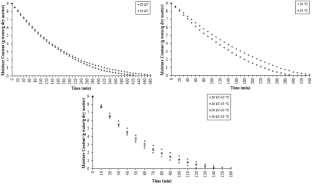
This study investigates the drying of ginger cubes using three different techniques: electrohydrodynamic drying, electrohydrodynamic-hot air drying, and hot air drying. The main objective is to assess how these drying methods affect drying times, effective diffusion coefficients, color, and microstructure. Additionally, the study includes fitting ten different thin-layer models to the experimental data for mathematical analysis. It was observed that increasing temperature and voltage values led to a reduction in the drying times of the ginger samples. After conducting statistical tests, it was determined that the Midilli et al. and Wang and Singh models were the most suitable for describing the experimental drying curves. Effective diffusion coefficient values increased with the rise in temperature and voltage values. The L* values of the dried ginger samples decreased due to temperature and voltage applications. Notably, ginger samples dried using the electrohydrodynamic method exhibited better preservation of their original appearance, particularly in terms of microstructure and starch particle integrity, compared to other drying methods. The findings of the study suggest that integrating electrohydrodynamic technology with hot air drying reduces overall drying time. This innovative approach shows promise for producing high-quality end products in the future.
期刊介绍:
This journal serves the circulation of new developments in the field of basic research of heat and mass transfer phenomena, as well as related material properties and their measurements. Thereby applications to engineering problems are promoted.
The journal is the traditional "Wärme- und Stoffübertragung" which was changed to "Heat and Mass Transfer" back in 1995.



 京公网安备 11010802042870号
京ICP备2023020795号-1
京公网安备 11010802042870号
京ICP备2023020795号-1

 分享
分享
 求助内容:
求助内容: 应助结果提醒方式:
 扫码关注我们
