Wyatt P Bensken, Suparna M Navale, Brenda M McGrath, Nicole Cook, Yui Nishiike, Gretchen Mertes, Rose Goueth, Matthew Jones, Anna Templeton, Stephen J Zyzanski, Siran M Koroukian, Kurt C Stange
{"title":"Variation in multimorbidity by sociodemographics and social drivers of health among patients seen at community-based health centers.","authors":"Wyatt P Bensken, Suparna M Navale, Brenda M McGrath, Nicole Cook, Yui Nishiike, Gretchen Mertes, Rose Goueth, Matthew Jones, Anna Templeton, Stephen J Zyzanski, Siran M Koroukian, Kurt C Stange","doi":"10.1177/26335565241236410","DOIUrl":null,"url":null,"abstract":"<p><strong>Purpose: </strong>Understanding variation in multimorbidity across sociodemographics and social drivers of health is critical to reducing health inequities.</p><p><strong>Methods: </strong>From the multi-state OCHIN network of community-based health centers (CBHCs), we identified a cross-sectional cohort of adult (> 25 years old) patients who had a visit between 2019-2021. We used generalized linear models to examine the relationship between the Multimorbidity Weighted Index (MWI) and sociodemographics and social drivers of health (Area Deprivation Index [ADI] and social risks [e.g., food insecurity]). Each model included an interaction term between the primary predictor and age to examine if certain groups had a higher MWI at younger ages.</p><p><strong>Results: </strong>Among 642,730 patients, 28.2% were Hispanic/Latino, 42.8% were male, and the median age was 48. The median MWI was 2.05 (IQR: 0.34, 4.87) and was higher for adults over the age of 40 and American Indians and Alaska Natives. The regression model revealed a higher MWI at younger ages for patients living in areas of higher deprivation. Additionally, patients with social risks had a higher MWI (3.16; IQR: 1.33, 6.65) than those without (2.13; IQR: 0.34, 4.89) and the interaction between age and social risk suggested a higher MWI at younger ages.</p><p><strong>Conclusions: </strong>Greater multimorbidity at younger ages and among those with social risks and living in areas of deprivation shows possible mechanisms for the premature aging and disability often seen in community-based health centers and highlights the need for comprehensive approaches to improving the health of vulnerable populations.</p>","PeriodicalId":73843,"journal":{"name":"Journal of multimorbidity and comorbidity","volume":"14 ","pages":"26335565241236410"},"PeriodicalIF":2.7000,"publicationDate":"2024-02-27","publicationTypes":"Journal Article","fieldsOfStudy":null,"isOpenAccess":false,"openAccessPdf":"https://www.ncbi.nlm.nih.gov/pmc/articles/PMC10901061/pdf/","citationCount":"0","resultStr":null,"platform":"Semanticscholar","paperid":null,"PeriodicalName":"Journal of multimorbidity and comorbidity","FirstCategoryId":"1085","ListUrlMain":"https://doi.org/10.1177/26335565241236410","RegionNum":0,"RegionCategory":null,"ArticlePicture":[],"TitleCN":null,"AbstractTextCN":null,"PMCID":null,"EPubDate":"2024/1/1 0:00:00","PubModel":"eCollection","JCR":"","JCRName":"","Score":null,"Total":0}
引用次数: 0
Abstract
Purpose: Understanding variation in multimorbidity across sociodemographics and social drivers of health is critical to reducing health inequities.
Methods: From the multi-state OCHIN network of community-based health centers (CBHCs), we identified a cross-sectional cohort of adult (> 25 years old) patients who had a visit between 2019-2021. We used generalized linear models to examine the relationship between the Multimorbidity Weighted Index (MWI) and sociodemographics and social drivers of health (Area Deprivation Index [ADI] and social risks [e.g., food insecurity]). Each model included an interaction term between the primary predictor and age to examine if certain groups had a higher MWI at younger ages.
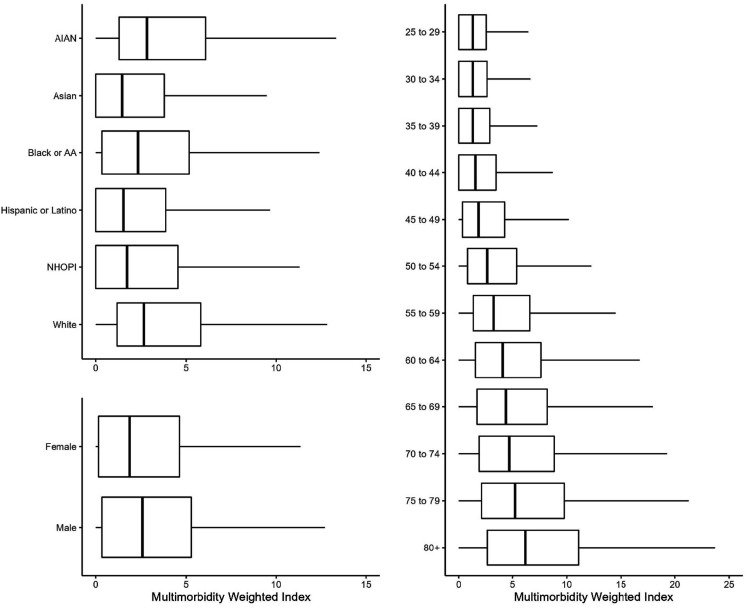
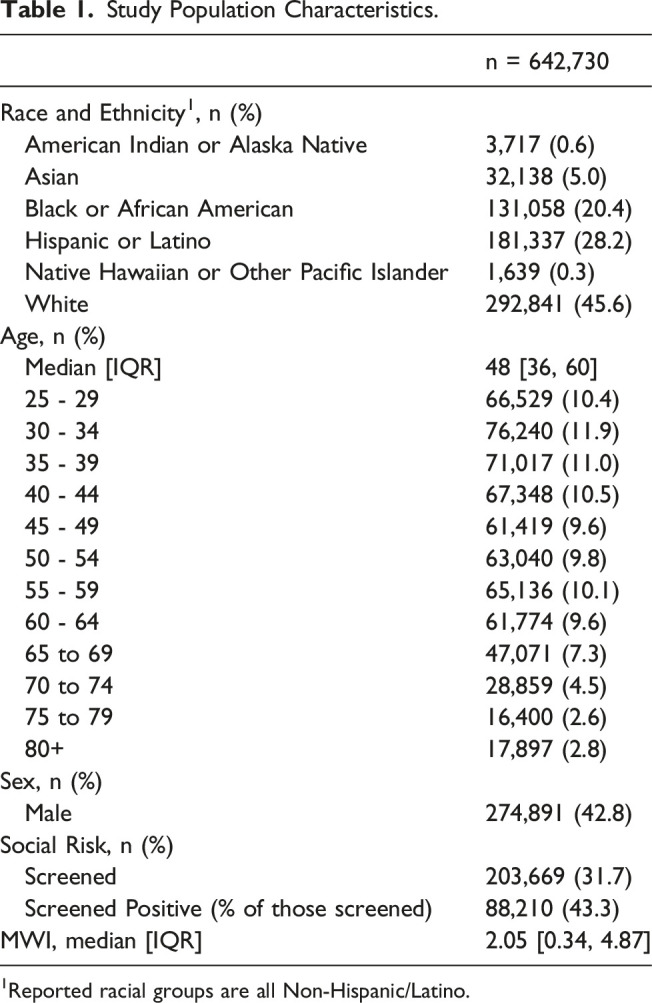
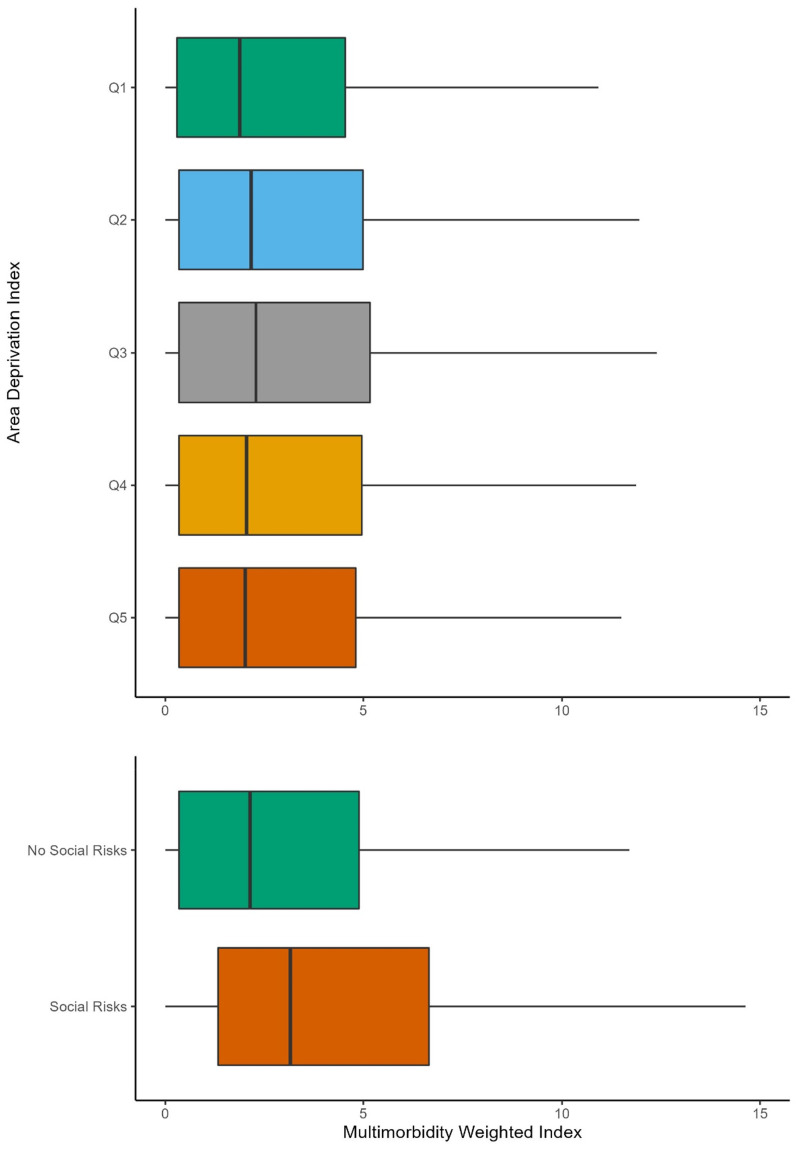
Results: Among 642,730 patients, 28.2% were Hispanic/Latino, 42.8% were male, and the median age was 48. The median MWI was 2.05 (IQR: 0.34, 4.87) and was higher for adults over the age of 40 and American Indians and Alaska Natives. The regression model revealed a higher MWI at younger ages for patients living in areas of higher deprivation. Additionally, patients with social risks had a higher MWI (3.16; IQR: 1.33, 6.65) than those without (2.13; IQR: 0.34, 4.89) and the interaction between age and social risk suggested a higher MWI at younger ages.
Conclusions: Greater multimorbidity at younger ages and among those with social risks and living in areas of deprivation shows possible mechanisms for the premature aging and disability often seen in community-based health centers and highlights the need for comprehensive approaches to improving the health of vulnerable populations.




 京公网安备 11010802042870号
京ICP备2023020795号-1
京公网安备 11010802042870号
京ICP备2023020795号-1

 分享
分享

 求助内容:
求助内容: 应助结果提醒方式:
 扫码关注我们
