Aaron R. J. Hutton, Melissa Kirkby, Tom Van Bogaert, Peter Casteels, Christelle Nonne, Veronique De Brabandere, Ortwin Van de Vyver, Lalit K. Vora, Ismaiel A. Tekko, Helen O. McCarthy, Ryan F. Donnelly
{"title":"Transdermal Administration of Nanobody Molecules using Hydrogel-Forming Microarray Patch Technology: A Unique Delivery Approach","authors":"Aaron R. J. Hutton, Melissa Kirkby, Tom Van Bogaert, Peter Casteels, Christelle Nonne, Veronique De Brabandere, Ortwin Van de Vyver, Lalit K. Vora, Ismaiel A. Tekko, Helen O. McCarthy, Ryan F. Donnelly","doi":"10.1002/mame.202400029","DOIUrl":null,"url":null,"abstract":"<p>Nanobody molecules, derived from heavy-chain only antibodies in camelids, represent the next generation of biotherapeutics. In addition to low immunogenicity, high stability, and potency, their single-domain format facilitates the construction of multivalent molecules for therapeutic applications. Although predominantly administered using a hypodermic syringe and needle, alternative delivery methods are under investigation. That said, the transdermal route has yet to be explored. Therefore, microarray patch (MAP) technology, offering a potentially high dose, pain-free transdermal system, is employed in this study. Trivalent Nanobody molecules, with and without half-life extension (VHH and VHH[HLE]), are formulated into hydrogel-forming MAPs, with pharmacokinetic parameters assessed in Sprague–Dawley rats. VHH MAPs exhibited a sustained release profile, with a serum concentration of 19 ± 9 ng mL<sup>−1</sup> 24 h post-administration. In contrast, a subcutaneous (SC) injection showed faster clearance, with a serum concentration of 1.1 ± 0.4 ng mL<sup>−1</sup> at 24 h. For VHH(HLE), both SC and MAP cohorts achieved a maximum serum concentration (<i>T</i><sub>max</sub>) at 24 h. The MAP cohort displayed a notable increase in VHH(HLE) serum levels between 6–24 h, dropping after MAP removal. This study has exemplified MAPs potential for delivering advanced biologics, indicating the transdermal route's promise for pain-free, patient-friendly administration of Nanobody molecules.</p>","PeriodicalId":18151,"journal":{"name":"Macromolecular Materials and Engineering","volume":"309 6","pages":""},"PeriodicalIF":4.6000,"publicationDate":"2024-03-18","publicationTypes":"Journal Article","fieldsOfStudy":null,"isOpenAccess":false,"openAccessPdf":"https://onlinelibrary.wiley.com/doi/epdf/10.1002/mame.202400029","citationCount":"0","resultStr":null,"platform":"Semanticscholar","paperid":null,"PeriodicalName":"Macromolecular Materials and Engineering","FirstCategoryId":"88","ListUrlMain":"https://onlinelibrary.wiley.com/doi/10.1002/mame.202400029","RegionNum":3,"RegionCategory":"材料科学","ArticlePicture":[],"TitleCN":null,"AbstractTextCN":null,"PMCID":null,"EPubDate":"","PubModel":"","JCR":"Q2","JCRName":"MATERIALS SCIENCE, MULTIDISCIPLINARY","Score":null,"Total":0}
引用次数: 0
Abstract
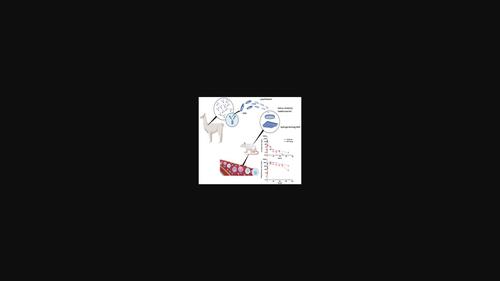
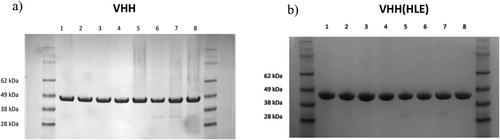
Nanobody molecules, derived from heavy-chain only antibodies in camelids, represent the next generation of biotherapeutics. In addition to low immunogenicity, high stability, and potency, their single-domain format facilitates the construction of multivalent molecules for therapeutic applications. Although predominantly administered using a hypodermic syringe and needle, alternative delivery methods are under investigation. That said, the transdermal route has yet to be explored. Therefore, microarray patch (MAP) technology, offering a potentially high dose, pain-free transdermal system, is employed in this study. Trivalent Nanobody molecules, with and without half-life extension (VHH and VHH[HLE]), are formulated into hydrogel-forming MAPs, with pharmacokinetic parameters assessed in Sprague–Dawley rats. VHH MAPs exhibited a sustained release profile, with a serum concentration of 19 ± 9 ng mL−1 24 h post-administration. In contrast, a subcutaneous (SC) injection showed faster clearance, with a serum concentration of 1.1 ± 0.4 ng mL−1 at 24 h. For VHH(HLE), both SC and MAP cohorts achieved a maximum serum concentration (Tmax) at 24 h. The MAP cohort displayed a notable increase in VHH(HLE) serum levels between 6–24 h, dropping after MAP removal. This study has exemplified MAPs potential for delivering advanced biologics, indicating the transdermal route's promise for pain-free, patient-friendly administration of Nanobody molecules.
期刊介绍:
Macromolecular Materials and Engineering is the high-quality polymer science journal dedicated to the design, modification, characterization, processing and application of advanced polymeric materials, including membranes, sensors, sustainability, composites, fibers, foams, 3D printing, actuators as well as energy and electronic applications.
Macromolecular Materials and Engineering is among the top journals publishing original research in polymer science.
The journal presents strictly peer-reviewed Research Articles, Reviews, Perspectives and Comments.
ISSN: 1438-7492 (print). 1439-2054 (online).
Readership:Polymer scientists, chemists, physicists, materials scientists, engineers
Abstracting and Indexing Information:
CAS: Chemical Abstracts Service (ACS)
CCR Database (Clarivate Analytics)
Chemical Abstracts Service/SciFinder (ACS)
Chemistry Server Reaction Center (Clarivate Analytics)
ChemWeb (ChemIndustry.com)
Chimica Database (Elsevier)
COMPENDEX (Elsevier)
Current Contents: Physical, Chemical & Earth Sciences (Clarivate Analytics)
Directory of Open Access Journals (DOAJ)
INSPEC (IET)
Journal Citation Reports/Science Edition (Clarivate Analytics)
Materials Science & Engineering Database (ProQuest)
PASCAL Database (INIST/CNRS)
Polymer Library (iSmithers RAPRA)
Reaction Citation Index (Clarivate Analytics)
Science Citation Index (Clarivate Analytics)
Science Citation Index Expanded (Clarivate Analytics)
SciTech Premium Collection (ProQuest)
SCOPUS (Elsevier)
Technology Collection (ProQuest)
Web of Science (Clarivate Analytics)



 京公网安备 11010802042870号
京ICP备2023020795号-1
京公网安备 11010802042870号
京ICP备2023020795号-1

 分享
分享
 求助内容:
求助内容: 应助结果提醒方式:
 扫码关注我们
