Ricardo Restrepo, Halley J Park, S Pinar Karakas, Luisa F Cervantes, Felipe G Rodriguez-Ruiz, Anna Maria Zahrah, Emilio J Inarejos-Clemente, Marcelo Laufer, Verena M Shreiber
{"title":"Bacterial osteomyelitis in pediatric patients: a comprehensive review.","authors":"Ricardo Restrepo, Halley J Park, S Pinar Karakas, Luisa F Cervantes, Felipe G Rodriguez-Ruiz, Anna Maria Zahrah, Emilio J Inarejos-Clemente, Marcelo Laufer, Verena M Shreiber","doi":"10.1007/s00256-024-04639-x","DOIUrl":null,"url":null,"abstract":"<p><p>Bacterial osteomyelitis, an inflammatory response in the bone caused by microorganisms, typically affects the metaphysis in the skeletally immature. Bacterial osteomyelitis possesses a significant diagnostic challenge in pediatric patients due to its nonspecific clinical presentation. Because the metaphysis is the primary focus of infection in skeletally immature patients, understanding the normal physiologic, maturation process of bones throughout childhood allows to understand the pathophysiology of osteomyelitis. Timely and accurate diagnosis is crucial to initiate appropriate treatment, and prevent long-term sequelae and efforts must be made to isolate the causative organism. The potential causative organism changes according to the age of the patient and underlying medical conditions. Staphylococcus Aureus is the most common isolated bacteria in pediatric pyogenic osteomyelitis whereas Kingella Kingae is the most common causative agent in children aged 6 months to 4 years. Imaging plays a pivotal role in the diagnosis, characterization, evaluation of complications, and follow up of bacterial osteomyelitis. Imaging also plays a pivotal role in the evaluation of potential neoplastic and non-neoplastic mimickers of osteomyelitis. In children, MRI is currently the gold standard imaging modality when suspecting bacterial osteomyelitis, whereas surgical intervention may be required in order to isolate the microorganism, treat complications, and exclude mimickers.</p>","PeriodicalId":21783,"journal":{"name":"Skeletal Radiology","volume":" ","pages":"2195-2210"},"PeriodicalIF":2.2000,"publicationDate":"2024-10-01","publicationTypes":"Journal Article","fieldsOfStudy":null,"isOpenAccess":false,"openAccessPdf":"","citationCount":"0","resultStr":null,"platform":"Semanticscholar","paperid":null,"PeriodicalName":"Skeletal Radiology","FirstCategoryId":"3","ListUrlMain":"https://doi.org/10.1007/s00256-024-04639-x","RegionNum":3,"RegionCategory":"医学","ArticlePicture":[],"TitleCN":null,"AbstractTextCN":null,"PMCID":null,"EPubDate":"2024/3/20 0:00:00","PubModel":"Epub","JCR":"Q2","JCRName":"ORTHOPEDICS","Score":null,"Total":0}
引用次数: 0
Abstract
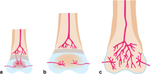
Bacterial osteomyelitis, an inflammatory response in the bone caused by microorganisms, typically affects the metaphysis in the skeletally immature. Bacterial osteomyelitis possesses a significant diagnostic challenge in pediatric patients due to its nonspecific clinical presentation. Because the metaphysis is the primary focus of infection in skeletally immature patients, understanding the normal physiologic, maturation process of bones throughout childhood allows to understand the pathophysiology of osteomyelitis. Timely and accurate diagnosis is crucial to initiate appropriate treatment, and prevent long-term sequelae and efforts must be made to isolate the causative organism. The potential causative organism changes according to the age of the patient and underlying medical conditions. Staphylococcus Aureus is the most common isolated bacteria in pediatric pyogenic osteomyelitis whereas Kingella Kingae is the most common causative agent in children aged 6 months to 4 years. Imaging plays a pivotal role in the diagnosis, characterization, evaluation of complications, and follow up of bacterial osteomyelitis. Imaging also plays a pivotal role in the evaluation of potential neoplastic and non-neoplastic mimickers of osteomyelitis. In children, MRI is currently the gold standard imaging modality when suspecting bacterial osteomyelitis, whereas surgical intervention may be required in order to isolate the microorganism, treat complications, and exclude mimickers.
期刊介绍:
Skeletal Radiology provides a forum for the dissemination of current knowledge and information dealing with disorders of the musculoskeletal system including the spine. While emphasizing the radiological aspects of the many varied skeletal abnormalities, the journal also adopts an interdisciplinary approach, reflecting the membership of the International Skeletal Society. Thus, the anatomical, pathological, physiological, clinical, metabolic and epidemiological aspects of the many entities affecting the skeleton receive appropriate consideration.
This is the Journal of the International Skeletal Society and the Official Journal of the Society of Skeletal Radiology and the Australasian Musculoskelelal Imaging Group.



 京公网安备 11010802042870号
京ICP备2023020795号-1
京公网安备 11010802042870号
京ICP备2023020795号-1

 分享
分享
 求助内容:
求助内容: 应助结果提醒方式:
 扫码关注我们
