Akanksha Dwivedi, Mahavir Singh, Janakarajan Ramkumar, S. Gangolu
{"title":"Influence of Soaking Time on Microstructural, Machinability, and Mechanical Properties of Al-10Si-0.3Mg Alloy Fabricated by Direct Powder Forging","authors":"Akanksha Dwivedi, Mahavir Singh, Janakarajan Ramkumar, S. Gangolu","doi":"10.1007/s11665-024-09379-6","DOIUrl":null,"url":null,"abstract":"<div><p>Direct Powder Forging has emerged as a new forming process to produce a forged component at the industry level from compacted powder. In the present work, the direct powder forging technique has been used to fabricate Al-10Si-0.3 Mg alloy in temperatures ranging from 550 to 600 °C. Initially, the stainless-steel (SS-304) canister was filled with pre-alloyed Al-10Si-0.3 Mg powder and compacted at 50 MPa, which was followed by sealing. The canisters were heated to temperatures ranging from 550 to 600 °C for a duration of 2 to 3 h, followed by forging. A total of four samples were prepared to study the effect of soaking time on microstructural development, mechanical properties, and machinability. It was found that an increase in hardness (~59.6HV to ~ 66.1 HV) and tensile strength (~203.07 MPa to ~ 280.5 MPa) with the increase in soaking time from 2 h at 550 °C to 2 h at 550 °C and 15 min at 600 °C, respectively. However, with a further increase in soaking time of 2.5 and 3 h at 550 °C and 15 min at 600 °C, a decrease in UTS value was observed (251.48 MPa). The machinability of the samples was analyzed through the electrical discharge machining hole-drilling operation at three different levels of machining current (1, 2, and 3 A). Machined holes with a maximum drilling rate of 7.03 <i>µ</i>m/s and taper angle of around 4.3° were machined without abnormal discharges. The variation in mechanical properties and machining rate of DPF alloys was explained with the help of Si particle size, fraction, and porosity values. Microstructure evolution was studied by using OM, SEM, and EBSD techniques. Fractographs reveal the mixed failure mode which is also used to correlate the limited plastic strain during the deformation.</p></div>","PeriodicalId":644,"journal":{"name":"Journal of Materials Engineering and Performance","volume":"34 5","pages":"4039 - 4053"},"PeriodicalIF":2.0000,"publicationDate":"2024-03-25","publicationTypes":"Journal Article","fieldsOfStudy":null,"isOpenAccess":false,"openAccessPdf":"","citationCount":"0","resultStr":null,"platform":"Semanticscholar","paperid":null,"PeriodicalName":"Journal of Materials Engineering and Performance","FirstCategoryId":"88","ListUrlMain":"https://link.springer.com/article/10.1007/s11665-024-09379-6","RegionNum":4,"RegionCategory":"材料科学","ArticlePicture":[],"TitleCN":null,"AbstractTextCN":null,"PMCID":null,"EPubDate":"","PubModel":"","JCR":"Q3","JCRName":"MATERIALS SCIENCE, MULTIDISCIPLINARY","Score":null,"Total":0}
引用次数: 0
Abstract
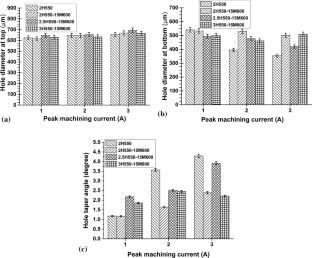
Direct Powder Forging has emerged as a new forming process to produce a forged component at the industry level from compacted powder. In the present work, the direct powder forging technique has been used to fabricate Al-10Si-0.3 Mg alloy in temperatures ranging from 550 to 600 °C. Initially, the stainless-steel (SS-304) canister was filled with pre-alloyed Al-10Si-0.3 Mg powder and compacted at 50 MPa, which was followed by sealing. The canisters were heated to temperatures ranging from 550 to 600 °C for a duration of 2 to 3 h, followed by forging. A total of four samples were prepared to study the effect of soaking time on microstructural development, mechanical properties, and machinability. It was found that an increase in hardness (~59.6HV to ~ 66.1 HV) and tensile strength (~203.07 MPa to ~ 280.5 MPa) with the increase in soaking time from 2 h at 550 °C to 2 h at 550 °C and 15 min at 600 °C, respectively. However, with a further increase in soaking time of 2.5 and 3 h at 550 °C and 15 min at 600 °C, a decrease in UTS value was observed (251.48 MPa). The machinability of the samples was analyzed through the electrical discharge machining hole-drilling operation at three different levels of machining current (1, 2, and 3 A). Machined holes with a maximum drilling rate of 7.03 µm/s and taper angle of around 4.3° were machined without abnormal discharges. The variation in mechanical properties and machining rate of DPF alloys was explained with the help of Si particle size, fraction, and porosity values. Microstructure evolution was studied by using OM, SEM, and EBSD techniques. Fractographs reveal the mixed failure mode which is also used to correlate the limited plastic strain during the deformation.
期刊介绍:
ASM International''s Journal of Materials Engineering and Performance focuses on solving day-to-day engineering challenges, particularly those involving components for larger systems. The journal presents a clear understanding of relationships between materials selection, processing, applications and performance.
The Journal of Materials Engineering covers all aspects of materials selection, design, processing, characterization and evaluation, including how to improve materials properties through processes and process control of casting, forming, heat treating, surface modification and coating, and fabrication.
Testing and characterization (including mechanical and physical tests, NDE, metallography, failure analysis, corrosion resistance, chemical analysis, surface characterization, and microanalysis of surfaces, features and fractures), and industrial performance measurement are also covered



 京公网安备 11010802042870号
京ICP备2023020795号-1
京公网安备 11010802042870号
京ICP备2023020795号-1

 分享
分享
 求助内容:
求助内容: 应助结果提醒方式:
 扫码关注我们
