{"title":"Anger and Political Conflict Dynamics","authors":"Keith E. Schnakenberg, Carly N. Wayne","doi":"10.1017/s0003055424000078","DOIUrl":null,"url":null,"abstract":"Emotions shape strategic conflict dynamics. However, the precise way in which strategic and emotional concerns interact to affect international cooperation and contention are not well understood. We propose a model of intergroup conflict under incomplete information in which agents are sensitive to psychological motivations in the form of anger. Agents become angry in response to worse-than-expected outcomes due to actions of other players. Aggression may be motivated by anger or by beliefs about preferences of members of the other group. Increasing one group’s sensitivity to anger makes that group more aggressive but reduces learning about preferences, which makes the other group less aggressive in response to bad outcomes. Thus, anger has competing effects on the likelihood of conflict. The results have important implications for understanding the complex role of anger in international relations and, more generally, the interplay between psychological and material aims in both fomenting and ameliorating conflict.","PeriodicalId":5,"journal":{"name":"ACS Applied Materials & Interfaces","volume":"144 S272","pages":""},"PeriodicalIF":8.2000,"publicationDate":"2024-02-26","publicationTypes":"Journal Article","fieldsOfStudy":null,"isOpenAccess":false,"openAccessPdf":"","citationCount":"0","resultStr":null,"platform":"Semanticscholar","paperid":null,"PeriodicalName":"ACS Applied Materials & Interfaces","FirstCategoryId":"90","ListUrlMain":"https://doi.org/10.1017/s0003055424000078","RegionNum":2,"RegionCategory":"材料科学","ArticlePicture":[],"TitleCN":null,"AbstractTextCN":null,"PMCID":null,"EPubDate":"","PubModel":"","JCR":"Q1","JCRName":"MATERIALS SCIENCE, MULTIDISCIPLINARY","Score":null,"Total":0}
引用次数: 0
Abstract
Emotions shape strategic conflict dynamics. However, the precise way in which strategic and emotional concerns interact to affect international cooperation and contention are not well understood. We propose a model of intergroup conflict under incomplete information in which agents are sensitive to psychological motivations in the form of anger. Agents become angry in response to worse-than-expected outcomes due to actions of other players. Aggression may be motivated by anger or by beliefs about preferences of members of the other group. Increasing one group’s sensitivity to anger makes that group more aggressive but reduces learning about preferences, which makes the other group less aggressive in response to bad outcomes. Thus, anger has competing effects on the likelihood of conflict. The results have important implications for understanding the complex role of anger in international relations and, more generally, the interplay between psychological and material aims in both fomenting and ameliorating conflict.
期刊介绍:
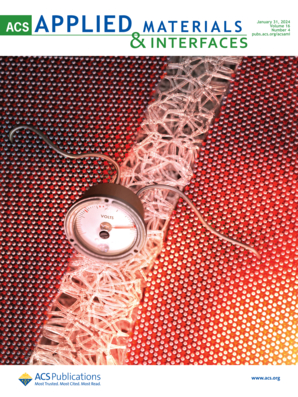
ACS Applied Materials & Interfaces is a leading interdisciplinary journal that brings together chemists, engineers, physicists, and biologists to explore the development and utilization of newly-discovered materials and interfacial processes for specific applications. Our journal has experienced remarkable growth since its establishment in 2009, both in terms of the number of articles published and the impact of the research showcased. We are proud to foster a truly global community, with the majority of published articles originating from outside the United States, reflecting the rapid growth of applied research worldwide.



 京公网安备 11010802042870号
京ICP备2023020795号-1
京公网安备 11010802042870号
京ICP备2023020795号-1

 分享
分享
 求助内容:
求助内容: 应助结果提醒方式:
 扫码关注我们
