{"title":"Effect of Solution Treatment on Microstructure, Texture, and Anisotropy of Mechanical Properties in TA10 (Ti-0.3Mo-0.8Ni) Sheet","authors":"Qiansi Wang, Yongkun Li, Rongfeng Zhou, Zhaoqiang Li, Lingzhi Xie, Lingzhi Zhang","doi":"10.1007/s12540-023-01606-4","DOIUrl":null,"url":null,"abstract":"<div><p>This study investigates the influence of varying solution temperatures on the microstructure, texture, and anisotropic behavior of mechanical properties in TA10 (Ti-0.3Mo-0.8Ni). Solution treatment gradually transforms the microstructure of the titanium alloy plate from an elongated α phase to a nearly equiaxial phase and subsequently to a Widmanstatten microstructure. Concurrently, the texture intensity and type undergo significant alterations. The anisotropy of mechanical properties in the plate with a T-type texture ({0001}⊥ND) is notably higher than that in the plate with a nearly B-type texture ({0001}//ND), owing to differing slip system initiation difficulties. In particular, the anisotropy of the titanium alloy plate is not solely dependent on texture intensity and is also intricately linked to the texture type and distribution. Specifically, the prismatic texture {10 <span>\\(\\overline{1 }\\)</span> 0} < 11 <span>\\(\\overline{2 }\\)</span> 0 > plays a central role in influencing tensile strength and yield strength anisotropy, while the directionality of the α phase primarily contributes to elongation anisotropy.</p><h3>Graphical Abstract</h3>\n<div><figure><div><div><picture><source><img></source></picture></div></div></figure></div></div>","PeriodicalId":703,"journal":{"name":"Metals and Materials International","volume":"30 6","pages":"1459 - 1478"},"PeriodicalIF":4.0000,"publicationDate":"2024-01-31","publicationTypes":"Journal Article","fieldsOfStudy":null,"isOpenAccess":false,"openAccessPdf":"","citationCount":"0","resultStr":null,"platform":"Semanticscholar","paperid":null,"PeriodicalName":"Metals and Materials International","FirstCategoryId":"88","ListUrlMain":"https://link.springer.com/article/10.1007/s12540-023-01606-4","RegionNum":3,"RegionCategory":"材料科学","ArticlePicture":[],"TitleCN":null,"AbstractTextCN":null,"PMCID":null,"EPubDate":"","PubModel":"","JCR":"Q2","JCRName":"MATERIALS SCIENCE, MULTIDISCIPLINARY","Score":null,"Total":0}
引用次数: 0
Abstract
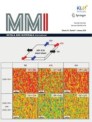
This study investigates the influence of varying solution temperatures on the microstructure, texture, and anisotropic behavior of mechanical properties in TA10 (Ti-0.3Mo-0.8Ni). Solution treatment gradually transforms the microstructure of the titanium alloy plate from an elongated α phase to a nearly equiaxial phase and subsequently to a Widmanstatten microstructure. Concurrently, the texture intensity and type undergo significant alterations. The anisotropy of mechanical properties in the plate with a T-type texture ({0001}⊥ND) is notably higher than that in the plate with a nearly B-type texture ({0001}//ND), owing to differing slip system initiation difficulties. In particular, the anisotropy of the titanium alloy plate is not solely dependent on texture intensity and is also intricately linked to the texture type and distribution. Specifically, the prismatic texture {10 \(\overline{1 }\) 0} < 11 \(\overline{2 }\) 0 > plays a central role in influencing tensile strength and yield strength anisotropy, while the directionality of the α phase primarily contributes to elongation anisotropy.
期刊介绍:
Metals and Materials International publishes original papers and occasional critical reviews on all aspects of research and technology in materials engineering: physical metallurgy, materials science, and processing of metals and other materials. Emphasis is placed on those aspects of the science of materials that are concerned with the relationships among the processing, structure and properties (mechanical, chemical, electrical, electrochemical, magnetic and optical) of materials. Aspects of processing include the melting, casting, and fabrication with the thermodynamics, kinetics and modeling.




 京公网安备 11010802042870号
京ICP备2023020795号-1
京公网安备 11010802042870号
京ICP备2023020795号-1

 分享
分享
 求助内容:
求助内容: 应助结果提醒方式:
 扫码关注我们
