Effects of Aging at 550 °C on α′-Martensitic Transformation of High Si-Bearing Metastable Austenitic Stainless Steel Weld Metal

IF 3.9 2区 材料科学 Q2 METALLURGY & METALLURGICAL ENGINEERING Acta Metallurgica Sinica-English Letters Pub Date : 2024-04-22 DOI:10.1007/s40195-024-01697-x
Yakui Chen, Shitong Wei, Dong Wu, Shanping Lu
{"title":"Effects of Aging at 550 °C on α′-Martensitic Transformation of High Si-Bearing Metastable Austenitic Stainless Steel Weld Metal","authors":"Yakui Chen,&nbsp;Shitong Wei,&nbsp;Dong Wu,&nbsp;Shanping Lu","doi":"10.1007/s40195-024-01697-x","DOIUrl":null,"url":null,"abstract":"<div><p>The high Si-bearing 15Cr–9Ni–Nb metastable austenitic stainless steel weld metal was prepared via gas tungsten arc welding and then processed by stabilized heat treatment (SHT) at 850 °C for 3 h. The effects of 550 °C aging on the <i>α</i>′-martensitic transformation of the as-welded and the SHT weld metals were investigated. The results showed that the weld metal had poor thermal stability of austenite. The precipitation of NbC during the 850 °C SHT made the thermal stability of the local matrix decrease and led to the formation of a large amount of C-depleted <i>α</i>′-martensite. The precipitation of coarse <i>σ</i>-phase at the <i>δ</i>-ferrite led to the Cr-depleted zone and the formation of Cr-depleted <i>α</i>′-martensite at the early stage of 550 °C aging. The homogenized diffusion of C and Cr in the matrix during 550 °C aging led to the restoration of austenitic thermal stability and the decrease of <i>α</i>′-martensite content. The C-depleted <i>α</i>′-martensite content in the SHT weld metal decreased rapidly at the early stage of aging due to the fast diffusion rate of the C atom in the matrix, while the Cr-depleted <i>α</i>′-martensite decreased at the later stage of aging due to the decreased diffusion rate of the Cr.</p></div>","PeriodicalId":457,"journal":{"name":"Acta Metallurgica Sinica-English Letters","volume":"37 9","pages":"1467 - 1479"},"PeriodicalIF":3.9000,"publicationDate":"2024-04-22","publicationTypes":"Journal Article","fieldsOfStudy":null,"isOpenAccess":false,"openAccessPdf":"","citationCount":"0","resultStr":null,"platform":"Semanticscholar","paperid":null,"PeriodicalName":"Acta Metallurgica Sinica-English Letters","FirstCategoryId":"1","ListUrlMain":"https://link.springer.com/article/10.1007/s40195-024-01697-x","RegionNum":2,"RegionCategory":"材料科学","ArticlePicture":[],"TitleCN":null,"AbstractTextCN":null,"PMCID":null,"EPubDate":"","PubModel":"","JCR":"Q2","JCRName":"METALLURGY & METALLURGICAL ENGINEERING","Score":null,"Total":0}
引用次数: 0

Abstract

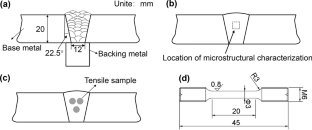
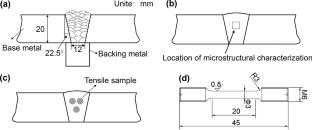
The high Si-bearing 15Cr–9Ni–Nb metastable austenitic stainless steel weld metal was prepared via gas tungsten arc welding and then processed by stabilized heat treatment (SHT) at 850 °C for 3 h. The effects of 550 °C aging on the α′-martensitic transformation of the as-welded and the SHT weld metals were investigated. The results showed that the weld metal had poor thermal stability of austenite. The precipitation of NbC during the 850 °C SHT made the thermal stability of the local matrix decrease and led to the formation of a large amount of C-depleted α′-martensite. The precipitation of coarse σ-phase at the δ-ferrite led to the Cr-depleted zone and the formation of Cr-depleted α′-martensite at the early stage of 550 °C aging. The homogenized diffusion of C and Cr in the matrix during 550 °C aging led to the restoration of austenitic thermal stability and the decrease of α′-martensite content. The C-depleted α′-martensite content in the SHT weld metal decreased rapidly at the early stage of aging due to the fast diffusion rate of the C atom in the matrix, while the Cr-depleted α′-martensite decreased at the later stage of aging due to the decreased diffusion rate of the Cr.
Abstract Image

Abstract Image

查看原文
分享 分享
微信好友 朋友圈 QQ好友 复制链接
本刊更多论文
550 °C 下的老化对高含硅可锻奥氏体不锈钢焊缝金属的α′-马氏体转变的影响
通过气体钨极氩弧焊制备了含硅量较高的 15Cr-9Ni-Nb 可转移奥氏体不锈钢焊缝金属,然后在 850 ℃ 下进行了 3 小时的稳定热处理(SHT)。结果表明,焊接金属的奥氏体热稳定性较差。在 850 °C SHT 过程中析出的 NbC 使局部基体的热稳定性降低,并导致形成大量贫 C α′-马氏体。在 550 °C 时效初期,δ-铁素体处粗σ相的析出导致了贫铬区和贫铬α′-马氏体的形成。在 550 °C 时效过程中,基体中 C 和 Cr 的均匀扩散导致奥氏体热稳定性的恢复和 α′-马氏体含量的降低。由于 C 原子在基体中的快速扩散速度,SHT 焊缝金属中的 C 贫化α′-马氏体含量在时效早期迅速减少,而由于 Cr 的扩散速度降低,Cr 贫化α′-马氏体含量在时效后期减少。
本文章由计算机程序翻译,如有差异,请以英文原文为准。
求助全文
约1分钟内获得全文 去求助
来源期刊
Acta Metallurgica Sinica-English Letters
Acta Metallurgica Sinica-English Letters METALLURGY & METALLURGICAL ENGINEERING-
CiteScore
6.60
自引率
14.30%
发文量
122
审稿时长
2 months
期刊介绍: This international journal presents compact reports of significant, original and timely research reflecting progress in metallurgy, materials science and engineering, including materials physics, physical metallurgy, and process metallurgy.
期刊最新文献
Role of Grain Boundary Segregation and Nanoprecipitation on the Tensile Properties and Thermal Stability of Dilute Mg–0.7Al–0.3Ca (wt%) Alloy Correction: Enhanced Hydrogen Embrittlement Resistance in a Vanadium-Alloyed 42CrNiMoV Steel for High-Strength Wind Turbine Bolts Dissolution Behaviors of Corrosion Products on 316LN Stainless Steel in Simulated Shutdown Acid-Reducing Water Chemistry Solute Segregation and Grain Boundary Cohesion of Magnesium Binary Alloys: A First-Principles Study Reinforcement Learning in Materials Science: Recent Advances, Methodologies and Applications
×
引用
GB/T 7714-2015
复制
MLA
复制
APA
复制
导出至
BibTeX EndNote RefMan NoteFirst NoteExpress
×
×
提示
您的信息不完整,为了账户安全,请先补充。
现在去补充
×
提示
您因"违规操作"
具体请查看互助需知
我知道了
×
提示
现在去查看 取消
×
提示
确定
0
微信
客服QQ
Book学术公众号 扫码关注我们
反馈
×
意见反馈
请填写您的意见或建议
请填写您的手机或邮箱
已复制链接
已复制链接
快去分享给好友吧!
我知道了
×
扫码分享
扫码分享
Book学术官方微信
Book学术文献互助
Book学术文献互助群
群 号:604180095
Book学术
文献互助 智能选刊 最新文献 互助须知 联系我们:info@booksci.cn
Book学术提供免费学术资源搜索服务,方便国内外学者检索中英文文献。致力于提供最便捷和优质的服务体验。
Copyright © 2023 Book学术 All rights reserved.
ghs 京公网安备 11010802042870号 京ICP备2023020795号-1