{"title":"Embracing the Crisis of Research Design: How the Collapse of Case Selection in the Field Can Uncover New Discoveries","authors":"Rachel A. Schwartz","doi":"10.1017/s1537592724000586","DOIUrl":null,"url":null,"abstract":"Political science has seen a welcome increase in guidance on conducting field research, which recognizes the need for adaptability. But while disciplinary conversations on “iterating” in the field have advanced, strategies for adapting to the breakdown of one’s case selection—an all-too-frequent problem faced by field researchers—remain underspecified. I synthesize the sources of case selection collapse and puts forward four strategies to help scholars iterate when things fall apart: 1) rethinking what constitutes a “case” when fieldwork upends one’s understanding of the population to which the original case(s) belong; 2) reorienting the object of analysis from outcomes to processes when new insights question the values of the outcome variable within one’s original case(s); 3) returning to dominant theoretical models as a source of comparison when unanticipated changes cut off data or field site access; and 4) dropping case(s) that become extraneous amid fieldwork-induced changes in the project’s comparative logic. By embracing these moments of seeming crisis, we can more productively train field researchers to make the most of the inductive discoveries and new theoretical insights that often emerge when one’s original plans fall apart.","PeriodicalId":4,"journal":{"name":"ACS Applied Energy Materials","volume":"56 16","pages":""},"PeriodicalIF":5.5000,"publicationDate":"2024-04-09","publicationTypes":"Journal Article","fieldsOfStudy":null,"isOpenAccess":false,"openAccessPdf":"","citationCount":"0","resultStr":null,"platform":"Semanticscholar","paperid":null,"PeriodicalName":"ACS Applied Energy Materials","FirstCategoryId":"90","ListUrlMain":"https://doi.org/10.1017/s1537592724000586","RegionNum":3,"RegionCategory":"材料科学","ArticlePicture":[],"TitleCN":null,"AbstractTextCN":null,"PMCID":null,"EPubDate":"","PubModel":"","JCR":"Q2","JCRName":"CHEMISTRY, PHYSICAL","Score":null,"Total":0}
引用次数: 0
Abstract
Political science has seen a welcome increase in guidance on conducting field research, which recognizes the need for adaptability. But while disciplinary conversations on “iterating” in the field have advanced, strategies for adapting to the breakdown of one’s case selection—an all-too-frequent problem faced by field researchers—remain underspecified. I synthesize the sources of case selection collapse and puts forward four strategies to help scholars iterate when things fall apart: 1) rethinking what constitutes a “case” when fieldwork upends one’s understanding of the population to which the original case(s) belong; 2) reorienting the object of analysis from outcomes to processes when new insights question the values of the outcome variable within one’s original case(s); 3) returning to dominant theoretical models as a source of comparison when unanticipated changes cut off data or field site access; and 4) dropping case(s) that become extraneous amid fieldwork-induced changes in the project’s comparative logic. By embracing these moments of seeming crisis, we can more productively train field researchers to make the most of the inductive discoveries and new theoretical insights that often emerge when one’s original plans fall apart.
期刊介绍:
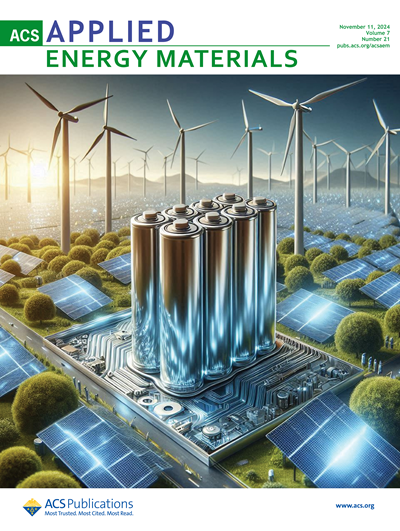
ACS Applied Energy Materials is an interdisciplinary journal publishing original research covering all aspects of materials, engineering, chemistry, physics and biology relevant to energy conversion and storage. The journal is devoted to reports of new and original experimental and theoretical research of an applied nature that integrate knowledge in the areas of materials, engineering, physics, bioscience, and chemistry into important energy applications.



 京公网安备 11010802042870号
京ICP备2023020795号-1
京公网安备 11010802042870号
京ICP备2023020795号-1

 分享
分享
 求助内容:
求助内容: 应助结果提醒方式:
 扫码关注我们
