Andrew Ifedapo Thompson, Maxwell Beveridge, Stefan McCabe, Molly Ahern, Fryda Cortes, Noah Axford, Jacqueline Martinez Franks
{"title":"Anti-Black Political Violence and the Historical Legacy of the Great Replacement Conspiracy","authors":"Andrew Ifedapo Thompson, Maxwell Beveridge, Stefan McCabe, Molly Ahern, Fryda Cortes, Noah Axford, Jacqueline Martinez Franks","doi":"10.1017/s1537592724000045","DOIUrl":null,"url":null,"abstract":"Racial violence is central to the American polity. We argue that support for violence, specifically anti-Black violence, has a long historical arc in American politics dating back to chattel slavery. In this paper, we argue that the racial violence associated with the “great replacement” conspiracy is much more pervasive among the white American public because of the historical legacy of anti-Black violent sentiment. To investigate the prevalence of this idea, we conducted a preregistered simple priming experiment aimed to tap into top-of-mind ideas about racial demographic change. Our experimental design spans multiple data sources, including two probability samples, over the course of a year. We ultimately find that simply priming attitudes about racial demographic change through a single open-ended question consistently leads to increased support for political violence, increasing racial resentment, and expressed anti-Black views. Our approach allows us to test this question through variant methodological means, all of which confirm strong associations Americans have between racial demographic change, anti-Blackness, and violence. Our findings demonstrate that Black threat is an important driver of democratic backsliding in the realm of political violence that requires further attention.","PeriodicalId":4,"journal":{"name":"ACS Applied Energy Materials","volume":"30 4","pages":""},"PeriodicalIF":5.5000,"publicationDate":"2024-04-09","publicationTypes":"Journal Article","fieldsOfStudy":null,"isOpenAccess":false,"openAccessPdf":"","citationCount":"0","resultStr":null,"platform":"Semanticscholar","paperid":null,"PeriodicalName":"ACS Applied Energy Materials","FirstCategoryId":"90","ListUrlMain":"https://doi.org/10.1017/s1537592724000045","RegionNum":3,"RegionCategory":"材料科学","ArticlePicture":[],"TitleCN":null,"AbstractTextCN":null,"PMCID":null,"EPubDate":"","PubModel":"","JCR":"Q2","JCRName":"CHEMISTRY, PHYSICAL","Score":null,"Total":0}
引用次数: 0
Abstract
Racial violence is central to the American polity. We argue that support for violence, specifically anti-Black violence, has a long historical arc in American politics dating back to chattel slavery. In this paper, we argue that the racial violence associated with the “great replacement” conspiracy is much more pervasive among the white American public because of the historical legacy of anti-Black violent sentiment. To investigate the prevalence of this idea, we conducted a preregistered simple priming experiment aimed to tap into top-of-mind ideas about racial demographic change. Our experimental design spans multiple data sources, including two probability samples, over the course of a year. We ultimately find that simply priming attitudes about racial demographic change through a single open-ended question consistently leads to increased support for political violence, increasing racial resentment, and expressed anti-Black views. Our approach allows us to test this question through variant methodological means, all of which confirm strong associations Americans have between racial demographic change, anti-Blackness, and violence. Our findings demonstrate that Black threat is an important driver of democratic backsliding in the realm of political violence that requires further attention.
期刊介绍:
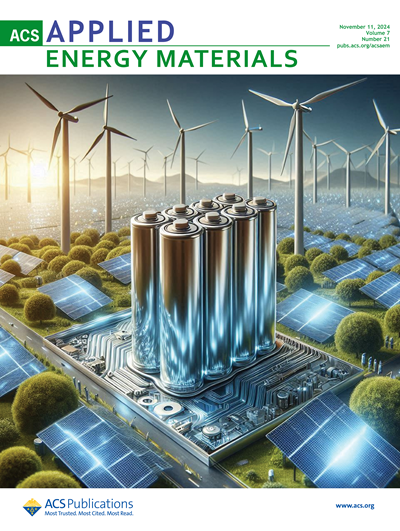
ACS Applied Energy Materials is an interdisciplinary journal publishing original research covering all aspects of materials, engineering, chemistry, physics and biology relevant to energy conversion and storage. The journal is devoted to reports of new and original experimental and theoretical research of an applied nature that integrate knowledge in the areas of materials, engineering, physics, bioscience, and chemistry into important energy applications.




 京公网安备 11010802042870号
京ICP备2023020795号-1
京公网安备 11010802042870号
京ICP备2023020795号-1

 分享
分享
 求助内容:
求助内容: 应助结果提醒方式:
 扫码关注我们
