{"title":"The Anatomical Record celebrates the magnificence of human antiquity from the Sima de los Huesos caves of Atapuerca, Spain, in a novel Special Issue","authors":"Jeffrey T. Laitman, Heather F. Smith","doi":"10.1002/ar.25467","DOIUrl":null,"url":null,"abstract":"<p>Spain has long been known as the birth home of many treasures of human history. From the unmatched grandeur of the Alhambra in Granada, Córdoba's history of architectural marvels and as dwelling for the incomparable genius of polymath Moses Ben Maimon (Maimonides), the emotion-grabbing insights and visualizations provided by Picasso, the sense-numbing genius of Gaudi's Sagrada Familia in Barcelona, to the countless gifts shared with the world at Madrid's Prado Museum, the pulse and vibrancy of much of humanity's history has majestically been presented. Equaling, if not surpassing, these gifts are those that have been uncovered from the earth itself. Treasures that are us from our past: the great fossil finds from Atapuerca.</p><p>First, for full disclosure, we note that our journal, <i>The Anatomical Record</i>, has an enduring love, and permanent place among our pages, for Spain and its brilliance. Indeed, our Editorial Board has met thrice in Spain since 2011 (2011, 2015, and 2019), greater than in any other country (JL would note that <i>The Anatomical Record</i> Board has not met in New York City—JL's homeland—even once during that period, but who's complaining!). Our collective adoration for all things Spanish may derive in part from our past Editor-in-Chief, Kurt Albertine's, appreciation (to put it gently) for Spanish wines and coauthor JL's too hearty appreciation of the ubiquitous tapas. More likely, it is attributable to the influence of our beloved Spanish Associate Editor, José-Luis Trejo of the Cajal Institute in Madrid, whose influence on our Board and journal has been profound. Indeed, our segue into encountering, and appreciating, the vibrancy of Spanish science and scholarship has been in great part due to his diligence and energy in opening the vault of such a cornucopia for us. His energy, for example, has resulted in a number of Special and Thematic Paper Issues of our journal that highlight Spanish science and Spanish scientists (e.g., examination of damage and disease to peripheral nerves, Trejo, <span>2018</span>, Laitman & Albertine, <span>2018</span>; studies, primarily by Spanish neuroscientists, on new research on the cranial nerves, Trejo, <span>2019a</span>, <span>2019b</span>, Laitman & Albertine, <span>2019a</span>, <span>2019b</span>; and a deep dive into the extraordinary history of Spanish neuroscience, De Carlos, <span>2020</span>, Laitman & Albertine, <span>2020</span>).</p><p>Again, in large part thanks to José-Luis, liaisons were made with the team of paleontologists/paleoanthropologists/archeologists/anatomists exploring the incomparable fossil-rich realm of the Sierra de Atapuerca in north-central Spain, near the historic city of Burgos (Figure 1). For JL and HFS, who were both hatched from a paleoanthropological egg, the growing impact of findings from this realm has been well-known throughout our careers. Indeed, the mountains of Atapuerca—a flat-topped anticline formed by limestone rocks whose sediments were deposited between 70 and 65 million years ago (mya)—have yielded an extraordinary, unmatched record of human fossil ancestors dating as far back as 1.2 mya, earlier than any other European site. Atapuerca locales—such as the Sima (pit, chasm, fissure in Spanish) del Elefante in the Trinchera del Ferrocarril (Railway Trench), in which a mandibular fragment and foot phalanx dated at c. 1.2 mya were discovered in 2007; the Gran Dolina in which human ancestors dating over 800,000 years ago were discovered in 1994; and, the focus of this Special Issue, the Sima de los Huesos (vide infra)—are now places of reverence for those who seek to understand humanity's past.</p><p>For some decades, the realms of Atapuerca have been lovingly (and energetically!) explored and analyzed by what has come to be known as “The Atapuerca Team.” This holy trio consists of Juan-Luis Arsuaga from the Complutense University of Madrid Facultad de Ciencias Geológicas and the Centro UCM-ISCIII de Investigación sobre Evolución y Comportamiento Humanos, who has shepherded work from the Sima de los Huesos; Eudald Carbonell at the Rovira I Virgili University of Tarragona who has overseen most of the archeological material, particularly from the Trenchina del Ferrocaril; and José María Bermúdez de Castro who led teams analyzing material on aspects of human evolution, archeology, and mammalian paleontology at the National Museum of Natural Sciences in Madrid (see the detailed historical overview in this issue by Arsuaga et al.; Arsuaga et al., <span>2024</span>; see also Trejo, <span>2024</span>, this issue). This group has collectively unearthed and analyzed findings that have made Atapuerca one of the most significant sites in all of human prehistory. Their impact on understanding human evolutionary history has been unique; indeed, they have made indelible marks in human prehistory and on those who study it. JL, much closer in age to the fossils than HS, has known members of the team, particularly Arsuaga and Bermúdez de Castro, since the early 1980s, often interacting (more correctly, sitting in awe) at international forums in which their many findings have been unfurled.</p><p>This month's Special Issue, “Human fossils from the Sima de los Huesos (Atapuerca, Spain): Forty Years of Discoveries and Research” has focused upon the material from that iconic site. The issue has been Guest Edited by Arsuaga, and co-guest edited by members of his internationally renowned Sima de los Huesos team: Ignacio Martínez of the Universidad de Alcalá, Cátedra de Otoacústica Evolutiva y Paleoantropología; Rolf Quam of the Centro UCM-ISCIII de Investigación sobre Evolución y Compotortamiento Humanos, Universidad de Alcalá Cátedra de Otoacústica Evolutiva y Paleoantropología, Binghamton University, and the American Museum of Natural History; José-Miguel Carretero of the Centro UCM-ISCIII de Investigación sobre Evolución y Comportamiento Humanos, Cátedra de Otoacústica Evolutiva y Paleoantropología, Universidad de Burgos Laboratorio de Evolución Humana and Unidad Asociada de I + D + i al CSIC Vidrio y Materiales del Patrimonio Cultural; and Carlos Lorenzo, of the Universitat Rovira I Virgili, Àrea de Prehistòria, department d'Història de l'Art; Institut Català de Paleoecologia Humana I Evolució Social. Together with scientists from around the globe, this team of Atapuerca excavators/scholars have documented the Sima de los Huesos material from teeth to toes, with accompanying analyses of the rich fauna, to sculpt an unmatched volume on this unique site. The end result is a paleoanthropological classic in scholarship that documents the history of the site, its centrality for comprehending the complexities of the European Pleistocene, and, indeed, its importance in understanding the path of human history itself.</p><p>In concert with this extraordinary documentation and assessment of the material from Sima de los Huesos in our journal, and in hearty celebration of the event and of the guest editors and entire Atapuerca team, <i>The Anatomical Record</i> in cooperation with the Universidad de Burgos, Universidad de Alcalá, and the 25th anniversary of the Fundación Atapuerca, will be sponsoring a unique symposium, “Forty Years of Excavation and Research in the Sima de los Huesos” in July of this year, 2024. At this landmark symposium, the authors of the issue will be presenting and discussing their work, alongside invited world leaders in paleoanthropology. In addition, homage will be given to several prominent researchers who will be retiring from excavation at the site. In all, a most special fiesta celebrating our ancestors and those that have brought them “back to life.”</p><p>There are moments in one's life that make indelible marks on our memories. These, differ, of course, for each of us. One that we have seen that affects everyone is the first time that they hold the remains of a fossil human ancestor. The awe-inspiring, sacred moment of reaching across the millennia to touch the body and spirit of our own origins is, in a word, transformative. We at <i>The Anatomical Record</i> are both proud and humbled to have the opportunity to offer at least a small moment of such contact through this novel Special Issue. We hope you, like us, will take a journey back in time by exploring the science and the history that speaks to us from our fossil past. Welcome to the wonders from Atapuerca.</p>","PeriodicalId":50965,"journal":{"name":"Anatomical Record-Advances in Integrative Anatomy and Evolutionary Biology","volume":"307 7","pages":"2217-2219"},"PeriodicalIF":2.1000,"publicationDate":"2024-05-17","publicationTypes":"Journal Article","fieldsOfStudy":null,"isOpenAccess":false,"openAccessPdf":"https://onlinelibrary.wiley.com/doi/epdf/10.1002/ar.25467","citationCount":"0","resultStr":null,"platform":"Semanticscholar","paperid":null,"PeriodicalName":"Anatomical Record-Advances in Integrative Anatomy and Evolutionary Biology","FirstCategoryId":"3","ListUrlMain":"https://anatomypubs.onlinelibrary.wiley.com/doi/10.1002/ar.25467","RegionNum":4,"RegionCategory":"医学","ArticlePicture":[],"TitleCN":null,"AbstractTextCN":null,"PMCID":null,"EPubDate":"","PubModel":"","JCR":"Q2","JCRName":"ANATOMY & MORPHOLOGY","Score":null,"Total":0}
引用次数: 0
Abstract
Spain has long been known as the birth home of many treasures of human history. From the unmatched grandeur of the Alhambra in Granada, Córdoba's history of architectural marvels and as dwelling for the incomparable genius of polymath Moses Ben Maimon (Maimonides), the emotion-grabbing insights and visualizations provided by Picasso, the sense-numbing genius of Gaudi's Sagrada Familia in Barcelona, to the countless gifts shared with the world at Madrid's Prado Museum, the pulse and vibrancy of much of humanity's history has majestically been presented. Equaling, if not surpassing, these gifts are those that have been uncovered from the earth itself. Treasures that are us from our past: the great fossil finds from Atapuerca.
First, for full disclosure, we note that our journal, The Anatomical Record, has an enduring love, and permanent place among our pages, for Spain and its brilliance. Indeed, our Editorial Board has met thrice in Spain since 2011 (2011, 2015, and 2019), greater than in any other country (JL would note that The Anatomical Record Board has not met in New York City—JL's homeland—even once during that period, but who's complaining!). Our collective adoration for all things Spanish may derive in part from our past Editor-in-Chief, Kurt Albertine's, appreciation (to put it gently) for Spanish wines and coauthor JL's too hearty appreciation of the ubiquitous tapas. More likely, it is attributable to the influence of our beloved Spanish Associate Editor, José-Luis Trejo of the Cajal Institute in Madrid, whose influence on our Board and journal has been profound. Indeed, our segue into encountering, and appreciating, the vibrancy of Spanish science and scholarship has been in great part due to his diligence and energy in opening the vault of such a cornucopia for us. His energy, for example, has resulted in a number of Special and Thematic Paper Issues of our journal that highlight Spanish science and Spanish scientists (e.g., examination of damage and disease to peripheral nerves, Trejo, 2018, Laitman & Albertine, 2018; studies, primarily by Spanish neuroscientists, on new research on the cranial nerves, Trejo, 2019a, 2019b, Laitman & Albertine, 2019a, 2019b; and a deep dive into the extraordinary history of Spanish neuroscience, De Carlos, 2020, Laitman & Albertine, 2020).
Again, in large part thanks to José-Luis, liaisons were made with the team of paleontologists/paleoanthropologists/archeologists/anatomists exploring the incomparable fossil-rich realm of the Sierra de Atapuerca in north-central Spain, near the historic city of Burgos (Figure 1). For JL and HFS, who were both hatched from a paleoanthropological egg, the growing impact of findings from this realm has been well-known throughout our careers. Indeed, the mountains of Atapuerca—a flat-topped anticline formed by limestone rocks whose sediments were deposited between 70 and 65 million years ago (mya)—have yielded an extraordinary, unmatched record of human fossil ancestors dating as far back as 1.2 mya, earlier than any other European site. Atapuerca locales—such as the Sima (pit, chasm, fissure in Spanish) del Elefante in the Trinchera del Ferrocarril (Railway Trench), in which a mandibular fragment and foot phalanx dated at c. 1.2 mya were discovered in 2007; the Gran Dolina in which human ancestors dating over 800,000 years ago were discovered in 1994; and, the focus of this Special Issue, the Sima de los Huesos (vide infra)—are now places of reverence for those who seek to understand humanity's past.
For some decades, the realms of Atapuerca have been lovingly (and energetically!) explored and analyzed by what has come to be known as “The Atapuerca Team.” This holy trio consists of Juan-Luis Arsuaga from the Complutense University of Madrid Facultad de Ciencias Geológicas and the Centro UCM-ISCIII de Investigación sobre Evolución y Comportamiento Humanos, who has shepherded work from the Sima de los Huesos; Eudald Carbonell at the Rovira I Virgili University of Tarragona who has overseen most of the archeological material, particularly from the Trenchina del Ferrocaril; and José María Bermúdez de Castro who led teams analyzing material on aspects of human evolution, archeology, and mammalian paleontology at the National Museum of Natural Sciences in Madrid (see the detailed historical overview in this issue by Arsuaga et al.; Arsuaga et al., 2024; see also Trejo, 2024, this issue). This group has collectively unearthed and analyzed findings that have made Atapuerca one of the most significant sites in all of human prehistory. Their impact on understanding human evolutionary history has been unique; indeed, they have made indelible marks in human prehistory and on those who study it. JL, much closer in age to the fossils than HS, has known members of the team, particularly Arsuaga and Bermúdez de Castro, since the early 1980s, often interacting (more correctly, sitting in awe) at international forums in which their many findings have been unfurled.
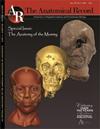
This month's Special Issue, “Human fossils from the Sima de los Huesos (Atapuerca, Spain): Forty Years of Discoveries and Research” has focused upon the material from that iconic site. The issue has been Guest Edited by Arsuaga, and co-guest edited by members of his internationally renowned Sima de los Huesos team: Ignacio Martínez of the Universidad de Alcalá, Cátedra de Otoacústica Evolutiva y Paleoantropología; Rolf Quam of the Centro UCM-ISCIII de Investigación sobre Evolución y Compotortamiento Humanos, Universidad de Alcalá Cátedra de Otoacústica Evolutiva y Paleoantropología, Binghamton University, and the American Museum of Natural History; José-Miguel Carretero of the Centro UCM-ISCIII de Investigación sobre Evolución y Comportamiento Humanos, Cátedra de Otoacústica Evolutiva y Paleoantropología, Universidad de Burgos Laboratorio de Evolución Humana and Unidad Asociada de I + D + i al CSIC Vidrio y Materiales del Patrimonio Cultural; and Carlos Lorenzo, of the Universitat Rovira I Virgili, Àrea de Prehistòria, department d'Història de l'Art; Institut Català de Paleoecologia Humana I Evolució Social. Together with scientists from around the globe, this team of Atapuerca excavators/scholars have documented the Sima de los Huesos material from teeth to toes, with accompanying analyses of the rich fauna, to sculpt an unmatched volume on this unique site. The end result is a paleoanthropological classic in scholarship that documents the history of the site, its centrality for comprehending the complexities of the European Pleistocene, and, indeed, its importance in understanding the path of human history itself.
In concert with this extraordinary documentation and assessment of the material from Sima de los Huesos in our journal, and in hearty celebration of the event and of the guest editors and entire Atapuerca team, The Anatomical Record in cooperation with the Universidad de Burgos, Universidad de Alcalá, and the 25th anniversary of the Fundación Atapuerca, will be sponsoring a unique symposium, “Forty Years of Excavation and Research in the Sima de los Huesos” in July of this year, 2024. At this landmark symposium, the authors of the issue will be presenting and discussing their work, alongside invited world leaders in paleoanthropology. In addition, homage will be given to several prominent researchers who will be retiring from excavation at the site. In all, a most special fiesta celebrating our ancestors and those that have brought them “back to life.”
There are moments in one's life that make indelible marks on our memories. These, differ, of course, for each of us. One that we have seen that affects everyone is the first time that they hold the remains of a fossil human ancestor. The awe-inspiring, sacred moment of reaching across the millennia to touch the body and spirit of our own origins is, in a word, transformative. We at The Anatomical Record are both proud and humbled to have the opportunity to offer at least a small moment of such contact through this novel Special Issue. We hope you, like us, will take a journey back in time by exploring the science and the history that speaks to us from our fossil past. Welcome to the wonders from Atapuerca.
西班牙一直被认为是人类历史上许多珍宝的诞生地。从格拉纳达无与伦比的宏伟的阿尔罕布拉宫,Córdoba的建筑奇迹历史,以及作为博学的摩西·本·迈蒙(迈蒙尼德)无与伦比的天才的住所,毕加索提供的激动人心的洞察力和可视化,高迪在巴塞罗那的圣家堂的天才,到马德里普拉多博物馆与世界分享的无数礼物,人类历史的脉搏和活力都被庄严地呈现出来。与这些恩赐相等的,如果不是超越的话,是那些从大地本身发掘出来的恩赐。来自我们过去的宝藏:在阿塔普尔卡发现的伟大化石。首先,为了充分披露,我们注意到,我们的杂志《解剖记录》对西班牙及其辉煌有着持久的热爱,并在我们的页面中占据了永久的位置。事实上,自2011年以来,我们的编辑委员会已经在西班牙召开了三次会议(2011年、2015年和2019年),比在其他任何国家都要多(JL会注意到,解剖记录委员会在此期间没有在纽约市(JL的家乡)召开过一次会议,但谁会抱怨呢!)。我们对西班牙一切事物的集体崇拜,可能部分源于我们的前任主编库尔特·艾伯丁(Kurt Albertine)对西班牙葡萄酒的欣赏(委婉地说),以及合著者JL对无处不在的西班牙餐前小吃的由衷欣赏。更有可能的是,这要归功于我们敬爱的西班牙副主编、马德里卡哈尔研究所的jos<s:1> - luis Trejo的影响,他对我们的董事会和期刊产生了深远的影响。事实上,我们之所以能够接触和欣赏西班牙科学和学术的活力,在很大程度上要归功于他的勤奋和精力,他为我们打开了如此丰富的宝库。例如,他的精力导致了我们杂志的一些特别和专题论文问题,突出了西班牙科学和西班牙科学家(例如,周围神经损伤和疾病的检查,Trejo, 2018, Laitman & Albertine, 2018;主要由西班牙神经科学家进行的关于脑神经新研究的研究,Trejo, 2019a, 2019b, Laitman & Albertine, 2019a, 2019b;深入探讨西班牙神经科学的非凡历史(De Carlos, 2020; Laitman & Albertine, 2020)。再次,在很大程度上要感谢jos<s:1> - luis,与古生物学家/古人类学家/考古学家/解剖学家组成的团队建立了联系,探索西班牙中北部,历史古城布尔戈斯附近的阿塔普尔卡山脉无与伦比的化石丰富的领域(图1)。对于JL和HFS来说,他们都是从古人类学的蛋里孵化出来的,这个领域的发现越来越大的影响在我们的职业生涯中是众所周知的。事实上,阿塔普尔卡山脉——由石灰岩形成的平顶背斜,其沉积物沉积于7000万至6500万年前(mya)——已经产生了一个非凡的、无与伦比的人类祖先化石记录,其历史可以追溯到120万年前,比任何其他欧洲遗址都要早。阿塔普埃尔卡地区——比如位于Trinchera del Ferrocarril(铁路海沟)的Sima del Elefante(坑、裂口、裂缝),2007年在那里发现了距今约1.2万年的下颌碎片和足趾骨;1994年,80多万年前的人类祖先在格兰多利纳被发现;而且,本期特刊的重点,西马德洛斯韦索斯(vide infra) -现在是那些寻求了解人类过去的人的崇敬之地。几十年来,被称为“阿塔普尔卡团队”的人一直在热情地(而且精力充沛地)探索和分析阿塔普尔卡的领域。这个神圣的三人组由马德里康普顿斯大学科学学院Geológicas的Juan-Luis Arsuaga和Comportamiento Humanos的Centro UCM-ISCIII de Investigación sobre Evolución组成,他指导了Sima de los Huesos的工作;来自塔拉戈纳大学的Eudald Carbonell监督了大部分考古材料,特别是来自Trenchina del Ferrocaril的;以及jos<s:1> María Bermúdez de Castro,他领导的团队在马德里国家自然科学博物馆分析了人类进化、考古学和哺乳动物古生物学方面的材料(参见本期Arsuaga et al.的详细历史概述;Arsuaga et al., 2024;参见Trejo, 2024,本期)。这个小组共同发掘和分析了使阿塔普尔卡成为人类史前史上最重要的地点之一的发现。它们对理解人类进化史的影响是独一无二的;的确,他们在人类史前史和研究史前史的人身上留下了不可磨灭的印记。 JL与化石的年龄比HS更接近,自20世纪80年代初以来,他就认识了该团队的成员,尤其是Arsuaga和Bermúdez de Castro,他们经常在国际论坛上互动(更准确地说,敬畏地坐着),在这些论坛上,他们的许多发现都得到了展示。本月的特刊《来自西班牙阿塔普尔卡的西马德洛斯韦索斯的人类化石:四十年的发现和研究》聚焦于这个标志性遗址的材料。本期由Arsuaga担任客座编辑,并由其国际知名的Sima de los Huesos团队成员共同担任客座编辑:alcalad大学的Ignacio Martínez, Cátedra de Otoacústica Evolutiva y Paleoantropología;UCM-ISCIII中心Investigación sobre Evolución y Compotortamiento Humanos,阿尔卡莱大学<e:1> Cátedra de Otoacústica Evolutiva y Paleoantropología,宾厄姆顿大学和美国自然历史博物馆的Rolf Quam;UCM-ISCIII中心的jos<s:1> -米格尔·卡雷特罗Investigación sobre Evolución y human Comportamiento, Cátedra de Otoacústica Evolutiva y Paleoantropología,布尔戈斯大学实验室Evolución human和Unidad associada de I + D + I CSIC Vidrio y materials del Patrimonio Cultural;卡洛斯·洛伦佐(Carlos Lorenzo),罗维拉大学(Universitat Rovira I Virgili), Àrea de Prehistòria,艺术系'Història;加泰罗尼亚人类古生态研究所Evolució社会。与来自世界各地的科学家一起,阿塔普尔卡的挖掘者/学者团队记录了从牙齿到脚趾的西马·德·洛斯·韦索斯的材料,并对丰富的动物群进行了分析,在这个独特的遗址上雕刻了一个无与伦比的体量。最终的结果是一个古人类学的学术经典,它记录了这个遗址的历史,它对理解欧洲更新世的复杂性至关重要,而且,它对理解人类历史本身的道路也很重要。为了配合我们杂志上对西马·德·洛斯·韦索斯的材料的非凡记录和评估,以及对这一事件、客座编辑和整个阿塔普埃尔卡团队的热烈庆祝,《解剖记录》与布尔gos大学、阿尔卡莱大学<e:1>合作,以及Fundación阿塔普埃尔卡25周年纪念,将于今年7月(2024年)赞助一场独特的研讨会,“西马·德·洛斯·韦索斯的四十年挖掘和研究”。在这个具有里程碑意义的研讨会上,这期杂志的作者将与受邀的古人类学界的世界领导人一起介绍和讨论他们的工作。此外,将向几位杰出的研究人员致敬,他们将从现场的挖掘中退休。总之,这是一个最特别的节日,庆祝我们的祖先和那些让他们“起死回生”的人。人的一生中总有一些时刻会在我们的记忆中留下不可磨灭的印记。当然,这些因人而异。我们所看到的影响到每个人的是他们第一次持有人类祖先的化石遗骸。这个令人敬畏、神圣的时刻跨越千年,触摸我们自己的起源的身体和精神,总而言之,是一种变革。我们在解剖记录既自豪又谦卑地有机会提供这样的接触至少一个小时刻通过这个新颖的特刊。我们希望你和我们一样,通过探索科学和历史,从化石的过去向我们说话,来一次时光倒流的旅行。欢迎来到阿塔普尔卡的奇观。




 京公网安备 11010802042870号
京ICP备2023020795号-1
京公网安备 11010802042870号
京ICP备2023020795号-1

 分享
分享
 求助内容:
求助内容: 应助结果提醒方式:
 扫码关注我们
