Corrado Pancotti, Cesare Rollo, Francesco Codicè, G. Birolo, Piero Fariselli, T. Sanavia
{"title":"MUSE-XAE: MUtational Signature Extraction with eXplainable AutoEncoder enhances tumour types classification.","authors":"Corrado Pancotti, Cesare Rollo, Francesco Codicè, G. Birolo, Piero Fariselli, T. Sanavia","doi":"10.1093/bioinformatics/btae320","DOIUrl":null,"url":null,"abstract":"MOTIVATION\nMutational signatures are a critical component in deciphering the genetic alterations that underlie cancer development and have become a valuable resource to understand the genomic changes during tumorigenesis. Therefore, it is essential to employ precise and accurate methods for their extraction to ensure that the underlying patterns are reliably identified and can be effectively utilized in new strategies for diagnosis, prognosis and treatment of cancer patients.\n\n\nRESULTS\nWe present MUSE-XAE, a novel method for mutational signature extraction from cancer genomes using an explainable autoencoder. Our approach employs a hybrid architecture consisting of a nonlinear encoder that can capture nonlinear interactions among features, and a linear decoder which ensures the interpretability of the active signatures. We evaluated and compared MUSE-XAE with other available tools on both synthetic and real cancer datasets and demonstrated that it achieves superior performance in terms of precision and sensitivity in recovering mutational signature profiles. MUSE-XAE extracts highly discriminative mutational signature profiles by enhancing the classification of primary tumour types and subtypes in real world settings. This approach could facilitate further research in this area, with neural networks playing a critical role in advancing our understanding of cancer genomics.\n\n\nAVAILABILITY\nMUSE-XAE software is freely available at https://github.com/compbiomed-unito/MUSE-XAE.\n\n\nSUPPLEMENTARY INFORMATION\nSupplementary data are available at Bioinformatics online.","PeriodicalId":4,"journal":{"name":"ACS Applied Energy Materials","volume":"28 12","pages":""},"PeriodicalIF":5.5000,"publicationDate":"2024-05-16","publicationTypes":"Journal Article","fieldsOfStudy":null,"isOpenAccess":false,"openAccessPdf":"","citationCount":"0","resultStr":null,"platform":"Semanticscholar","paperid":null,"PeriodicalName":"ACS Applied Energy Materials","FirstCategoryId":"99","ListUrlMain":"https://doi.org/10.1093/bioinformatics/btae320","RegionNum":3,"RegionCategory":"材料科学","ArticlePicture":[],"TitleCN":null,"AbstractTextCN":null,"PMCID":null,"EPubDate":"","PubModel":"","JCR":"Q2","JCRName":"CHEMISTRY, PHYSICAL","Score":null,"Total":0}
引用次数: 0
Abstract
MOTIVATION
Mutational signatures are a critical component in deciphering the genetic alterations that underlie cancer development and have become a valuable resource to understand the genomic changes during tumorigenesis. Therefore, it is essential to employ precise and accurate methods for their extraction to ensure that the underlying patterns are reliably identified and can be effectively utilized in new strategies for diagnosis, prognosis and treatment of cancer patients.
RESULTS
We present MUSE-XAE, a novel method for mutational signature extraction from cancer genomes using an explainable autoencoder. Our approach employs a hybrid architecture consisting of a nonlinear encoder that can capture nonlinear interactions among features, and a linear decoder which ensures the interpretability of the active signatures. We evaluated and compared MUSE-XAE with other available tools on both synthetic and real cancer datasets and demonstrated that it achieves superior performance in terms of precision and sensitivity in recovering mutational signature profiles. MUSE-XAE extracts highly discriminative mutational signature profiles by enhancing the classification of primary tumour types and subtypes in real world settings. This approach could facilitate further research in this area, with neural networks playing a critical role in advancing our understanding of cancer genomics.
AVAILABILITY
MUSE-XAE software is freely available at https://github.com/compbiomed-unito/MUSE-XAE.
SUPPLEMENTARY INFORMATION
Supplementary data are available at Bioinformatics online.
期刊介绍:
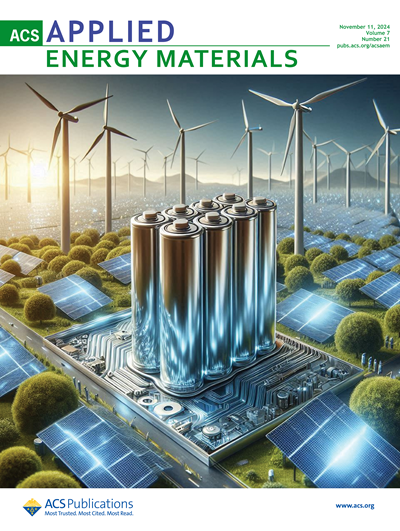
ACS Applied Energy Materials is an interdisciplinary journal publishing original research covering all aspects of materials, engineering, chemistry, physics and biology relevant to energy conversion and storage. The journal is devoted to reports of new and original experimental and theoretical research of an applied nature that integrate knowledge in the areas of materials, engineering, physics, bioscience, and chemistry into important energy applications.



 京公网安备 11010802042870号
京ICP备2023020795号-1
京公网安备 11010802042870号
京ICP备2023020795号-1

 分享
分享
 求助内容:
求助内容: 应助结果提醒方式:
 扫码关注我们
