{"title":"Hidden Barriers to Marketplace Disability Accessibility: An Empirical Analysis of the Role of Perceived Trade-Offs","authors":"Lauren Grewal, Helen Van Der Sluis","doi":"10.1093/jcr/ucad051","DOIUrl":null,"url":null,"abstract":"\n Disability is a basic human condition that affects a significant proportion of the world’s population, yet many disability- and accessibility-relevant issues remain pressing and insufficiently addressed. With three experiments, the current research investigates potential reasons for why marketplace disability accessibility has not been universally accepted. Potential barriers to greater accessibility in marketplaces may arise because such efforts appear at odds with other salient priorities, at micro (i.e., consumer) and macro (i.e., firm, policy, or societal) levels. In the proposed framework and resulting experiments, micro-level trade-offs prompt perceptions of personal cost and macro-level trade-offs prompt perceptions of firm morality. In turn, these perceptions mediate firm evaluations, showing that consumers at baseline respond negatively to accessibility. Critically, however, several practical interventions emerge from these processes. Marketers can mitigate consumers’ negative responses to accessibility by employing simple framing choices such as emphasizing who benefits or noting what the purpose of the offering is. By demonstrating one way to better understand perceptions of the full spectrum of the consumer population, this research provides pathways for consumer researchers to further delve into disability-related research in the future.","PeriodicalId":5,"journal":{"name":"ACS Applied Materials & Interfaces","volume":"15 7","pages":""},"PeriodicalIF":8.2000,"publicationDate":"2024-05-15","publicationTypes":"Journal Article","fieldsOfStudy":null,"isOpenAccess":false,"openAccessPdf":"","citationCount":"2","resultStr":null,"platform":"Semanticscholar","paperid":null,"PeriodicalName":"ACS Applied Materials & Interfaces","FirstCategoryId":"91","ListUrlMain":"https://doi.org/10.1093/jcr/ucad051","RegionNum":2,"RegionCategory":"材料科学","ArticlePicture":[],"TitleCN":null,"AbstractTextCN":null,"PMCID":null,"EPubDate":"","PubModel":"","JCR":"Q1","JCRName":"MATERIALS SCIENCE, MULTIDISCIPLINARY","Score":null,"Total":0}
引用次数: 2
Abstract
Disability is a basic human condition that affects a significant proportion of the world’s population, yet many disability- and accessibility-relevant issues remain pressing and insufficiently addressed. With three experiments, the current research investigates potential reasons for why marketplace disability accessibility has not been universally accepted. Potential barriers to greater accessibility in marketplaces may arise because such efforts appear at odds with other salient priorities, at micro (i.e., consumer) and macro (i.e., firm, policy, or societal) levels. In the proposed framework and resulting experiments, micro-level trade-offs prompt perceptions of personal cost and macro-level trade-offs prompt perceptions of firm morality. In turn, these perceptions mediate firm evaluations, showing that consumers at baseline respond negatively to accessibility. Critically, however, several practical interventions emerge from these processes. Marketers can mitigate consumers’ negative responses to accessibility by employing simple framing choices such as emphasizing who benefits or noting what the purpose of the offering is. By demonstrating one way to better understand perceptions of the full spectrum of the consumer population, this research provides pathways for consumer researchers to further delve into disability-related research in the future.
期刊介绍:
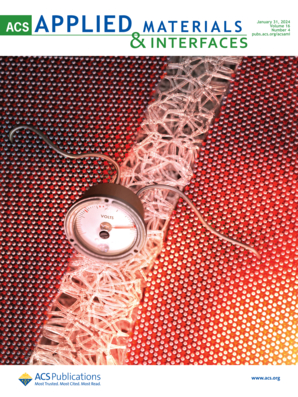
ACS Applied Materials & Interfaces is a leading interdisciplinary journal that brings together chemists, engineers, physicists, and biologists to explore the development and utilization of newly-discovered materials and interfacial processes for specific applications. Our journal has experienced remarkable growth since its establishment in 2009, both in terms of the number of articles published and the impact of the research showcased. We are proud to foster a truly global community, with the majority of published articles originating from outside the United States, reflecting the rapid growth of applied research worldwide.




 京公网安备 11010802042870号
京ICP备2023020795号-1
京公网安备 11010802042870号
京ICP备2023020795号-1

 分享
分享
 求助内容:
求助内容: 应助结果提醒方式:
 扫码关注我们
