{"title":"Rice Straw Derived Mesoporous Biochar for the Removal of Coomassie Brilliant Blue Dye","authors":"Jagpreet Singh, Monika Bhattu, Meenakshi Verma","doi":"10.1007/s11244-024-01961-5","DOIUrl":null,"url":null,"abstract":"<div><p>Agricultural waste management and water remediation present substantial environmental challenges in the modern era. The discharge of dyes from industries into water sources leads to various carcinogenic, mutagenic, and genotoxic effects to aquatic and living organisms. To address this issue, removal of dye from the aqueous solution can be efficiently performed using different kinds of adsorbents. The present study explores mesoporous biochar (BC) derived from rice straw as an adsorbent for the removal of Coomassie Brilliant Blue (CBB) from aqueous solutions. The structural characteristics were analysed using thermogravimetric analysis, brunauer-emmett-teller (BET) analysis, scanning electron spectroscopy (SEM), energy-dispersive X-ray spectroscopy (EDX), and fourier transform infrared spectroscopy (FTIR) which indicates the mesoporous structure of prepared biochar with pore size varies from 20 to 50 nm, and enhanced surface area. XRD analysis showed the amorphous nature with graphitic carbon. The prepared BC leads to 80% removal of CBB at an adsorbent dose of 10 mg with 20 mg/L of CBB dye at ambient conditions. The isotherm and kinetic studies suggested that the Langmuir adsorption isotherm and pseudo-first-order kinetics are well-fitted for the removal of CBB. Overall, the results suggest the rice straw-mediated BC as an potential greener biosorbent with high adsorption efficacy for CBB dye sequestration from water.</p></div>","PeriodicalId":801,"journal":{"name":"Topics in Catalysis","volume":"68 5-8","pages":"573 - 582"},"PeriodicalIF":3.0000,"publicationDate":"2024-05-14","publicationTypes":"Journal Article","fieldsOfStudy":null,"isOpenAccess":false,"openAccessPdf":"","citationCount":"0","resultStr":null,"platform":"Semanticscholar","paperid":null,"PeriodicalName":"Topics in Catalysis","FirstCategoryId":"92","ListUrlMain":"https://link.springer.com/article/10.1007/s11244-024-01961-5","RegionNum":3,"RegionCategory":"化学","ArticlePicture":[],"TitleCN":null,"AbstractTextCN":null,"PMCID":null,"EPubDate":"","PubModel":"","JCR":"Q2","JCRName":"CHEMISTRY, APPLIED","Score":null,"Total":0}
引用次数: 0
Abstract
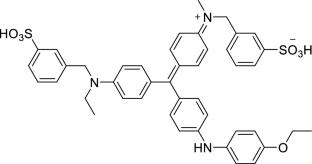
Agricultural waste management and water remediation present substantial environmental challenges in the modern era. The discharge of dyes from industries into water sources leads to various carcinogenic, mutagenic, and genotoxic effects to aquatic and living organisms. To address this issue, removal of dye from the aqueous solution can be efficiently performed using different kinds of adsorbents. The present study explores mesoporous biochar (BC) derived from rice straw as an adsorbent for the removal of Coomassie Brilliant Blue (CBB) from aqueous solutions. The structural characteristics were analysed using thermogravimetric analysis, brunauer-emmett-teller (BET) analysis, scanning electron spectroscopy (SEM), energy-dispersive X-ray spectroscopy (EDX), and fourier transform infrared spectroscopy (FTIR) which indicates the mesoporous structure of prepared biochar with pore size varies from 20 to 50 nm, and enhanced surface area. XRD analysis showed the amorphous nature with graphitic carbon. The prepared BC leads to 80% removal of CBB at an adsorbent dose of 10 mg with 20 mg/L of CBB dye at ambient conditions. The isotherm and kinetic studies suggested that the Langmuir adsorption isotherm and pseudo-first-order kinetics are well-fitted for the removal of CBB. Overall, the results suggest the rice straw-mediated BC as an potential greener biosorbent with high adsorption efficacy for CBB dye sequestration from water.
期刊介绍:
Topics in Catalysis publishes topical collections in all fields of catalysis which are composed only of invited articles from leading authors. The journal documents today’s emerging and critical trends in all branches of catalysis. Each themed issue is organized by renowned Guest Editors in collaboration with the Editors-in-Chief. Proposals for new topics are welcome and should be submitted directly to the Editors-in-Chief.
The publication of individual uninvited original research articles can be sent to our sister journal Catalysis Letters. This journal aims for rapid publication of high-impact original research articles in all fields of both applied and theoretical catalysis, including heterogeneous, homogeneous and biocatalysis.



 京公网安备 11010802042870号
京ICP备2023020795号-1
京公网安备 11010802042870号
京ICP备2023020795号-1

 分享
分享
 求助内容:
求助内容: 应助结果提醒方式:
 扫码关注我们
