{"title":"AI dogs vs. real dogs and human-like robots: clarification, conceptualization, and applications in tourism and hospitality settings","authors":"Yue (Darcy) Lu, Yifeng Liang, Yao-Chin Wang","doi":"10.1108/jhtt-12-2023-0416","DOIUrl":null,"url":null,"abstract":"Purpose\nThis study aims to conceptualize the characteristics of artificial intelligence (AI) dogs while exploring their applications in tourism and hospitality settings.\n\nDesign/methodology/approach\nThe total of 30 in-depth interviews were conducted, and data were analyzed through thematic analysis.\n\nFindings\nThis study proposed differences between AI dogs and real dogs and human-like robots, core characteristics of AI dogs’ functions, a matrix of appearance and expectation regarding intelligence for AI dogs and human-like robots, the relationship between ethical barriers and task complexity, adoptions of AI dogs in different user segments and practical applications in hospitality and tourism settings, such as restaurants, city tour guides, extended-stay resorts and event organizations.\n\nResearch limitations/implications\nThis research advances the field of tourism and hospitality studies by introducing the new concept of AI dogs and their practical applications. This present study adds new insights into the opportunities and contexts of human–robot interaction in the field of tourism and hospitality.\n\nOriginality/value\nTo the best of the authors’ knowledge, this research is one of the first studies of AI dogs in tourism and hospitality.\n","PeriodicalId":5,"journal":{"name":"ACS Applied Materials & Interfaces","volume":"15 2","pages":""},"PeriodicalIF":8.2000,"publicationDate":"2024-05-06","publicationTypes":"Journal Article","fieldsOfStudy":null,"isOpenAccess":false,"openAccessPdf":"","citationCount":"0","resultStr":null,"platform":"Semanticscholar","paperid":null,"PeriodicalName":"ACS Applied Materials & Interfaces","FirstCategoryId":"91","ListUrlMain":"https://doi.org/10.1108/jhtt-12-2023-0416","RegionNum":2,"RegionCategory":"材料科学","ArticlePicture":[],"TitleCN":null,"AbstractTextCN":null,"PMCID":null,"EPubDate":"","PubModel":"","JCR":"Q1","JCRName":"MATERIALS SCIENCE, MULTIDISCIPLINARY","Score":null,"Total":0}
引用次数: 0
Abstract
Purpose
This study aims to conceptualize the characteristics of artificial intelligence (AI) dogs while exploring their applications in tourism and hospitality settings.
Design/methodology/approach
The total of 30 in-depth interviews were conducted, and data were analyzed through thematic analysis.
Findings
This study proposed differences between AI dogs and real dogs and human-like robots, core characteristics of AI dogs’ functions, a matrix of appearance and expectation regarding intelligence for AI dogs and human-like robots, the relationship between ethical barriers and task complexity, adoptions of AI dogs in different user segments and practical applications in hospitality and tourism settings, such as restaurants, city tour guides, extended-stay resorts and event organizations.
Research limitations/implications
This research advances the field of tourism and hospitality studies by introducing the new concept of AI dogs and their practical applications. This present study adds new insights into the opportunities and contexts of human–robot interaction in the field of tourism and hospitality.
Originality/value
To the best of the authors’ knowledge, this research is one of the first studies of AI dogs in tourism and hospitality.
期刊介绍:
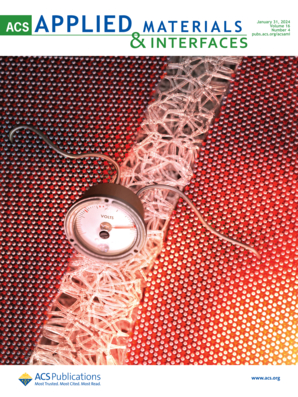
ACS Applied Materials & Interfaces is a leading interdisciplinary journal that brings together chemists, engineers, physicists, and biologists to explore the development and utilization of newly-discovered materials and interfacial processes for specific applications. Our journal has experienced remarkable growth since its establishment in 2009, both in terms of the number of articles published and the impact of the research showcased. We are proud to foster a truly global community, with the majority of published articles originating from outside the United States, reflecting the rapid growth of applied research worldwide.



 京公网安备 11010802042870号
京ICP备2023020795号-1
京公网安备 11010802042870号
京ICP备2023020795号-1

 分享
分享
 求助内容:
求助内容: 应助结果提醒方式:
 扫码关注我们
