{"title":"Bioremediation of heavy metals-contaminated sites by microbial extracellular polymeric substances – A critical view","authors":"","doi":"10.1016/j.enceco.2024.05.002","DOIUrl":null,"url":null,"abstract":"<div><p>Heavy metal (HM) contamination in the atmosphere poses substantial threats to ecosystems. Traditional methods for the removal of HM-contaminated sites, such as physical and chemical treatments, often have limitations in terms of efficiency, cost, and potential negative impacts on the environment. As a result, there is growing interest in exploring alternative and sustainable approaches, such as bioremediation. Bioremediation is a promising technology that utilizes the inherent abilities of microorganisms to degrade or transform pollutants into less harmful forms. Microbial exopolysaccharides have gained attention as potential tools in bioremediation strategies due to their unique physicochemical properties and their ability to interact with heavy metals. This work aims to provide an overview of the role of microbial extracellular polymeric substances (EPS) in the bioremediation of HM-contaminated sites. First, the mechanisms by which EPS facilitates heavy metal sequestration are discussed. EPS can form metal-complexing agents, such as chelators and ion-binding sites, which enhance the immobilization and precipitation of heavy metals, reducing their bioavailability and toxicity. EPS can act as a protective barrier, shielding microorganisms from heavy metal stress and facilitating their survival and growth. Additionally, EPS production can be induced or enhanced in response to heavy metal exposure, potentially increasing the efficiency of bioremediation processes.</p></div>","PeriodicalId":100480,"journal":{"name":"Environmental Chemistry and Ecotoxicology","volume":"6 ","pages":"Pages 408-421"},"PeriodicalIF":8.2000,"publicationDate":"2024-01-01","publicationTypes":"Journal Article","fieldsOfStudy":null,"isOpenAccess":false,"openAccessPdf":"https://www.sciencedirect.com/science/article/pii/S2590182624000109/pdfft?md5=9d5d88902dbb019e7b28df3b0368be7c&pid=1-s2.0-S2590182624000109-main.pdf","citationCount":"0","resultStr":null,"platform":"Semanticscholar","paperid":null,"PeriodicalName":"Environmental Chemistry and Ecotoxicology","FirstCategoryId":"1085","ListUrlMain":"https://www.sciencedirect.com/science/article/pii/S2590182624000109","RegionNum":0,"RegionCategory":null,"ArticlePicture":[],"TitleCN":null,"AbstractTextCN":null,"PMCID":null,"EPubDate":"2024/5/12 0:00:00","PubModel":"Epub","JCR":"Q1","JCRName":"ENVIRONMENTAL SCIENCES","Score":null,"Total":0}
引用次数: 0
Abstract
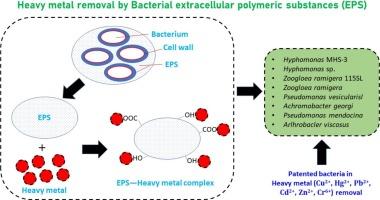
Heavy metal (HM) contamination in the atmosphere poses substantial threats to ecosystems. Traditional methods for the removal of HM-contaminated sites, such as physical and chemical treatments, often have limitations in terms of efficiency, cost, and potential negative impacts on the environment. As a result, there is growing interest in exploring alternative and sustainable approaches, such as bioremediation. Bioremediation is a promising technology that utilizes the inherent abilities of microorganisms to degrade or transform pollutants into less harmful forms. Microbial exopolysaccharides have gained attention as potential tools in bioremediation strategies due to their unique physicochemical properties and their ability to interact with heavy metals. This work aims to provide an overview of the role of microbial extracellular polymeric substances (EPS) in the bioremediation of HM-contaminated sites. First, the mechanisms by which EPS facilitates heavy metal sequestration are discussed. EPS can form metal-complexing agents, such as chelators and ion-binding sites, which enhance the immobilization and precipitation of heavy metals, reducing their bioavailability and toxicity. EPS can act as a protective barrier, shielding microorganisms from heavy metal stress and facilitating their survival and growth. Additionally, EPS production can be induced or enhanced in response to heavy metal exposure, potentially increasing the efficiency of bioremediation processes.



 京公网安备 11010802042870号
京ICP备2023020795号-1
京公网安备 11010802042870号
京ICP备2023020795号-1

 分享
分享

 求助内容:
求助内容: 应助结果提醒方式:
 扫码关注我们
