{"title":"Metal–Organic Framework (MOF)-Derived SnO2-ZnO Nanocomposites for Highly Sensitive NO2 Detection","authors":"Shrihari Kannan, Gaurav Pandey, Shiv Dutta Lawaniya, Sanjay Kumar, Prashant Sharma, Kamlendra Awasthi","doi":"10.1007/s11664-024-11161-2","DOIUrl":null,"url":null,"abstract":"<div><p>The presence of nitrogen dioxide (NO<sub>2</sub>), a hazardous gas emanating from various sources including vehicles, industrial power plants, indoor combustion appliances, and tobacco smoke, underscores the importance of effective monitoring. Early risk assessment and continuous vigilance are vital to mitigate potential respiratory and cardiovascular consequences associated with prolonged exposure. To address this need, we have developed a cost-effective metal–organic framework (MOF)-derived SnO<sub>2</sub>-ZnO-based gas sensor for NO<sub>2</sub> detection. Different combinations of SnO<sub>2</sub>-ZnO were synthesized by varying the Sn/Zn molar ratio. The sensor SZ 1–0.5, having Sn/Zn = 1/0.5, demonstrated a superior response (<i>R</i><sub>g</sub>/<i>R</i><sub>a</sub><i> = </i>7.37) compared to bare SnO<sub>2</sub> and ZnO towards 100 ppm of NO<sub>2</sub> at 225°C. The fabricated SZ 1–0.5 sensor showed a good response time of 100 s with outstanding selectivity, cyclability, and repeatability. The enhanced gas-sensing characteristics of the sensor are attributed to the formation of heterojunctions. The gas-sensing mechanism is discussed in detail.</p></div>","PeriodicalId":626,"journal":{"name":"Journal of Electronic Materials","volume":"53 9","pages":"5092 - 5102"},"PeriodicalIF":2.5000,"publicationDate":"2024-05-23","publicationTypes":"Journal Article","fieldsOfStudy":null,"isOpenAccess":false,"openAccessPdf":"","citationCount":"0","resultStr":null,"platform":"Semanticscholar","paperid":null,"PeriodicalName":"Journal of Electronic Materials","FirstCategoryId":"5","ListUrlMain":"https://link.springer.com/article/10.1007/s11664-024-11161-2","RegionNum":4,"RegionCategory":"工程技术","ArticlePicture":[],"TitleCN":null,"AbstractTextCN":null,"PMCID":null,"EPubDate":"","PubModel":"","JCR":"Q3","JCRName":"ENGINEERING, ELECTRICAL & ELECTRONIC","Score":null,"Total":0}
引用次数: 0
Abstract
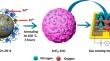
The presence of nitrogen dioxide (NO2), a hazardous gas emanating from various sources including vehicles, industrial power plants, indoor combustion appliances, and tobacco smoke, underscores the importance of effective monitoring. Early risk assessment and continuous vigilance are vital to mitigate potential respiratory and cardiovascular consequences associated with prolonged exposure. To address this need, we have developed a cost-effective metal–organic framework (MOF)-derived SnO2-ZnO-based gas sensor for NO2 detection. Different combinations of SnO2-ZnO were synthesized by varying the Sn/Zn molar ratio. The sensor SZ 1–0.5, having Sn/Zn = 1/0.5, demonstrated a superior response (Rg/Ra = 7.37) compared to bare SnO2 and ZnO towards 100 ppm of NO2 at 225°C. The fabricated SZ 1–0.5 sensor showed a good response time of 100 s with outstanding selectivity, cyclability, and repeatability. The enhanced gas-sensing characteristics of the sensor are attributed to the formation of heterojunctions. The gas-sensing mechanism is discussed in detail.
期刊介绍:
The Journal of Electronic Materials (JEM) reports monthly on the science and technology of electronic materials, while examining new applications for semiconductors, magnetic alloys, dielectrics, nanoscale materials, and photonic materials. The journal welcomes articles on methods for preparing and evaluating the chemical, physical, electronic, and optical properties of these materials. Specific areas of interest are materials for state-of-the-art transistors, nanotechnology, electronic packaging, detectors, emitters, metallization, superconductivity, and energy applications.
Review papers on current topics enable individuals in the field of electronics to keep abreast of activities in areas peripheral to their own. JEM also selects papers from conferences such as the Electronic Materials Conference, the U.S. Workshop on the Physics and Chemistry of II-VI Materials, and the International Conference on Thermoelectrics. It benefits both specialists and non-specialists in the electronic materials field.
A journal of The Minerals, Metals & Materials Society.



 京公网安备 11010802042870号
京ICP备2023020795号-1
京公网安备 11010802042870号
京ICP备2023020795号-1

 分享
分享
 求助内容:
求助内容: 应助结果提醒方式:
 扫码关注我们
