{"title":"High Quality Au-carbon Nitride Catalyst for Monitoring of Anti-prostate Cancer Drug (Flutamide)","authors":"Xiao Fan, Wen Liu, Li Feng","doi":"10.1007/s11244-024-01973-1","DOIUrl":null,"url":null,"abstract":"<div><p>Determination of anti-cancer drug in bio-fluids is an important task for human health care and clinical diagnosis. In this study, we developed a new voltammetric sensor using a nanocatalyst of gold nanoparticles decorated on carbon nitride (GNPs@CN). This electrochemical sensing device was employed for measuring of non-steroidal anti-inflammatory drug flutamide (FLT). Various charactrization and electro-catalytic methods were employed to investigate the morphological, crystal structural, chemical components, and catalytic properties of GNPs@CN composite material. The combination of CN nanosheets and GNPs facilitated the electron transfer at the interface sensing layer. The established sensor demonstrated a linear response to FLT concentrations ranging from 0.075 µM to 100 µM and excellent detection limit of 50 nM (based on the 3σ<sub>b</sub> method). Furthermore, the proposed sensing platform depicts good selectivity, acceptable reproducibility, and high operational stability for electro-catalytic detection of FLT levels in real biological samples. The capability for real-time applications of the prepared sensor was also validated with an outstanding recovery rate (more than 97%) and good relative standard deviation (RSD) values (less than 3%) human fluids. This approach presents numerous benefits, such as ease of use, cost-effectiveness and rapid analysis for FLT monitoring in human body fluids.</p></div>","PeriodicalId":801,"journal":{"name":"Topics in Catalysis","volume":"68 5-8","pages":"583 - 590"},"PeriodicalIF":3.0000,"publicationDate":"2024-05-23","publicationTypes":"Journal Article","fieldsOfStudy":null,"isOpenAccess":false,"openAccessPdf":"","citationCount":"0","resultStr":null,"platform":"Semanticscholar","paperid":null,"PeriodicalName":"Topics in Catalysis","FirstCategoryId":"92","ListUrlMain":"https://link.springer.com/article/10.1007/s11244-024-01973-1","RegionNum":3,"RegionCategory":"化学","ArticlePicture":[],"TitleCN":null,"AbstractTextCN":null,"PMCID":null,"EPubDate":"","PubModel":"","JCR":"Q2","JCRName":"CHEMISTRY, APPLIED","Score":null,"Total":0}
引用次数: 0
Abstract
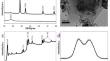
Determination of anti-cancer drug in bio-fluids is an important task for human health care and clinical diagnosis. In this study, we developed a new voltammetric sensor using a nanocatalyst of gold nanoparticles decorated on carbon nitride (GNPs@CN). This electrochemical sensing device was employed for measuring of non-steroidal anti-inflammatory drug flutamide (FLT). Various charactrization and electro-catalytic methods were employed to investigate the morphological, crystal structural, chemical components, and catalytic properties of GNPs@CN composite material. The combination of CN nanosheets and GNPs facilitated the electron transfer at the interface sensing layer. The established sensor demonstrated a linear response to FLT concentrations ranging from 0.075 µM to 100 µM and excellent detection limit of 50 nM (based on the 3σb method). Furthermore, the proposed sensing platform depicts good selectivity, acceptable reproducibility, and high operational stability for electro-catalytic detection of FLT levels in real biological samples. The capability for real-time applications of the prepared sensor was also validated with an outstanding recovery rate (more than 97%) and good relative standard deviation (RSD) values (less than 3%) human fluids. This approach presents numerous benefits, such as ease of use, cost-effectiveness and rapid analysis for FLT monitoring in human body fluids.
期刊介绍:
Topics in Catalysis publishes topical collections in all fields of catalysis which are composed only of invited articles from leading authors. The journal documents today’s emerging and critical trends in all branches of catalysis. Each themed issue is organized by renowned Guest Editors in collaboration with the Editors-in-Chief. Proposals for new topics are welcome and should be submitted directly to the Editors-in-Chief.
The publication of individual uninvited original research articles can be sent to our sister journal Catalysis Letters. This journal aims for rapid publication of high-impact original research articles in all fields of both applied and theoretical catalysis, including heterogeneous, homogeneous and biocatalysis.



 京公网安备 11010802042870号
京ICP备2023020795号-1
京公网安备 11010802042870号
京ICP备2023020795号-1

 分享
分享
 求助内容:
求助内容: 应助结果提醒方式:
 扫码关注我们
