Pranshu Adhikari, Emily M. Gordon, Khiloni A. Shah, Paul W. Eslinger, Harry S. Miley, Theodore W. Bowyer, Derek A. Haas
{"title":"Quantifying the Potential of Argon Detection Capabilities for Nuclear Explosion Monitoring","authors":"Pranshu Adhikari, Emily M. Gordon, Khiloni A. Shah, Paul W. Eslinger, Harry S. Miley, Theodore W. Bowyer, Derek A. Haas","doi":"10.1007/s00024-024-03489-x","DOIUrl":null,"url":null,"abstract":"<div><p>Current noble gas detection systems for nuclear explosion monitoring are based on the detection of four radioxenon isotopes—Xe-131m, -133, -133m and -135. The data provided by radioxenon detection could be enhanced by other radionuclide signatures such as Ar-37. Activation of Ca-40 in rock by neutrons produces Ar-37, and monitoring for this additional nuclide could help distinguish detections of nuclear explosions from background sources, such as medical isotope production. This work studies the capabilities of a hypothetical argon detection network. A 10 kt explosion was modeled using MCNP and SCALE to determine the inventory of Ar-37 created in a representative granite rock layer, assuming either 0.1, 1 or 10% of the total inventory was released. The Ar-37 inventory was combined with atmospheric transport data from HYSPLIT compiled in a previous study, along with the detection limits of standard Ar-37 detection systems, to determine how many hypothetical monitoring stations would detect Ar-37 from an explosion. This method was repeated for 365 HYSPLIT data sets to create a year’s worth of hypothetical explosions, releases, and detections. The study quantified the average number of detections per release, the number of stations detecting Ar-37, and the possibility of detecting Ar-37 in coincidence with xenon.</p></div>","PeriodicalId":21078,"journal":{"name":"pure and applied geophysics","volume":"182 :","pages":"5129 - 5136"},"PeriodicalIF":1.9000,"publicationDate":"2024-05-22","publicationTypes":"Journal Article","fieldsOfStudy":null,"isOpenAccess":false,"openAccessPdf":"https://link.springer.com/content/pdf/10.1007/s00024-024-03489-x.pdf","citationCount":"0","resultStr":null,"platform":"Semanticscholar","paperid":null,"PeriodicalName":"pure and applied geophysics","FirstCategoryId":"89","ListUrlMain":"https://link.springer.com/article/10.1007/s00024-024-03489-x","RegionNum":4,"RegionCategory":"地球科学","ArticlePicture":[],"TitleCN":null,"AbstractTextCN":null,"PMCID":null,"EPubDate":"","PubModel":"","JCR":"Q2","JCRName":"GEOCHEMISTRY & GEOPHYSICS","Score":null,"Total":0}
引用次数: 0
Abstract
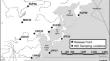
Current noble gas detection systems for nuclear explosion monitoring are based on the detection of four radioxenon isotopes—Xe-131m, -133, -133m and -135. The data provided by radioxenon detection could be enhanced by other radionuclide signatures such as Ar-37. Activation of Ca-40 in rock by neutrons produces Ar-37, and monitoring for this additional nuclide could help distinguish detections of nuclear explosions from background sources, such as medical isotope production. This work studies the capabilities of a hypothetical argon detection network. A 10 kt explosion was modeled using MCNP and SCALE to determine the inventory of Ar-37 created in a representative granite rock layer, assuming either 0.1, 1 or 10% of the total inventory was released. The Ar-37 inventory was combined with atmospheric transport data from HYSPLIT compiled in a previous study, along with the detection limits of standard Ar-37 detection systems, to determine how many hypothetical monitoring stations would detect Ar-37 from an explosion. This method was repeated for 365 HYSPLIT data sets to create a year’s worth of hypothetical explosions, releases, and detections. The study quantified the average number of detections per release, the number of stations detecting Ar-37, and the possibility of detecting Ar-37 in coincidence with xenon.
期刊介绍:
pure and applied geophysics (pageoph), a continuation of the journal "Geofisica pura e applicata", publishes original scientific contributions in the fields of solid Earth, atmospheric and oceanic sciences. Regular and special issues feature thought-provoking reports on active areas of current research and state-of-the-art surveys.
Long running journal, founded in 1939 as Geofisica pura e applicata
Publishes peer-reviewed original scientific contributions and state-of-the-art surveys in solid earth and atmospheric sciences
Features thought-provoking reports on active areas of current research and is a major source for publications on tsunami research
Coverage extends to research topics in oceanic sciences
See Instructions for Authors on the right hand side.



 京公网安备 11010802042870号
京ICP备2023020795号-1
京公网安备 11010802042870号
京ICP备2023020795号-1

 分享
分享
 求助内容:
求助内容: 应助结果提醒方式:
 扫码关注我们
