Gege Zhao, Zhehai Jin, Xinya Zhang, Chengcheng Li, Xing Su, Qiuju Geng, Yaping Zhao
{"title":"Highly Conductive Para-Aramid Fabric Prepared Via Bioinspired Poly(dopamine) Functionalization After an Improved Etching Process","authors":"Gege Zhao, Zhehai Jin, Xinya Zhang, Chengcheng Li, Xing Su, Qiuju Geng, Yaping Zhao","doi":"10.1007/s12221-024-00581-w","DOIUrl":null,"url":null,"abstract":"<div><p>The formation of a metallic layer on fiber substrates has aroused great interest in recent years due to the application of metal-deposited fiber composite materials in many fields, such as microelectronics, aerospace, and military materials. To achieve sustained high conductivity throughout the entire service life of conductive fibers, it is an essential step to modify the surface of substrates to improve the adhesion between the fiber substrate and the conductive structure. Herein, a practical and feasible two-step approach consisting of mixed solution etching and dopamine self-polymerization was proposed to enhance electroless silver deposition on para-aramid fabrics. The hydrophilicity, surface morphology, infrared spectroscopy, and tensile strength of the fibers after etching in different solutions were compared. The modification conditions of etched fibers with polydopamine before electroless silver deposition were explored by comparing the square resistance and washing resistance of the conductive fabrics. With the assistance of the metal-binding ability of polydopamine, a homogeneous and compact silver layer was obtained on para-aramid fabrics by palladium-free activation electroless plating. The composite fabrics exhibited a low electrical resistivity of 0.052 Ω/sq and satisfactory resistance stability under high/low-temperature, ice, and flame environments, as well as in acids, alkalis, and organic solutions.</p></div>","PeriodicalId":557,"journal":{"name":"Fibers and Polymers","volume":"25 6","pages":"2107 - 2116"},"PeriodicalIF":2.3000,"publicationDate":"2024-05-21","publicationTypes":"Journal Article","fieldsOfStudy":null,"isOpenAccess":false,"openAccessPdf":"","citationCount":"0","resultStr":null,"platform":"Semanticscholar","paperid":null,"PeriodicalName":"Fibers and Polymers","FirstCategoryId":"88","ListUrlMain":"https://link.springer.com/article/10.1007/s12221-024-00581-w","RegionNum":4,"RegionCategory":"工程技术","ArticlePicture":[],"TitleCN":null,"AbstractTextCN":null,"PMCID":null,"EPubDate":"","PubModel":"","JCR":"Q1","JCRName":"MATERIALS SCIENCE, TEXTILES","Score":null,"Total":0}
引用次数: 0
Abstract
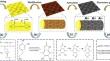
The formation of a metallic layer on fiber substrates has aroused great interest in recent years due to the application of metal-deposited fiber composite materials in many fields, such as microelectronics, aerospace, and military materials. To achieve sustained high conductivity throughout the entire service life of conductive fibers, it is an essential step to modify the surface of substrates to improve the adhesion between the fiber substrate and the conductive structure. Herein, a practical and feasible two-step approach consisting of mixed solution etching and dopamine self-polymerization was proposed to enhance electroless silver deposition on para-aramid fabrics. The hydrophilicity, surface morphology, infrared spectroscopy, and tensile strength of the fibers after etching in different solutions were compared. The modification conditions of etched fibers with polydopamine before electroless silver deposition were explored by comparing the square resistance and washing resistance of the conductive fabrics. With the assistance of the metal-binding ability of polydopamine, a homogeneous and compact silver layer was obtained on para-aramid fabrics by palladium-free activation electroless plating. The composite fabrics exhibited a low electrical resistivity of 0.052 Ω/sq and satisfactory resistance stability under high/low-temperature, ice, and flame environments, as well as in acids, alkalis, and organic solutions.
期刊介绍:
-Chemistry of Fiber Materials, Polymer Reactions and Synthesis-
Physical Properties of Fibers, Polymer Blends and Composites-
Fiber Spinning and Textile Processing, Polymer Physics, Morphology-
Colorants and Dyeing, Polymer Analysis and Characterization-
Chemical Aftertreatment of Textiles, Polymer Processing and Rheology-
Textile and Apparel Science, Functional Polymers



 京公网安备 11010802042870号
京ICP备2023020795号-1
京公网安备 11010802042870号
京ICP备2023020795号-1

 分享
分享
 求助内容:
求助内容: 应助结果提醒方式:
 扫码关注我们
