{"title":"Par2-mediated responses in inflammation and regeneration: choosing between repair and damage.","authors":"Gal Reches, Ron Piran","doi":"10.1186/s41232-024-00338-1","DOIUrl":null,"url":null,"abstract":"<p><p>The protease activated receptor 2 (Par2) plays a pivotal role in various damage models, influencing injury, proliferation, inflammation, and regeneration. Despite extensive studies, its binary roles- EITHER aggravating injury or promoting recovery-make a conclusive translational decision on its modulation strategy elusive. Analyzing two liver regeneration models, autoimmune hepatitis and direct hepatic damage, we discovered Par2's outcome depends on the injury's nature. In immune-mediated injury, Par2 exacerbates damage, while in direct tissue injury, it promotes regeneration. Subsequently, we evaluated the clinical significance of this finding by investigating Par2's expression in the context of autoimmune diabetes. We found that the absence of Par2 in all lymphocytes provided full protection against the autoimmune destruction of insulin-producing β-cells in mice, whereas the introduction of a β-cell-specific Par2 null mutation accelerated the onset of autoimmune diabetes. This pattern led us to hypothesize whether these observations are universal. A comprehensive review of recent Par2 publications across tissues and systems confirms the claim drafted above: Par2's initial activation in the immune system aggravates inflammation, hindering recovery, whereas its primary activation in the damaged tissue fosters regeneration. As a membrane-anchored receptor, Par2 emerges as an attractive drug target. Our findings highlight a crucial translational modulation strategy in regenerative medicine based on injury type.</p>","PeriodicalId":94041,"journal":{"name":"Inflammation and regeneration","volume":"44 1","pages":"26"},"PeriodicalIF":0.0000,"publicationDate":"2024-05-30","publicationTypes":"Journal Article","fieldsOfStudy":null,"isOpenAccess":false,"openAccessPdf":"https://www.ncbi.nlm.nih.gov/pmc/articles/PMC11138036/pdf/","citationCount":"0","resultStr":null,"platform":"Semanticscholar","paperid":null,"PeriodicalName":"Inflammation and regeneration","FirstCategoryId":"1085","ListUrlMain":"https://doi.org/10.1186/s41232-024-00338-1","RegionNum":0,"RegionCategory":null,"ArticlePicture":[],"TitleCN":null,"AbstractTextCN":null,"PMCID":null,"EPubDate":"","PubModel":"","JCR":"","JCRName":"","Score":null,"Total":0}
引用次数: 0
Abstract
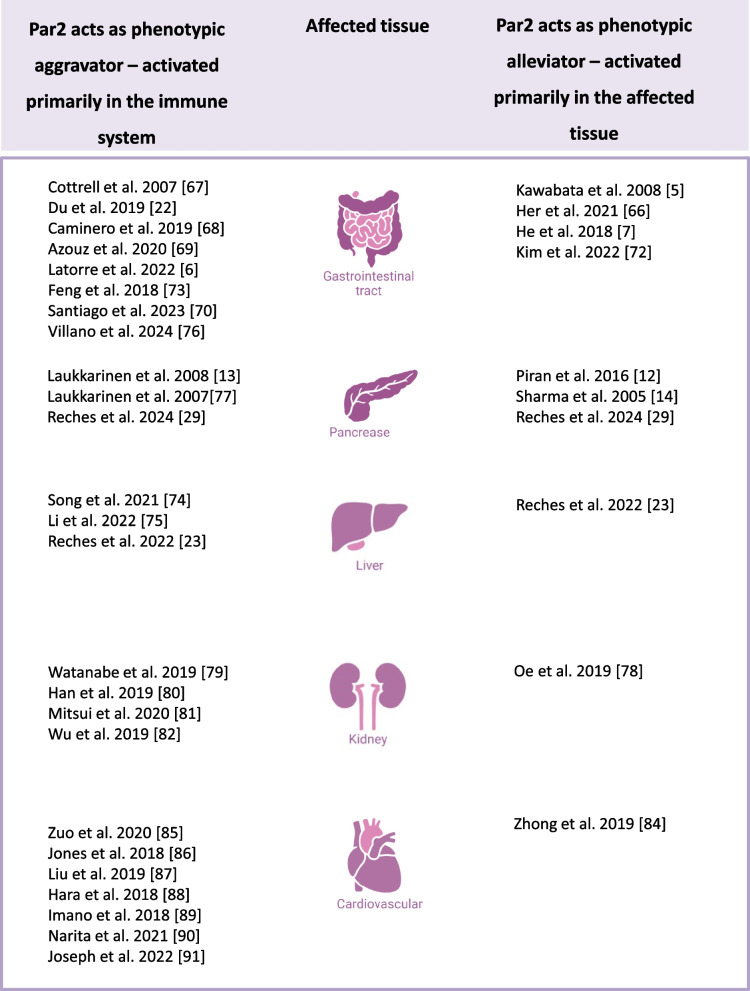
The protease activated receptor 2 (Par2) plays a pivotal role in various damage models, influencing injury, proliferation, inflammation, and regeneration. Despite extensive studies, its binary roles- EITHER aggravating injury or promoting recovery-make a conclusive translational decision on its modulation strategy elusive. Analyzing two liver regeneration models, autoimmune hepatitis and direct hepatic damage, we discovered Par2's outcome depends on the injury's nature. In immune-mediated injury, Par2 exacerbates damage, while in direct tissue injury, it promotes regeneration. Subsequently, we evaluated the clinical significance of this finding by investigating Par2's expression in the context of autoimmune diabetes. We found that the absence of Par2 in all lymphocytes provided full protection against the autoimmune destruction of insulin-producing β-cells in mice, whereas the introduction of a β-cell-specific Par2 null mutation accelerated the onset of autoimmune diabetes. This pattern led us to hypothesize whether these observations are universal. A comprehensive review of recent Par2 publications across tissues and systems confirms the claim drafted above: Par2's initial activation in the immune system aggravates inflammation, hindering recovery, whereas its primary activation in the damaged tissue fosters regeneration. As a membrane-anchored receptor, Par2 emerges as an attractive drug target. Our findings highlight a crucial translational modulation strategy in regenerative medicine based on injury type.





 京公网安备 11010802042870号
京ICP备2023020795号-1
京公网安备 11010802042870号
京ICP备2023020795号-1

 分享
分享

 求助内容:
求助内容: 应助结果提醒方式:
 扫码关注我们
