{"title":"State-of-the-art developments in surface functionalized carbon-based bio/nanocomposites for theranostic antibacterials, advanced bioimaging, and molecular bioelectronics inspired biosensing platforms","authors":"","doi":"10.1016/j.jiec.2024.05.065","DOIUrl":null,"url":null,"abstract":"<div><div>Carbon-based nanomaterials (CNMs) offer high stability, functionality, mechanical strength, thermal conductivity, and larger surface area. However, issues like toxicity, inadequate solubility, biocompatibility, immunogenicity, etc., lead to adverse events that can limit their frequent biological applications. Another focus area is to encourage facile and eco-benign routes for modifying CNMs, leading to improved functional properties for biomedical applications. Herein, we review state-of-the-art technological interventions in fabricating surface functionalized carbon-based bio/nanocomposites and their potential utilization as theranostic antimicrobial agents and molecular bioelectronics sensing tools. In the purview of developing novel carbon-based bio/nanocomposites, green chemistry routes approaching different CNMs (such as carbon nanotubes, carbon dots, fullerenes, carbon nanofibers, etc.,), mechanistic understanding over the involvement of covalent and non-covalent interactions, strategies of biofunctionalization, and nanoparticle-carbon nanomaterials based hybrid/heterostructures has been reviewed. The latest developments in biosensing devices, highly sensitive diagnostic and bioimaging platforms, and the risk of environmental toxicity and credits for carbon-based bio/nanocomposites for long-term applications<!--> <!-->are presented. The undertaken study should attract researchers towards the materialization of synergistic interactions between different CNMs and biopolymers/nanoparticles to develop robust antimicrobial, bioimaging, and biosensing platforms with broad-spectrum activities.</div></div>","PeriodicalId":363,"journal":{"name":"Journal of Industrial and Engineering Chemistry","volume":"140 ","pages":"Pages 103-145"},"PeriodicalIF":5.9000,"publicationDate":"2024-12-25","publicationTypes":"Journal Article","fieldsOfStudy":null,"isOpenAccess":false,"openAccessPdf":"","citationCount":"0","resultStr":null,"platform":"Semanticscholar","paperid":null,"PeriodicalName":"Journal of Industrial and Engineering Chemistry","FirstCategoryId":"5","ListUrlMain":"https://www.sciencedirect.com/science/article/pii/S1226086X2400371X","RegionNum":3,"RegionCategory":"工程技术","ArticlePicture":[],"TitleCN":null,"AbstractTextCN":null,"PMCID":null,"EPubDate":"2024/6/1 0:00:00","PubModel":"Epub","JCR":"Q1","JCRName":"CHEMISTRY, MULTIDISCIPLINARY","Score":null,"Total":0}
引用次数: 0
Abstract
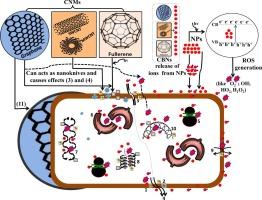
Carbon-based nanomaterials (CNMs) offer high stability, functionality, mechanical strength, thermal conductivity, and larger surface area. However, issues like toxicity, inadequate solubility, biocompatibility, immunogenicity, etc., lead to adverse events that can limit their frequent biological applications. Another focus area is to encourage facile and eco-benign routes for modifying CNMs, leading to improved functional properties for biomedical applications. Herein, we review state-of-the-art technological interventions in fabricating surface functionalized carbon-based bio/nanocomposites and their potential utilization as theranostic antimicrobial agents and molecular bioelectronics sensing tools. In the purview of developing novel carbon-based bio/nanocomposites, green chemistry routes approaching different CNMs (such as carbon nanotubes, carbon dots, fullerenes, carbon nanofibers, etc.,), mechanistic understanding over the involvement of covalent and non-covalent interactions, strategies of biofunctionalization, and nanoparticle-carbon nanomaterials based hybrid/heterostructures has been reviewed. The latest developments in biosensing devices, highly sensitive diagnostic and bioimaging platforms, and the risk of environmental toxicity and credits for carbon-based bio/nanocomposites for long-term applications are presented. The undertaken study should attract researchers towards the materialization of synergistic interactions between different CNMs and biopolymers/nanoparticles to develop robust antimicrobial, bioimaging, and biosensing platforms with broad-spectrum activities.
期刊介绍:
Journal of Industrial and Engineering Chemistry is published monthly in English by the Korean Society of Industrial and Engineering Chemistry. JIEC brings together multidisciplinary interests in one journal and is to disseminate information on all aspects of research and development in industrial and engineering chemistry. Contributions in the form of research articles, short communications, notes and reviews are considered for publication. The editors welcome original contributions that have not been and are not to be published elsewhere. Instruction to authors and a manuscript submissions form are printed at the end of each issue. Bulk reprints of individual articles can be ordered. This publication is partially supported by Korea Research Foundation and the Korean Federation of Science and Technology Societies.



 京公网安备 11010802042870号
京ICP备2023020795号-1
京公网安备 11010802042870号
京ICP备2023020795号-1

 分享
分享
 求助内容:
求助内容: 应助结果提醒方式:
 扫码关注我们
