{"title":"Low magnesium in conjunction with high homocysteine increases DNA damage in healthy middle aged Australians.","authors":"Varinderpal S Dhillon, Permal Deo, Michael Fenech","doi":"10.1007/s00394-024-03449-0","DOIUrl":null,"url":null,"abstract":"<p><strong>Purpose: </strong>Magnesium is one of the most common elements in the human body and plays an important role as a cofactor of enzymes required for DNA replication and repair and many other biochemical mechanisms including sensing and regulating one-carbon metabolism deficiencies. Low intake of magnesium can increase the risk of many diseases, in particular, chronic degenerative disorders. However, its role in prevention of DNA damage has not been studied fully in humans so far. Therefore, we tested the hypothesis that magnesium deficiency either on its own or in conjunction with high homocysteine (Hcy) induces DNA damage in vivo in humans.</p><p><strong>Methods: </strong>The present study was carried out in 172 healthy middle aged subjects from South Australia. Blood levels of magnesium, Hcy, folate and vitamin B<sub>12</sub> were measured. Cytokinesis-Block Micronucleus cytome assay was performed to measure three DNA damage biomarkers: micronuclei (MN), nucleoplasmic bridges (NPBs) and nuclear buds (NBuds) in peripheral blood lymphocytes.</p><p><strong>Results: </strong>Data showed that magnesium and Hcy are significantly inversely correlated with each other (r = - 0.299, p < 0.0001). Furthermore, magnesium is positively correlated both with folate (p = 0.002) and vitamin B<sub>12</sub> (p = 0.007). Magnesium is also significantly inversely correlated with MN (p < 0.0001) and NPB (p < 0.0001). Individuals with low magnesium and high Hcy exhibited significantly higher frequency of MN and NPBs compared to those with high magnesium and low Hcy (p < 0.0001). Furthermore, there was an interactive effect between these two factors as well in inducing MN (p = 0.01) and NPB (p = 0.048).</p><p><strong>Conclusions: </strong>The results obtained in the present study indicate for the first time that low in vivo levels of magnesium either on its own or in the presence of high Hcy increases DNA damage as evident by higher frequencies of MN and NPBs.</p>","PeriodicalId":12030,"journal":{"name":"European Journal of Nutrition","volume":" ","pages":"2555-2565"},"PeriodicalIF":4.3000,"publicationDate":"2024-10-01","publicationTypes":"Journal Article","fieldsOfStudy":null,"isOpenAccess":false,"openAccessPdf":"https://www.ncbi.nlm.nih.gov/pmc/articles/PMC11490467/pdf/","citationCount":"0","resultStr":null,"platform":"Semanticscholar","paperid":null,"PeriodicalName":"European Journal of Nutrition","FirstCategoryId":"3","ListUrlMain":"https://doi.org/10.1007/s00394-024-03449-0","RegionNum":2,"RegionCategory":"医学","ArticlePicture":[],"TitleCN":null,"AbstractTextCN":null,"PMCID":null,"EPubDate":"2024/6/12 0:00:00","PubModel":"Epub","JCR":"Q2","JCRName":"NUTRITION & DIETETICS","Score":null,"Total":0}
引用次数: 0
Abstract
Purpose: Magnesium is one of the most common elements in the human body and plays an important role as a cofactor of enzymes required for DNA replication and repair and many other biochemical mechanisms including sensing and regulating one-carbon metabolism deficiencies. Low intake of magnesium can increase the risk of many diseases, in particular, chronic degenerative disorders. However, its role in prevention of DNA damage has not been studied fully in humans so far. Therefore, we tested the hypothesis that magnesium deficiency either on its own or in conjunction with high homocysteine (Hcy) induces DNA damage in vivo in humans.
Methods: The present study was carried out in 172 healthy middle aged subjects from South Australia. Blood levels of magnesium, Hcy, folate and vitamin B12 were measured. Cytokinesis-Block Micronucleus cytome assay was performed to measure three DNA damage biomarkers: micronuclei (MN), nucleoplasmic bridges (NPBs) and nuclear buds (NBuds) in peripheral blood lymphocytes.
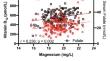
Results: Data showed that magnesium and Hcy are significantly inversely correlated with each other (r = - 0.299, p < 0.0001). Furthermore, magnesium is positively correlated both with folate (p = 0.002) and vitamin B12 (p = 0.007). Magnesium is also significantly inversely correlated with MN (p < 0.0001) and NPB (p < 0.0001). Individuals with low magnesium and high Hcy exhibited significantly higher frequency of MN and NPBs compared to those with high magnesium and low Hcy (p < 0.0001). Furthermore, there was an interactive effect between these two factors as well in inducing MN (p = 0.01) and NPB (p = 0.048).
Conclusions: The results obtained in the present study indicate for the first time that low in vivo levels of magnesium either on its own or in the presence of high Hcy increases DNA damage as evident by higher frequencies of MN and NPBs.
期刊介绍:
The European Journal of Nutrition publishes original papers, reviews, and short communications in the nutritional sciences. The manuscripts submitted to the European Journal of Nutrition should have their major focus on the impact of nutrients and non-nutrients on
immunology and inflammation,
gene expression,
metabolism,
chronic diseases, or
carcinogenesis,
or a major focus on
epidemiology, including intervention studies with healthy subjects and with patients,
biofunctionality of food and food components, or
the impact of diet on the environment.



 京公网安备 11010802042870号
京ICP备2023020795号-1
京公网安备 11010802042870号
京ICP备2023020795号-1

 分享
分享
 求助内容:
求助内容: 应助结果提醒方式:
 扫码关注我们
