{"title":"Optimization of Novel Pyrido-pyridazinone Derivatives as FER Tyrosine Kinase Inhibitors, Leading to the Potent DS08701581","authors":"Toru Taniguchi*, Isao Yasumatsu, Hiroaki Inagaki, Daichi Baba, Akiko Toyota, Yasuyuki Kaneta, Takashi Odagiri, Takayuki Momose, Junya Kawai, Tomoki Imaoka and Kiyoshi Nakayama, ","doi":"10.1021/acsmedchemlett.4c00030","DOIUrl":null,"url":null,"abstract":"<p >Previously, we reported the new pyrido-pyridazinone template as a feline sarcoma-related (FER) tyrosine kinase inhibitor. Representative compound <b>1</b> (<b>DS21360717</b>) showed strong enzyme inhibitory activity (IC50 = 0.5 nM), however, its antitumor effect was insufficient, probably due to poor solubility and resultant low bioavailability (BA). In addition, the kinase selectivity was inadequate, which may result in certain safety risks. Here, we focused on derivatization of the unoptimized C-5 position to obtain promising FER inhibitors possessing strong antitumor effects and improved selectivity, referring to their X-ray crystal structure and the docking model with FES proto-oncogene tyrosine kinase as an FER surrogate. While establishing the synthetic route of the pyrido-pyridazinone scaffold, we obtained a desired compound via our derivatization. Our optimized compound <b>17c (DS08701581</b>) showed the highest class cell-free and cell activities in this template, good oral BA, and improved kinase selectivity, resulting in significant tumor growth inhibition in the Ba/F3-FER tumor model without body weight loss.</p>","PeriodicalId":20,"journal":{"name":"ACS Medicinal Chemistry Letters","volume":"15 7","pages":"1010–1016"},"PeriodicalIF":4.0000,"publicationDate":"2024-06-13","publicationTypes":"Journal Article","fieldsOfStudy":null,"isOpenAccess":false,"openAccessPdf":"","citationCount":"0","resultStr":null,"platform":"Semanticscholar","paperid":null,"PeriodicalName":"ACS Medicinal Chemistry Letters","FirstCategoryId":"3","ListUrlMain":"https://pubs.acs.org/doi/10.1021/acsmedchemlett.4c00030","RegionNum":3,"RegionCategory":"医学","ArticlePicture":[],"TitleCN":null,"AbstractTextCN":null,"PMCID":null,"EPubDate":"","PubModel":"","JCR":"Q2","JCRName":"CHEMISTRY, MEDICINAL","Score":null,"Total":0}
引用次数: 0
Abstract
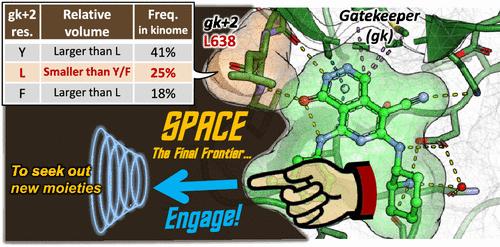
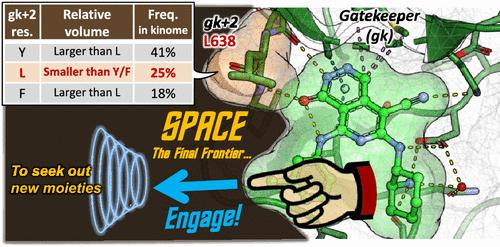
Previously, we reported the new pyrido-pyridazinone template as a feline sarcoma-related (FER) tyrosine kinase inhibitor. Representative compound 1 (DS21360717) showed strong enzyme inhibitory activity (IC50 = 0.5 nM), however, its antitumor effect was insufficient, probably due to poor solubility and resultant low bioavailability (BA). In addition, the kinase selectivity was inadequate, which may result in certain safety risks. Here, we focused on derivatization of the unoptimized C-5 position to obtain promising FER inhibitors possessing strong antitumor effects and improved selectivity, referring to their X-ray crystal structure and the docking model with FES proto-oncogene tyrosine kinase as an FER surrogate. While establishing the synthetic route of the pyrido-pyridazinone scaffold, we obtained a desired compound via our derivatization. Our optimized compound 17c (DS08701581) showed the highest class cell-free and cell activities in this template, good oral BA, and improved kinase selectivity, resulting in significant tumor growth inhibition in the Ba/F3-FER tumor model without body weight loss.
此前,我们曾报道过一种新的吡啶并哒嗪酮模板作为猫肉瘤相关(FER)酪氨酸激酶抑制剂。代表性化合物 1(DS21360717)显示出很强的酶抑制活性(IC50 = 0.5 nM),但其抗肿瘤效果并不充分,这可能是由于溶解性差和生物利用度(BA)低造成的。此外,激酶选择性不足,可能会导致一定的安全风险。在此,我们参考其 X 射线晶体结构以及以 FES 原癌基因酪氨酸激酶作为 FER 替代物的对接模型,重点对未优化的 C-5 位进行衍生化处理,以获得具有较强抗肿瘤作用和较高选择性的 FER 抑制剂。在建立吡啶并哒嗪酮支架合成路线的同时,我们通过衍生化获得了理想的化合物。我们优化后的化合物 17c(DS08701581)在该模板中显示出了最高级别的无细胞活性和细胞活性、良好的口服 BA 和改进的激酶选择性,从而在 Ba/F3-FER 肿瘤模型中显著抑制了肿瘤生长,且无体重减轻。
期刊介绍:
ACS Medicinal Chemistry Letters is interested in receiving manuscripts that discuss various aspects of medicinal chemistry. The journal will publish studies that pertain to a broad range of subject matter, including compound design and optimization, biological evaluation, drug delivery, imaging agents, and pharmacology of both small and large bioactive molecules. Specific areas include but are not limited to:
Identification, synthesis, and optimization of lead biologically active molecules and drugs (small molecules and biologics)
Biological characterization of new molecular entities in the context of drug discovery
Computational, cheminformatics, and structural studies for the identification or SAR analysis of bioactive molecules, ligands and their targets, etc.
Novel and improved methodologies, including radiation biochemistry, with broad application to medicinal chemistry
Discovery technologies for biologically active molecules from both synthetic and natural (plant and other) sources
Pharmacokinetic/pharmacodynamic studies that address mechanisms underlying drug disposition and response
Pharmacogenetic and pharmacogenomic studies used to enhance drug design and the translation of medicinal chemistry into the clinic
Mechanistic drug metabolism and regulation of metabolic enzyme gene expression
Chemistry patents relevant to the medicinal chemistry field.




 京公网安备 11010802042870号
京ICP备2023020795号-1
京公网安备 11010802042870号
京ICP备2023020795号-1

 分享
分享
 求助内容:
求助内容: 应助结果提醒方式:
 扫码关注我们
