{"title":"Enacting Decentralized Authority: The Practices and Limits of Moving Beyond Hierarchy","authors":"Michael Y. Lee","doi":"10.1177/00018392241257372","DOIUrl":null,"url":null,"abstract":"Decentralization as an organizing principle has drawn growing interest from scholars and practitioners because of its perceived suitability for contemporary market conditions and alignment with employees’ evolving work expectations. However, efforts to decentralize authority face significant obstacles and often end in failure. I propose that existing research on decentralization has struggled to generate insight into how such barriers can be overcome because it has treated decentralization as a static outcome imposed by organizational designers. In contrast, this article treats decentralization as a dynamic and situated achievement that must be continually enacted, and it leverages ethnographic data from a decentralization effort in order to build theory on the organizational practices that support enactments of decentralized authority. I find that successful enactments of decentralized authority were supported by practices that established clear boundaries of authority and focused collective attention on these boundaries, as well as by practices that depersonalized collective attributions of the source of authority. At the same time, the practices were difficult to sustain because they were cognitively, emotionally, and temporally demanding. Through this study, I show that decentralization is not merely a one-time structural change but an ongoing collective process that requires navigating and neutralizing the structural and psychological forces pulling organizations back toward hierarchy.","PeriodicalId":8,"journal":{"name":"ACS Biomaterials Science & Engineering","volume":"57 5","pages":""},"PeriodicalIF":5.5000,"publicationDate":"2024-06-12","publicationTypes":"Journal Article","fieldsOfStudy":null,"isOpenAccess":false,"openAccessPdf":"","citationCount":"0","resultStr":null,"platform":"Semanticscholar","paperid":null,"PeriodicalName":"ACS Biomaterials Science & Engineering","FirstCategoryId":"91","ListUrlMain":"https://doi.org/10.1177/00018392241257372","RegionNum":2,"RegionCategory":"医学","ArticlePicture":[],"TitleCN":null,"AbstractTextCN":null,"PMCID":null,"EPubDate":"","PubModel":"","JCR":"Q2","JCRName":"MATERIALS SCIENCE, BIOMATERIALS","Score":null,"Total":0}
引用次数: 0
Abstract
Decentralization as an organizing principle has drawn growing interest from scholars and practitioners because of its perceived suitability for contemporary market conditions and alignment with employees’ evolving work expectations. However, efforts to decentralize authority face significant obstacles and often end in failure. I propose that existing research on decentralization has struggled to generate insight into how such barriers can be overcome because it has treated decentralization as a static outcome imposed by organizational designers. In contrast, this article treats decentralization as a dynamic and situated achievement that must be continually enacted, and it leverages ethnographic data from a decentralization effort in order to build theory on the organizational practices that support enactments of decentralized authority. I find that successful enactments of decentralized authority were supported by practices that established clear boundaries of authority and focused collective attention on these boundaries, as well as by practices that depersonalized collective attributions of the source of authority. At the same time, the practices were difficult to sustain because they were cognitively, emotionally, and temporally demanding. Through this study, I show that decentralization is not merely a one-time structural change but an ongoing collective process that requires navigating and neutralizing the structural and psychological forces pulling organizations back toward hierarchy.
期刊介绍:
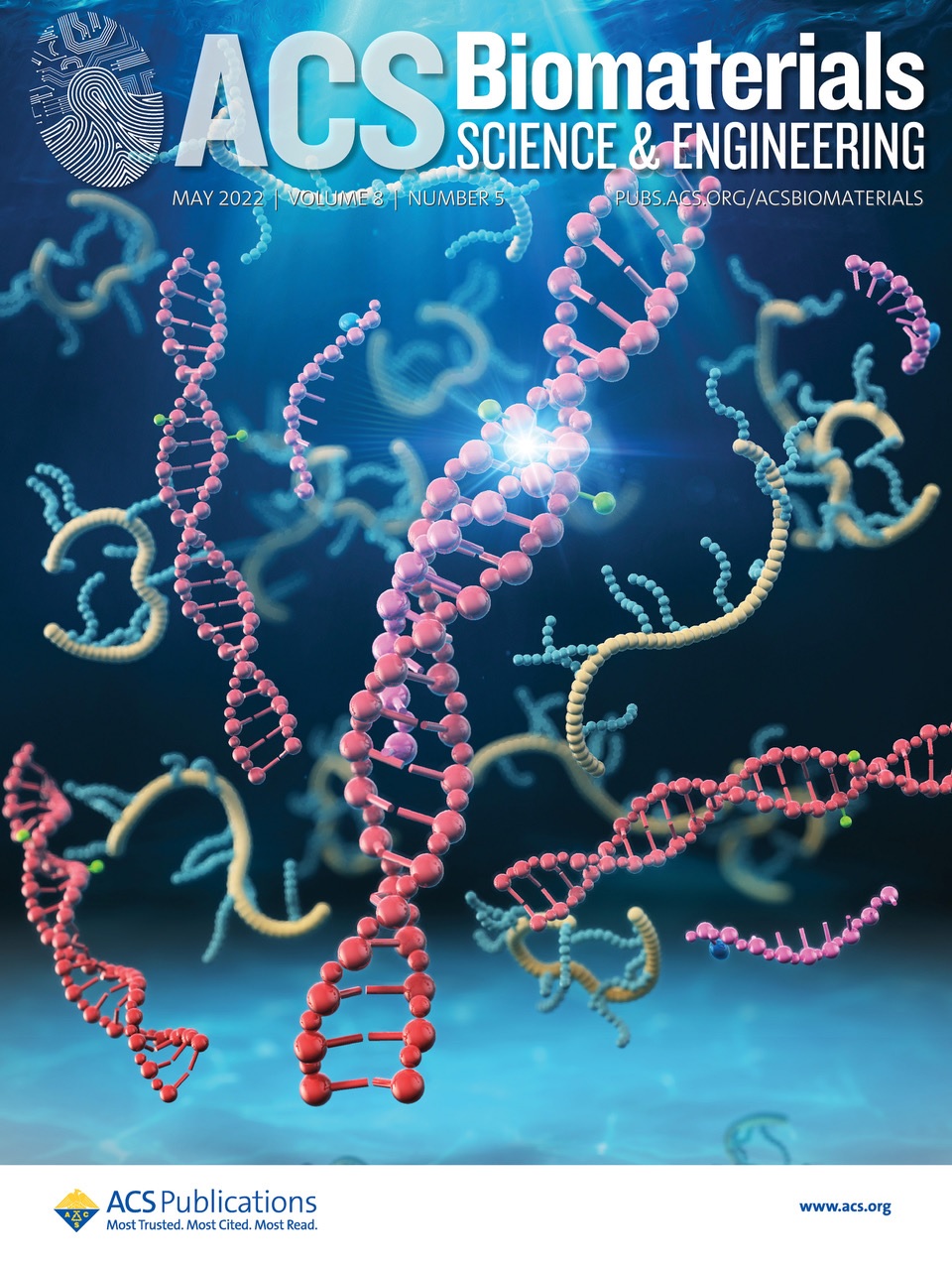
ACS Biomaterials Science & Engineering is the leading journal in the field of biomaterials, serving as an international forum for publishing cutting-edge research and innovative ideas on a broad range of topics:
Applications and Health – implantable tissues and devices, prosthesis, health risks, toxicology
Bio-interactions and Bio-compatibility – material-biology interactions, chemical/morphological/structural communication, mechanobiology, signaling and biological responses, immuno-engineering, calcification, coatings, corrosion and degradation of biomaterials and devices, biophysical regulation of cell functions
Characterization, Synthesis, and Modification – new biomaterials, bioinspired and biomimetic approaches to biomaterials, exploiting structural hierarchy and architectural control, combinatorial strategies for biomaterials discovery, genetic biomaterials design, synthetic biology, new composite systems, bionics, polymer synthesis
Controlled Release and Delivery Systems – biomaterial-based drug and gene delivery, bio-responsive delivery of regulatory molecules, pharmaceutical engineering
Healthcare Advances – clinical translation, regulatory issues, patient safety, emerging trends
Imaging and Diagnostics – imaging agents and probes, theranostics, biosensors, monitoring
Manufacturing and Technology – 3D printing, inks, organ-on-a-chip, bioreactor/perfusion systems, microdevices, BioMEMS, optics and electronics interfaces with biomaterials, systems integration
Modeling and Informatics Tools – scaling methods to guide biomaterial design, predictive algorithms for structure-function, biomechanics, integrating bioinformatics with biomaterials discovery, metabolomics in the context of biomaterials
Tissue Engineering and Regenerative Medicine – basic and applied studies, cell therapies, scaffolds, vascularization, bioartificial organs, transplantation and functionality, cellular agriculture



 京公网安备 11010802042870号
京ICP备2023020795号-1
京公网安备 11010802042870号
京ICP备2023020795号-1

 分享
分享
 求助内容:
求助内容: 应助结果提醒方式:
 扫码关注我们
