{"title":"Structural, Ferroelectric, and Ferromagnetic Properties of Yttrium-Doped Cobalt Ferrites to Produce Green Electricity by Hydroelectric Cells","authors":"Prachi Jain, S. Shankar, O. P. Thakur","doi":"10.1007/s11664-024-11178-7","DOIUrl":null,"url":null,"abstract":"<div><p>A hydroelectric cell has been coined as an accomplished device keeping the ability to produce current just by adsorbing a few microliters of water. These cells are the new source of generating green energy which involves no evolution of toxic gases like NO<sub>2</sub>, SO<sub>2</sub>, CO, etc. Our current research focuses on studying how to increase the maximum output current (<i>I</i>) in the pure cobalt ferrites by doping with rare-earth ion, yttrium. The yttrium-doped cobalt ferrites with composition (CoY<sub><i>x</i></sub>Fe<sub>2−<i>x</i></sub>O<sub>4</sub>, <i>x</i> = 0.00, 0.10, and 0.20) have been prepared using a modified sol–gel citrate method. X-ray diffractogram (XRD) confirmed the formation of cubic crystal structures with crystallite size less than 30 nm. Energy dispersive x-ray (EDX) patterns confirmed the presence of elements (Y, Co, Fe, O) in the prepared compositions. The ionic diffusion mechanism confirmed the dissociation of water molecules by the cations present on the surface of the material at room temperature. Vibrating sample magnetometer (VSM) analysis revealed the increase in coercivity values from 948.81 Oe to 2580.09 Oe with the increase in the concentration of yttrium ions in the cobalt ferrite (CFO) lattice. The <i>V</i>–<i>I</i> polarization curves measured the maximum output current and voltage as around 8.6 mA and 1.1 V, respectively, for the 20% yttrium-doped CFO hydroelectric cells (area = 4 cm<sup>2</sup>).</p></div>","PeriodicalId":626,"journal":{"name":"Journal of Electronic Materials","volume":"53 9","pages":"5169 - 5183"},"PeriodicalIF":2.5000,"publicationDate":"2024-06-11","publicationTypes":"Journal Article","fieldsOfStudy":null,"isOpenAccess":false,"openAccessPdf":"","citationCount":"0","resultStr":null,"platform":"Semanticscholar","paperid":null,"PeriodicalName":"Journal of Electronic Materials","FirstCategoryId":"5","ListUrlMain":"https://link.springer.com/article/10.1007/s11664-024-11178-7","RegionNum":4,"RegionCategory":"工程技术","ArticlePicture":[],"TitleCN":null,"AbstractTextCN":null,"PMCID":null,"EPubDate":"","PubModel":"","JCR":"Q3","JCRName":"ENGINEERING, ELECTRICAL & ELECTRONIC","Score":null,"Total":0}
引用次数: 0
Abstract
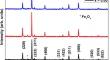
A hydroelectric cell has been coined as an accomplished device keeping the ability to produce current just by adsorbing a few microliters of water. These cells are the new source of generating green energy which involves no evolution of toxic gases like NO2, SO2, CO, etc. Our current research focuses on studying how to increase the maximum output current (I) in the pure cobalt ferrites by doping with rare-earth ion, yttrium. The yttrium-doped cobalt ferrites with composition (CoYxFe2−xO4, x = 0.00, 0.10, and 0.20) have been prepared using a modified sol–gel citrate method. X-ray diffractogram (XRD) confirmed the formation of cubic crystal structures with crystallite size less than 30 nm. Energy dispersive x-ray (EDX) patterns confirmed the presence of elements (Y, Co, Fe, O) in the prepared compositions. The ionic diffusion mechanism confirmed the dissociation of water molecules by the cations present on the surface of the material at room temperature. Vibrating sample magnetometer (VSM) analysis revealed the increase in coercivity values from 948.81 Oe to 2580.09 Oe with the increase in the concentration of yttrium ions in the cobalt ferrite (CFO) lattice. The V–I polarization curves measured the maximum output current and voltage as around 8.6 mA and 1.1 V, respectively, for the 20% yttrium-doped CFO hydroelectric cells (area = 4 cm2).
期刊介绍:
The Journal of Electronic Materials (JEM) reports monthly on the science and technology of electronic materials, while examining new applications for semiconductors, magnetic alloys, dielectrics, nanoscale materials, and photonic materials. The journal welcomes articles on methods for preparing and evaluating the chemical, physical, electronic, and optical properties of these materials. Specific areas of interest are materials for state-of-the-art transistors, nanotechnology, electronic packaging, detectors, emitters, metallization, superconductivity, and energy applications.
Review papers on current topics enable individuals in the field of electronics to keep abreast of activities in areas peripheral to their own. JEM also selects papers from conferences such as the Electronic Materials Conference, the U.S. Workshop on the Physics and Chemistry of II-VI Materials, and the International Conference on Thermoelectrics. It benefits both specialists and non-specialists in the electronic materials field.
A journal of The Minerals, Metals & Materials Society.



 京公网安备 11010802042870号
京ICP备2023020795号-1
京公网安备 11010802042870号
京ICP备2023020795号-1

 分享
分享
 求助内容:
求助内容: 应助结果提醒方式:
 扫码关注我们
