Integrated Transport Model for Controlled Delivery of Short-Lived Reactive Species via Plasma-Activated Liquid with Practical Applications in Plant Disease Control
{"title":"Integrated Transport Model for Controlled Delivery of Short-Lived Reactive Species via Plasma-Activated Liquid with Practical Applications in Plant Disease Control","authors":"Toshiro Kaneko, Keisuke Takashima, Shota Sasaki","doi":"10.1007/s11090-024-10461-z","DOIUrl":null,"url":null,"abstract":"<div><p>Gas–liquid interfacial plasmas (GLIPs), specifically atmospheric-pressure plasmas (APPs) interacting with liquids, have garnered global interest for potential applications across various fields where reactive oxygen and nitrogen species (RONS) in both the gas and liquid phases could play a key role. However, APP-induced gas- and liquid-phase chemical reactions display spatially nonuniform features and involve a number of species; thus, they are extremely complicated and have not been fully understood and controlled. Herein, our primary focus is centered on elucidating RONS transport processes in GLIPs without direct plasma-liquid contact to reduce the complexity of this mechanism. Firstly, this review delineates the simplified transport models commonly found in general GLIP systems, including: (1) the transport of remotely generated gas-phase RONS to the liquid phase; (2) liquid-phase diffusion governing dissolution into the liquid phase and volatilization loss to the gas phase; and (3) chemical reactions in the liquid phase governing the generation and loss of short-lived RONS. Second, we delve into RONS transport using our laboratory-built plasma devices, aimed at sterilizing plant pathogens, interpreting results in line with the relevant transport models to aid the comprehension of the heterogeneous transport of RONS. Third, we discussed the innovative control of the plasma reaction process in the gas phase required to selectively synthesize N<sub>2</sub>O<sub>5</sub>, which is highly reactive at the gas–liquid interface. Finally, future prospects for the efficient utilization of unique reactions at the plasma/gas–liquid interface are discussed.</p></div>","PeriodicalId":734,"journal":{"name":"Plasma Chemistry and Plasma Processing","volume":"44 :","pages":"1165 - 1201"},"PeriodicalIF":2.5000,"publicationDate":"2024-06-08","publicationTypes":"Journal Article","fieldsOfStudy":null,"isOpenAccess":false,"openAccessPdf":"https://link.springer.com/content/pdf/10.1007/s11090-024-10461-z.pdf","citationCount":"0","resultStr":null,"platform":"Semanticscholar","paperid":null,"PeriodicalName":"Plasma Chemistry and Plasma Processing","FirstCategoryId":"5","ListUrlMain":"https://link.springer.com/article/10.1007/s11090-024-10461-z","RegionNum":3,"RegionCategory":"物理与天体物理","ArticlePicture":[],"TitleCN":null,"AbstractTextCN":null,"PMCID":null,"EPubDate":"","PubModel":"","JCR":"Q3","JCRName":"ENGINEERING, CHEMICAL","Score":null,"Total":0}
引用次数: 0
Abstract
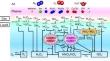
Gas–liquid interfacial plasmas (GLIPs), specifically atmospheric-pressure plasmas (APPs) interacting with liquids, have garnered global interest for potential applications across various fields where reactive oxygen and nitrogen species (RONS) in both the gas and liquid phases could play a key role. However, APP-induced gas- and liquid-phase chemical reactions display spatially nonuniform features and involve a number of species; thus, they are extremely complicated and have not been fully understood and controlled. Herein, our primary focus is centered on elucidating RONS transport processes in GLIPs without direct plasma-liquid contact to reduce the complexity of this mechanism. Firstly, this review delineates the simplified transport models commonly found in general GLIP systems, including: (1) the transport of remotely generated gas-phase RONS to the liquid phase; (2) liquid-phase diffusion governing dissolution into the liquid phase and volatilization loss to the gas phase; and (3) chemical reactions in the liquid phase governing the generation and loss of short-lived RONS. Second, we delve into RONS transport using our laboratory-built plasma devices, aimed at sterilizing plant pathogens, interpreting results in line with the relevant transport models to aid the comprehension of the heterogeneous transport of RONS. Third, we discussed the innovative control of the plasma reaction process in the gas phase required to selectively synthesize N2O5, which is highly reactive at the gas–liquid interface. Finally, future prospects for the efficient utilization of unique reactions at the plasma/gas–liquid interface are discussed.
期刊介绍:
Publishing original papers on fundamental and applied research in plasma chemistry and plasma processing, the scope of this journal includes processing plasmas ranging from non-thermal plasmas to thermal plasmas, and fundamental plasma studies as well as studies of specific plasma applications. Such applications include but are not limited to plasma catalysis, environmental processing including treatment of liquids and gases, biological applications of plasmas including plasma medicine and agriculture, surface modification and deposition, powder and nanostructure synthesis, energy applications including plasma combustion and reforming, resource recovery, coupling of plasmas and electrochemistry, and plasma etching. Studies of chemical kinetics in plasmas, and the interactions of plasmas with surfaces are also solicited. It is essential that submissions include substantial consideration of the role of the plasma, for example, the relevant plasma chemistry, plasma physics or plasma–surface interactions; manuscripts that consider solely the properties of materials or substances processed using a plasma are not within the journal’s scope.



 京公网安备 11010802042870号
京ICP备2023020795号-1
京公网安备 11010802042870号
京ICP备2023020795号-1

 分享
分享
 求助内容:
求助内容: 应助结果提醒方式:
 扫码关注我们
