Gayatri Shishodia, Shubhra Gupta, Neelam Pahwa, P. K. Shishodia
{"title":"ZrO2 Nanoparticles Synthesized by the Sol–Gel Method: Dependence of Size on pH and Annealing Temperature","authors":"Gayatri Shishodia, Shubhra Gupta, Neelam Pahwa, P. K. Shishodia","doi":"10.1007/s11664-024-11185-8","DOIUrl":null,"url":null,"abstract":"<div><p>Zirconium oxide(ZrO<sub>2</sub>) is an important ceramic material characterized by a wide optical bandgap, low optical losses, high dielectric constant, excellent physical and structural properties, high coefficient of thermal expansion and chemical stability. This paper reports the synthesis of ZrO<sub>2</sub> nanoparticles by the sol–gel method using ZrO(NO<sub>3</sub>)<sub>2</sub> as the zirconium precursor and ammonia solution (25%) as the precipitating agent. The pH value of the sol and the annealing temperature strongly influence the morphology and size of nanoparticles. In the present work, the sol pH was varied from 8 to 11 and the nanoparticles obtained were annealed in the temperature range of 400–700°C. The structural, morphological and optical properties of the nanoparticles were investigated using x-ray diffraction, field-emission scanning electron microscopy, high-resolution transmission electron microscopy, Fourier transform infrared spectroscopy, Raman spectroscopy and photoluminescence measurements. The results demonstrate that the stable t-ZrO<sub>2</sub> phase starts appearing above 400°C, with nanoparticle size varying in the range of 15–22 nm. The optimal size of ZrO<sub>2</sub> nanoparticles (15.65 nm) was obtained at a pH value of 9 and an annealing temperature of 500°C.</p></div>","PeriodicalId":626,"journal":{"name":"Journal of Electronic Materials","volume":"53 9","pages":"5159 - 5168"},"PeriodicalIF":2.5000,"publicationDate":"2024-06-07","publicationTypes":"Journal Article","fieldsOfStudy":null,"isOpenAccess":false,"openAccessPdf":"","citationCount":"0","resultStr":null,"platform":"Semanticscholar","paperid":null,"PeriodicalName":"Journal of Electronic Materials","FirstCategoryId":"5","ListUrlMain":"https://link.springer.com/article/10.1007/s11664-024-11185-8","RegionNum":4,"RegionCategory":"工程技术","ArticlePicture":[],"TitleCN":null,"AbstractTextCN":null,"PMCID":null,"EPubDate":"","PubModel":"","JCR":"Q3","JCRName":"ENGINEERING, ELECTRICAL & ELECTRONIC","Score":null,"Total":0}
引用次数: 0
Abstract
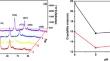
Zirconium oxide(ZrO2) is an important ceramic material characterized by a wide optical bandgap, low optical losses, high dielectric constant, excellent physical and structural properties, high coefficient of thermal expansion and chemical stability. This paper reports the synthesis of ZrO2 nanoparticles by the sol–gel method using ZrO(NO3)2 as the zirconium precursor and ammonia solution (25%) as the precipitating agent. The pH value of the sol and the annealing temperature strongly influence the morphology and size of nanoparticles. In the present work, the sol pH was varied from 8 to 11 and the nanoparticles obtained were annealed in the temperature range of 400–700°C. The structural, morphological and optical properties of the nanoparticles were investigated using x-ray diffraction, field-emission scanning electron microscopy, high-resolution transmission electron microscopy, Fourier transform infrared spectroscopy, Raman spectroscopy and photoluminescence measurements. The results demonstrate that the stable t-ZrO2 phase starts appearing above 400°C, with nanoparticle size varying in the range of 15–22 nm. The optimal size of ZrO2 nanoparticles (15.65 nm) was obtained at a pH value of 9 and an annealing temperature of 500°C.
期刊介绍:
The Journal of Electronic Materials (JEM) reports monthly on the science and technology of electronic materials, while examining new applications for semiconductors, magnetic alloys, dielectrics, nanoscale materials, and photonic materials. The journal welcomes articles on methods for preparing and evaluating the chemical, physical, electronic, and optical properties of these materials. Specific areas of interest are materials for state-of-the-art transistors, nanotechnology, electronic packaging, detectors, emitters, metallization, superconductivity, and energy applications.
Review papers on current topics enable individuals in the field of electronics to keep abreast of activities in areas peripheral to their own. JEM also selects papers from conferences such as the Electronic Materials Conference, the U.S. Workshop on the Physics and Chemistry of II-VI Materials, and the International Conference on Thermoelectrics. It benefits both specialists and non-specialists in the electronic materials field.
A journal of The Minerals, Metals & Materials Society.



 京公网安备 11010802042870号
京ICP备2023020795号-1
京公网安备 11010802042870号
京ICP备2023020795号-1

 分享
分享
 求助内容:
求助内容: 应助结果提醒方式:
 扫码关注我们
