Zhenyi Wang, Yitong Yang, Nisha Wang, Linhe Lu, Chennian Xu, Jun Ren, Lifang Yang
{"title":"RIP3 orchestrates oxidative stress and pyroptosis in doxorubicin-induced cardiotoxicity through regulation of AKT/Nrf2 signaling cascade.","authors":"Zhenyi Wang, Yitong Yang, Nisha Wang, Linhe Lu, Chennian Xu, Jun Ren, Lifang Yang","doi":"10.1007/s11010-024-05029-6","DOIUrl":null,"url":null,"abstract":"<p><p>This study was designed to explore the role of RIP3 in DOX-induced cardiotoxicity and its underlying molecular mechanisms. Our results demonstrate that RIP3 exacerbates DOX-induced cardiotoxicity through promoting oxidative stress and pyroptosis by regulating the AKT/Nuclear factor erythroid 2-related factor 2 (Nrf2) signal pathway. Inhibition of RIP3 using GSK-872 attenuated DOX-induced cardiac remodeling and contractile dysfunction. Moreover, using GSK-872 in vivo, the results revealed that inhibition of RIP3 alleviated DOX-induced cardiotoxicity by the resulting inhibition of oxidative stress and pyroptosis. In addition, inhibition of RIP3 increased the protein levels of AKT and Nrf2 in DOX-treated mouse hearts. Furthermore, the AKT inhibitor LY294002 lessened RIP3 reduction-offered protection against DOX-induced H9c2 cell injury by moderating oxidative stress and pyroptosis. Taken together, these data demonstrate that RIP3 activation orchestrates DOX-induced cardiotoxicity through elevated oxidative stress and pyroptosis in an AKT/Nrf2-dependent manner. Those findings highlight the clinical relevance and therapeutic potential of targeting RIP3 for the treatment of DOX-induced cardiotoxicity.</p>","PeriodicalId":18724,"journal":{"name":"Molecular and Cellular Biochemistry","volume":" ","pages":"2331-2343"},"PeriodicalIF":3.7000,"publicationDate":"2025-04-01","publicationTypes":"Journal Article","fieldsOfStudy":null,"isOpenAccess":false,"openAccessPdf":"","citationCount":"0","resultStr":null,"platform":"Semanticscholar","paperid":null,"PeriodicalName":"Molecular and Cellular Biochemistry","FirstCategoryId":"99","ListUrlMain":"https://doi.org/10.1007/s11010-024-05029-6","RegionNum":2,"RegionCategory":"生物学","ArticlePicture":[],"TitleCN":null,"AbstractTextCN":null,"PMCID":null,"EPubDate":"2024/7/2 0:00:00","PubModel":"Epub","JCR":"Q3","JCRName":"CELL BIOLOGY","Score":null,"Total":0}
引用次数: 0
Abstract
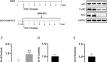
This study was designed to explore the role of RIP3 in DOX-induced cardiotoxicity and its underlying molecular mechanisms. Our results demonstrate that RIP3 exacerbates DOX-induced cardiotoxicity through promoting oxidative stress and pyroptosis by regulating the AKT/Nuclear factor erythroid 2-related factor 2 (Nrf2) signal pathway. Inhibition of RIP3 using GSK-872 attenuated DOX-induced cardiac remodeling and contractile dysfunction. Moreover, using GSK-872 in vivo, the results revealed that inhibition of RIP3 alleviated DOX-induced cardiotoxicity by the resulting inhibition of oxidative stress and pyroptosis. In addition, inhibition of RIP3 increased the protein levels of AKT and Nrf2 in DOX-treated mouse hearts. Furthermore, the AKT inhibitor LY294002 lessened RIP3 reduction-offered protection against DOX-induced H9c2 cell injury by moderating oxidative stress and pyroptosis. Taken together, these data demonstrate that RIP3 activation orchestrates DOX-induced cardiotoxicity through elevated oxidative stress and pyroptosis in an AKT/Nrf2-dependent manner. Those findings highlight the clinical relevance and therapeutic potential of targeting RIP3 for the treatment of DOX-induced cardiotoxicity.
期刊介绍:
Molecular and Cellular Biochemistry: An International Journal for Chemical Biology in Health and Disease publishes original research papers and short communications in all areas of the biochemical sciences, emphasizing novel findings relevant to the biochemical basis of cellular function and disease processes, as well as the mechanics of action of hormones and chemical agents. Coverage includes membrane transport, receptor mechanism, immune response, secretory processes, and cytoskeletal function, as well as biochemical structure-function relationships in the cell.
In addition to the reports of original research, the journal publishes state of the art reviews. Specific subjects covered by Molecular and Cellular Biochemistry include cellular metabolism, cellular pathophysiology, enzymology, ion transport, lipid biochemistry, membrane biochemistry, molecular biology, nuclear structure and function, and protein chemistry.



 京公网安备 11010802042870号
京ICP备2023020795号-1
京公网安备 11010802042870号
京ICP备2023020795号-1

 分享
分享
 求助内容:
求助内容: 应助结果提醒方式:
 扫码关注我们
