{"title":"In vitro study on the anticancer effects of oxalipalladium against PC3 human prostate carcinoma cells","authors":"","doi":"10.1016/j.taap.2024.117021","DOIUrl":null,"url":null,"abstract":"<div><p>Prostate cancer is a common type of cancer in men with high incidence and mortality. Our aim was to investigate the effects of oxalipalladium (ox-Pd) on metastatic human prostate cancer PC3 cells and compare them with the effects of oxaliplatin (ox-Pt) (as an approved cancer drug). We synthesized ox-Pd through a new chemical method and used FT-IR, <sup>1</sup>H NMR, <sup>13</sup>C NMR, and MS analyzes to characterize it. The effects of ox-Pd on PC3 cells viability, apoptosis, cell cycle, migration, and gene expression were examined. Inhibition of topoisomerase IIα activity was investigated by pHOT1 plasmid relaxation and kDNA decatenation assays. Chemical tests showed ox-Pd with the correct composition and structure. For the first time, the exact fragmentation pathway of ox-Pd and its difference with ox-Pt was obtained by MS analysis. Ox-Pd significantly decreased PC3 cell viability with less/no toxicity effect on MHFB-1 normal skin fibroblasts. Wound scratch assay confirmed the strong anti-migratory activity of ox-Pd. According to flow cytometry analysis, this drug increased the number of PC3 cells in late apoptosis and decreased DNA replication and mitosis. Furthermore, pHOT1 plasmid relaxation and kDNA decatenation assays showed that ox-Pd strongly inhibited the catalytic activity of topoisomerase IIα. The expression of <em>topoisomerase IIα</em>, <em>Bcl-2</em>, <em>P21</em>, and <em>survivin</em> was decreased while the expression of <em>Bax</em> and <em>p53</em> was increased under ox-Pd treatment. We provide the first evidence that ox-Pd exhibits more selective anticancer effects on PC3 cells compared to ox-Pt. Taken together, these data strongly suggest a therapeutic window for ox-Pd in cancer.</p></div>","PeriodicalId":23174,"journal":{"name":"Toxicology and applied pharmacology","volume":"490 ","pages":"Article 117021"},"PeriodicalIF":3.4000,"publicationDate":"2024-07-04","publicationTypes":"Journal Article","fieldsOfStudy":null,"isOpenAccess":false,"openAccessPdf":"","citationCount":"0","resultStr":null,"platform":"Semanticscholar","paperid":null,"PeriodicalName":"Toxicology and applied pharmacology","FirstCategoryId":"3","ListUrlMain":"https://www.sciencedirect.com/science/article/pii/S0041008X24002199","RegionNum":3,"RegionCategory":"医学","ArticlePicture":[],"TitleCN":null,"AbstractTextCN":null,"PMCID":null,"EPubDate":"","PubModel":"","JCR":"Q2","JCRName":"PHARMACOLOGY & PHARMACY","Score":null,"Total":0}
引用次数: 0
Abstract
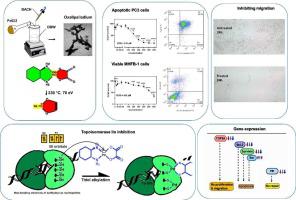
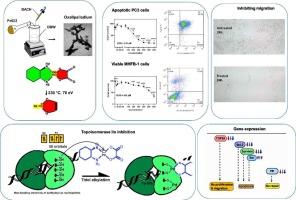
Prostate cancer is a common type of cancer in men with high incidence and mortality. Our aim was to investigate the effects of oxalipalladium (ox-Pd) on metastatic human prostate cancer PC3 cells and compare them with the effects of oxaliplatin (ox-Pt) (as an approved cancer drug). We synthesized ox-Pd through a new chemical method and used FT-IR, 1H NMR, 13C NMR, and MS analyzes to characterize it. The effects of ox-Pd on PC3 cells viability, apoptosis, cell cycle, migration, and gene expression were examined. Inhibition of topoisomerase IIα activity was investigated by pHOT1 plasmid relaxation and kDNA decatenation assays. Chemical tests showed ox-Pd with the correct composition and structure. For the first time, the exact fragmentation pathway of ox-Pd and its difference with ox-Pt was obtained by MS analysis. Ox-Pd significantly decreased PC3 cell viability with less/no toxicity effect on MHFB-1 normal skin fibroblasts. Wound scratch assay confirmed the strong anti-migratory activity of ox-Pd. According to flow cytometry analysis, this drug increased the number of PC3 cells in late apoptosis and decreased DNA replication and mitosis. Furthermore, pHOT1 plasmid relaxation and kDNA decatenation assays showed that ox-Pd strongly inhibited the catalytic activity of topoisomerase IIα. The expression of topoisomerase IIα, Bcl-2, P21, and survivin was decreased while the expression of Bax and p53 was increased under ox-Pd treatment. We provide the first evidence that ox-Pd exhibits more selective anticancer effects on PC3 cells compared to ox-Pt. Taken together, these data strongly suggest a therapeutic window for ox-Pd in cancer.
期刊介绍:
Toxicology and Applied Pharmacology publishes original scientific research of relevance to animals or humans pertaining to the action of chemicals, drugs, or chemically-defined natural products.
Regular articles address mechanistic approaches to physiological, pharmacologic, biochemical, cellular, or molecular understanding of toxicologic/pathologic lesions and to methods used to describe these responses. Safety Science articles address outstanding state-of-the-art preclinical and human translational characterization of drug and chemical safety employing cutting-edge science. Highly significant Regulatory Safety Science articles will also be considered in this category. Papers concerned with alternatives to the use of experimental animals are encouraged.
Short articles report on high impact studies of broad interest to readers of TAAP that would benefit from rapid publication. These articles should contain no more than a combined total of four figures and tables. Authors should include in their cover letter the justification for consideration of their manuscript as a short article.



 京公网安备 11010802042870号
京ICP备2023020795号-1
京公网安备 11010802042870号
京ICP备2023020795号-1

 分享
分享
 求助内容:
求助内容: 应助结果提醒方式:
 扫码关注我们
