Alireza Yaghoobi, Malihe Rezaee, Neda Hedayati, Atoosa Keshavarzmotamed, Mohammad Amin Khalilzad, Reitel Russel, Zatollah Asemi, Hasan Rajabi Moghadam, Alireza Mafi
{"title":"Insight into the cardioprotective effects of melatonin: shining a spotlight on intercellular Sirt signaling communication.","authors":"Alireza Yaghoobi, Malihe Rezaee, Neda Hedayati, Atoosa Keshavarzmotamed, Mohammad Amin Khalilzad, Reitel Russel, Zatollah Asemi, Hasan Rajabi Moghadam, Alireza Mafi","doi":"10.1007/s11010-024-05002-3","DOIUrl":null,"url":null,"abstract":"<p><p>Cardiovascular diseases (CVDs) are the leading causes of death and illness worldwide. While there have been advancements in the treatment of CVDs using medication and medical procedures, these conventional methods have limited effectiveness in halting the progression of heart diseases to complete heart failure. However, in recent years, the hormone melatonin has shown promise as a protective agent for the heart. Melatonin, which is secreted by the pineal gland and regulates our sleep-wake cycle, plays a role in various biological processes including oxidative stress, mitochondrial function, and cell death. The Sirtuin (Sirt) family of proteins has gained attention for their involvement in many cellular functions related to heart health. It has been well established that melatonin activates the Sirt signaling pathways, leading to several beneficial effects on the heart. These include preserving mitochondrial function, reducing oxidative stress, decreasing inflammation, preventing cell death, and regulating autophagy in cardiac cells. Therefore, melatonin could play crucial roles in ameliorating various cardiovascular pathologies, such as sepsis, drug toxicity-induced myocardial injury, myocardial ischemia-reperfusion injury, hypertension, heart failure, and diabetic cardiomyopathy. These effects may be partly attributed to the modulation of different Sirt family members by melatonin. This review summarizes the existing body of literature highlighting the cardioprotective effects of melatonin, specifically the ones including modulation of Sirt signaling pathways. Also, we discuss the potential use of melatonin-Sirt interactions as a forthcoming therapeutic target for managing and preventing CVDs.</p>","PeriodicalId":18724,"journal":{"name":"Molecular and Cellular Biochemistry","volume":" ","pages":"799-823"},"PeriodicalIF":3.7000,"publicationDate":"2025-02-01","publicationTypes":"Journal Article","fieldsOfStudy":null,"isOpenAccess":false,"openAccessPdf":"","citationCount":"0","resultStr":null,"platform":"Semanticscholar","paperid":null,"PeriodicalName":"Molecular and Cellular Biochemistry","FirstCategoryId":"99","ListUrlMain":"https://doi.org/10.1007/s11010-024-05002-3","RegionNum":2,"RegionCategory":"生物学","ArticlePicture":[],"TitleCN":null,"AbstractTextCN":null,"PMCID":null,"EPubDate":"2024/7/9 0:00:00","PubModel":"Epub","JCR":"Q3","JCRName":"CELL BIOLOGY","Score":null,"Total":0}
引用次数: 0
Abstract
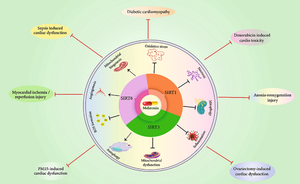
Cardiovascular diseases (CVDs) are the leading causes of death and illness worldwide. While there have been advancements in the treatment of CVDs using medication and medical procedures, these conventional methods have limited effectiveness in halting the progression of heart diseases to complete heart failure. However, in recent years, the hormone melatonin has shown promise as a protective agent for the heart. Melatonin, which is secreted by the pineal gland and regulates our sleep-wake cycle, plays a role in various biological processes including oxidative stress, mitochondrial function, and cell death. The Sirtuin (Sirt) family of proteins has gained attention for their involvement in many cellular functions related to heart health. It has been well established that melatonin activates the Sirt signaling pathways, leading to several beneficial effects on the heart. These include preserving mitochondrial function, reducing oxidative stress, decreasing inflammation, preventing cell death, and regulating autophagy in cardiac cells. Therefore, melatonin could play crucial roles in ameliorating various cardiovascular pathologies, such as sepsis, drug toxicity-induced myocardial injury, myocardial ischemia-reperfusion injury, hypertension, heart failure, and diabetic cardiomyopathy. These effects may be partly attributed to the modulation of different Sirt family members by melatonin. This review summarizes the existing body of literature highlighting the cardioprotective effects of melatonin, specifically the ones including modulation of Sirt signaling pathways. Also, we discuss the potential use of melatonin-Sirt interactions as a forthcoming therapeutic target for managing and preventing CVDs.
期刊介绍:
Molecular and Cellular Biochemistry: An International Journal for Chemical Biology in Health and Disease publishes original research papers and short communications in all areas of the biochemical sciences, emphasizing novel findings relevant to the biochemical basis of cellular function and disease processes, as well as the mechanics of action of hormones and chemical agents. Coverage includes membrane transport, receptor mechanism, immune response, secretory processes, and cytoskeletal function, as well as biochemical structure-function relationships in the cell.
In addition to the reports of original research, the journal publishes state of the art reviews. Specific subjects covered by Molecular and Cellular Biochemistry include cellular metabolism, cellular pathophysiology, enzymology, ion transport, lipid biochemistry, membrane biochemistry, molecular biology, nuclear structure and function, and protein chemistry.



 京公网安备 11010802042870号
京ICP备2023020795号-1
京公网安备 11010802042870号
京ICP备2023020795号-1

 分享
分享
 求助内容:
求助内容: 应助结果提醒方式:
 扫码关注我们
