Hyungjoo Park, Misun Kim, Seunghyun Kang, Taewan Kim, Sehyuk Yoon, Jihee Park, Sungjae Ha, Sung Jae Kim
{"title":"Enhancement of Overlimiting Current in a Three-Dimensional Hierarchical Micro/Nanofluidic System by Non-uniform Compartmentalization","authors":"Hyungjoo Park, Misun Kim, Seunghyun Kang, Taewan Kim, Sehyuk Yoon, Jihee Park, Sungjae Ha, Sung Jae Kim","doi":"10.1007/s13206-024-00161-3","DOIUrl":null,"url":null,"abstract":"<p>Overlimiting current (OLC) is a non-linear current response that occurs related to an ion concentration polarization (ICP) phenomenon in micro/nanofluidic systems and holds great importance since it represents the rate of selective ion transportation through perm-selective structure. For last two decades, numerous studies of OLC have been reported about understanding the fundamentals of nanoelectrokinetics and enhancing ion transportation through perm-selective membranes. Recent study reported that the alignment of non-uniform microspace near the perm-selective membranes in two-dimensional micro/nanofluidic systems can significantly enhance OLC, <i>i</i>.<i>e</i>., overlimiting conductance (<i>σ</i><sub>OLC</sub>). This is attributed to recirculation flow induced by combination of unbalanced electroosmosis and induced pressure driven flow among non-uniform microspaces. However, 2D micro/nanofluidic systems have limited practicality due to their small volume and low throughput. Herein, we tested the OLC enhancement using 3D-printed hierarchical micro/nanofluidic systems with respect to the non-uniformity of microspaces. The 3D microspaces were fabricated as a mesh structure using a conventional 3D printer. By comparing current–voltage measurement with each type of mesh, we experimentally confirmed the generation of recirculation flow among non-uniform meshes and ionic current enhancement in 3D hierarchical micro/nanofluidic system. Also, we further investigated the enhancement of overlimiting conductance depending on the mesh pattern. Furthermore, we validated that this effect of microscale non-uniform compartmentalization, both increasing surface area and aligning non-uniform spaces, appears not only at low molar concentration but at high molar concentrations. This demonstration can offer a strategy to design optimal electrochemical systems where a perm-selective ion transportation is crucial.</p>","PeriodicalId":8768,"journal":{"name":"BioChip Journal","volume":"40 1","pages":""},"PeriodicalIF":6.1000,"publicationDate":"2024-07-08","publicationTypes":"Journal Article","fieldsOfStudy":null,"isOpenAccess":false,"openAccessPdf":"","citationCount":"0","resultStr":null,"platform":"Semanticscholar","paperid":null,"PeriodicalName":"BioChip Journal","FirstCategoryId":"5","ListUrlMain":"https://doi.org/10.1007/s13206-024-00161-3","RegionNum":3,"RegionCategory":"工程技术","ArticlePicture":[],"TitleCN":null,"AbstractTextCN":null,"PMCID":null,"EPubDate":"","PubModel":"","JCR":"Q1","JCRName":"BIOCHEMICAL RESEARCH METHODS","Score":null,"Total":0}
引用次数: 0
Abstract
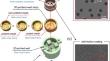
Overlimiting current (OLC) is a non-linear current response that occurs related to an ion concentration polarization (ICP) phenomenon in micro/nanofluidic systems and holds great importance since it represents the rate of selective ion transportation through perm-selective structure. For last two decades, numerous studies of OLC have been reported about understanding the fundamentals of nanoelectrokinetics and enhancing ion transportation through perm-selective membranes. Recent study reported that the alignment of non-uniform microspace near the perm-selective membranes in two-dimensional micro/nanofluidic systems can significantly enhance OLC, i.e., overlimiting conductance (σOLC). This is attributed to recirculation flow induced by combination of unbalanced electroosmosis and induced pressure driven flow among non-uniform microspaces. However, 2D micro/nanofluidic systems have limited practicality due to their small volume and low throughput. Herein, we tested the OLC enhancement using 3D-printed hierarchical micro/nanofluidic systems with respect to the non-uniformity of microspaces. The 3D microspaces were fabricated as a mesh structure using a conventional 3D printer. By comparing current–voltage measurement with each type of mesh, we experimentally confirmed the generation of recirculation flow among non-uniform meshes and ionic current enhancement in 3D hierarchical micro/nanofluidic system. Also, we further investigated the enhancement of overlimiting conductance depending on the mesh pattern. Furthermore, we validated that this effect of microscale non-uniform compartmentalization, both increasing surface area and aligning non-uniform spaces, appears not only at low molar concentration but at high molar concentrations. This demonstration can offer a strategy to design optimal electrochemical systems where a perm-selective ion transportation is crucial.
期刊介绍:
BioChip Journal publishes original research and reviews in all areas of the biochip technology in the following disciplines, including protein chip, DNA chip, cell chip, lab-on-a-chip, bio-MEMS, biosensor, micro/nano mechanics, microfluidics, high-throughput screening technology, medical science, genomics, proteomics, bioinformatics, medical diagnostics, environmental monitoring and micro/nanotechnology. The Journal is committed to rapid peer review to ensure the publication of highest quality original research and timely news and review articles.



 京公网安备 11010802042870号
京ICP备2023020795号-1
京公网安备 11010802042870号
京ICP备2023020795号-1

 分享
分享
 求助内容:
求助内容: 应助结果提醒方式:
 扫码关注我们
