Torri D Metz, Harrison T Reeder, Rebecca G Clifton, Valerie Flaherman, Leyna V Aragon, Leah Castro Baucom, Carmen J Beamon, Alexis Braverman, Jeanette Brown, Tingyi Cao, Ann Chang, Maged M Costantine, Jodie A Dionne, Kelly S Gibson, Rachel S Gross, Estefania Guerreros, Mounira Habli, Jennifer Hadlock, Jenny Han, Rachel Hess, Leah Hillier, M Camille Hoffman, Matthew K Hoffman, Brenna L Hughes, Xiaolin Jia, Minal Kale, Stuart D Katz, Victoria Laleau, Gail Mallett, Alem Mehari, Hector Mendez-Figueroa, Grace A McComsey, Jonathan Monteiro, Vanessa Monzon, Megumi J Okumura, Deepti Pant, Luis D Pacheco, Anna Palatnik, Kristy T S Palomares, Samuel Parry, Christian M Pettker, Beth A Plunkett, Athena Poppas, Patrick Ramsey, Uma M Reddy, Dwight J Rouse, George R Saade, Grecio J Sandoval, Frank Sciurba, Hyagriv N Simhan, Daniel W Skupski, Amber Sowles, John M Thorp, Alan T N Tita, Samantha Wiegand, Steven J Weiner, Lynn M Yee, Leora I Horwitz, Andrea S Foulkes, Vanessa Jacoby
{"title":"Post-Acute Sequelae of Severe Acute Respiratory Syndrome Coronavirus 2 (SARS-CoV-2) After Infection During Pregnancy.","authors":"Torri D Metz, Harrison T Reeder, Rebecca G Clifton, Valerie Flaherman, Leyna V Aragon, Leah Castro Baucom, Carmen J Beamon, Alexis Braverman, Jeanette Brown, Tingyi Cao, Ann Chang, Maged M Costantine, Jodie A Dionne, Kelly S Gibson, Rachel S Gross, Estefania Guerreros, Mounira Habli, Jennifer Hadlock, Jenny Han, Rachel Hess, Leah Hillier, M Camille Hoffman, Matthew K Hoffman, Brenna L Hughes, Xiaolin Jia, Minal Kale, Stuart D Katz, Victoria Laleau, Gail Mallett, Alem Mehari, Hector Mendez-Figueroa, Grace A McComsey, Jonathan Monteiro, Vanessa Monzon, Megumi J Okumura, Deepti Pant, Luis D Pacheco, Anna Palatnik, Kristy T S Palomares, Samuel Parry, Christian M Pettker, Beth A Plunkett, Athena Poppas, Patrick Ramsey, Uma M Reddy, Dwight J Rouse, George R Saade, Grecio J Sandoval, Frank Sciurba, Hyagriv N Simhan, Daniel W Skupski, Amber Sowles, John M Thorp, Alan T N Tita, Samantha Wiegand, Steven J Weiner, Lynn M Yee, Leora I Horwitz, Andrea S Foulkes, Vanessa Jacoby","doi":"10.1097/AOG.0000000000005670","DOIUrl":null,"url":null,"abstract":"<p><strong>Objective: </strong>To estimate the prevalence of post-acute sequelae of severe acute respiratory syndrome coronavirus 2 (SARS-CoV-2) infection (PASC) after infection with SARS-CoV-2 during pregnancy and to characterize associated risk factors.</p><p><strong>Methods: </strong>In a multicenter cohort study (NIH RECOVER [Researching COVID to Enhance Recovery]-Pregnancy Cohort), individuals who were pregnant during their first SARS-CoV-2 infection were enrolled across the United States from December 2021 to September 2023, either within 30 days of their infection or at differential time points thereafter. The primary outcome was PASC , defined as score of 12 or higher based on symptoms and severity as previously published by the NIH RECOVER-Adult Cohort, at the first study visit at least 6 months after the participant's first SARS-CoV-2 infection. Risk factors for PASC were evaluated, including sociodemographic characteristics, clinical characteristics before SARS-CoV-2 infection (baseline comorbidities, trimester of infection, vaccination status), and acute infection severity (classified by need for oxygen therapy). Multivariable logistic regression models were fitted to estimate associations between these characteristics and presence of PASC.</p><p><strong>Results: </strong>Of the 1,502 participants, 61.1% had their first SARS-CoV-2 infection on or after December 1, 2021 (ie, during Omicron variant dominance); 51.4% were fully vaccinated before infection; and 182 (12.1%) were enrolled within 30 days of their acute infection. The prevalence of PASC was 9.3% (95% CI, 7.9-10.9%) measured at a median of 10.3 months (interquartile range 6.1-21.5) after first infection. The most common symptoms among individuals with PASC were postexertional malaise (77.7%), fatigue (76.3%), and gastrointestinal symptoms (61.2%). In a multivariable model, the proportion PASC positive with vs without history of obesity (14.9% vs 7.5%, adjusted odds ratio [aOR] 1.65, 95% CI, 1.12-2.43), depression or anxiety disorder (14.4% vs 6.1%, aOR 2.64, 95% CI, 1.79-3.88) before first infection, economic hardship (self-reported difficulty covering expenses) (12.5% vs 6.9%, aOR 1.57, 95% CI, 1.05-2.34), and treatment with oxygen during acute SARS-CoV-2 infection (18.1% vs 8.7%, aOR 1.86, 95% CI, 1.00-3.44) were associated with increased prevalence of PASC.</p><p><strong>Conclusion: </strong>The prevalence of PASC at a median time of 10.3 months after SARS-CoV-2 infection during pregnancy was 9.3% in the NIH RECOVER-Pregnancy Cohort. The predominant symptoms were postexertional malaise, fatigue, and gastrointestinal symptoms. Several socioeconomic and clinical characteristics were associated with PASC after infection during pregnancy.</p><p><strong>Clinical trial registration: </strong>ClinicalTrials.gov , NCT05172024.</p>","PeriodicalId":19483,"journal":{"name":"Obstetrics and gynecology","volume":" ","pages":"411-420"},"PeriodicalIF":4.7000,"publicationDate":"2024-09-01","publicationTypes":"Journal Article","fieldsOfStudy":null,"isOpenAccess":false,"openAccessPdf":"https://www.ncbi.nlm.nih.gov/pmc/articles/PMC11326967/pdf/","citationCount":"0","resultStr":null,"platform":"Semanticscholar","paperid":null,"PeriodicalName":"Obstetrics and gynecology","FirstCategoryId":"3","ListUrlMain":"https://doi.org/10.1097/AOG.0000000000005670","RegionNum":2,"RegionCategory":"医学","ArticlePicture":[],"TitleCN":null,"AbstractTextCN":null,"PMCID":null,"EPubDate":"2024/7/11 0:00:00","PubModel":"Epub","JCR":"Q1","JCRName":"OBSTETRICS & GYNECOLOGY","Score":null,"Total":0}
引用次数: 0
Abstract
Objective: To estimate the prevalence of post-acute sequelae of severe acute respiratory syndrome coronavirus 2 (SARS-CoV-2) infection (PASC) after infection with SARS-CoV-2 during pregnancy and to characterize associated risk factors.
Methods: In a multicenter cohort study (NIH RECOVER [Researching COVID to Enhance Recovery]-Pregnancy Cohort), individuals who were pregnant during their first SARS-CoV-2 infection were enrolled across the United States from December 2021 to September 2023, either within 30 days of their infection or at differential time points thereafter. The primary outcome was PASC , defined as score of 12 or higher based on symptoms and severity as previously published by the NIH RECOVER-Adult Cohort, at the first study visit at least 6 months after the participant's first SARS-CoV-2 infection. Risk factors for PASC were evaluated, including sociodemographic characteristics, clinical characteristics before SARS-CoV-2 infection (baseline comorbidities, trimester of infection, vaccination status), and acute infection severity (classified by need for oxygen therapy). Multivariable logistic regression models were fitted to estimate associations between these characteristics and presence of PASC.
Results: Of the 1,502 participants, 61.1% had their first SARS-CoV-2 infection on or after December 1, 2021 (ie, during Omicron variant dominance); 51.4% were fully vaccinated before infection; and 182 (12.1%) were enrolled within 30 days of their acute infection. The prevalence of PASC was 9.3% (95% CI, 7.9-10.9%) measured at a median of 10.3 months (interquartile range 6.1-21.5) after first infection. The most common symptoms among individuals with PASC were postexertional malaise (77.7%), fatigue (76.3%), and gastrointestinal symptoms (61.2%). In a multivariable model, the proportion PASC positive with vs without history of obesity (14.9% vs 7.5%, adjusted odds ratio [aOR] 1.65, 95% CI, 1.12-2.43), depression or anxiety disorder (14.4% vs 6.1%, aOR 2.64, 95% CI, 1.79-3.88) before first infection, economic hardship (self-reported difficulty covering expenses) (12.5% vs 6.9%, aOR 1.57, 95% CI, 1.05-2.34), and treatment with oxygen during acute SARS-CoV-2 infection (18.1% vs 8.7%, aOR 1.86, 95% CI, 1.00-3.44) were associated with increased prevalence of PASC.
Conclusion: The prevalence of PASC at a median time of 10.3 months after SARS-CoV-2 infection during pregnancy was 9.3% in the NIH RECOVER-Pregnancy Cohort. The predominant symptoms were postexertional malaise, fatigue, and gastrointestinal symptoms. Several socioeconomic and clinical characteristics were associated with PASC after infection during pregnancy.
期刊介绍:
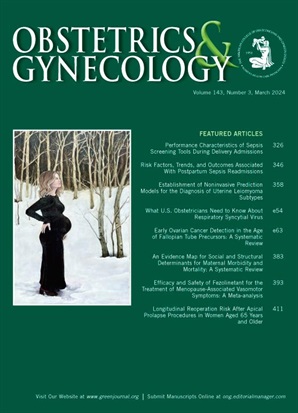
"Obstetrics & Gynecology," affectionately known as "The Green Journal," is the official publication of the American College of Obstetricians and Gynecologists (ACOG). Since its inception in 1953, the journal has been dedicated to advancing the clinical practice of obstetrics and gynecology, as well as related fields. The journal's mission is to promote excellence in these areas by publishing a diverse range of articles that cover translational and clinical topics.
"Obstetrics & Gynecology" provides a platform for the dissemination of evidence-based research, clinical guidelines, and expert opinions that are essential for the continuous improvement of women's health care. The journal's content is designed to inform and educate obstetricians, gynecologists, and other healthcare professionals, ensuring that they stay abreast of the latest developments and best practices in their field.



 京公网安备 11010802042870号
京ICP备2023020795号-1
京公网安备 11010802042870号
京ICP备2023020795号-1

 分享
分享
 求助内容:
求助内容: 应助结果提醒方式:
 扫码关注我们
