{"title":"The effects of eWom triggered service recovery on customer citizenship behavior in the hospitality industry: The moderating role of failure severity","authors":"Engin Tengilimoglu, Yüksel Öztürk","doi":"10.1002/jtr.2673","DOIUrl":null,"url":null,"abstract":"<p>This study examines service failures in the hospitality industry, amplified by the shift to online platforms, and highlights the need for effective online recovery methods. These methods are crucial for retaining existing customers and preventing potential customer loss. Despite its importance, customer citizenship behavior resulting from service recovery must be noticed. This study examines the impact of service failure severity and online recovery methods on customer citizenship behavior, employing six scenarios varying in severity and recovery strategies. Multi-group scanning electron microscope analysis reveals that justice types positively influence recovery satisfaction, enhancing customer citizenship behaviors. Failure severity moderates the relationship between recovery satisfaction and customer citizenship behavior, with recovery satisfaction being more effective in promoting advocacy and tolerance behaviors during low-severity failures. However, this effect diminishes in high-severity failures. Effective recovery strategies can transform negative service failures into positive outcomes for hospitality organizations.</p>","PeriodicalId":51375,"journal":{"name":"International Journal of Tourism Research","volume":"26 4","pages":""},"PeriodicalIF":5.7000,"publicationDate":"2024-07-17","publicationTypes":"Journal Article","fieldsOfStudy":null,"isOpenAccess":false,"openAccessPdf":"https://onlinelibrary.wiley.com/doi/epdf/10.1002/jtr.2673","citationCount":"0","resultStr":null,"platform":"Semanticscholar","paperid":null,"PeriodicalName":"International Journal of Tourism Research","FirstCategoryId":"91","ListUrlMain":"https://onlinelibrary.wiley.com/doi/10.1002/jtr.2673","RegionNum":3,"RegionCategory":"管理学","ArticlePicture":[],"TitleCN":null,"AbstractTextCN":null,"PMCID":null,"EPubDate":"","PubModel":"","JCR":"Q1","JCRName":"HOSPITALITY, LEISURE, SPORT & TOURISM","Score":null,"Total":0}
引用次数: 0
Abstract
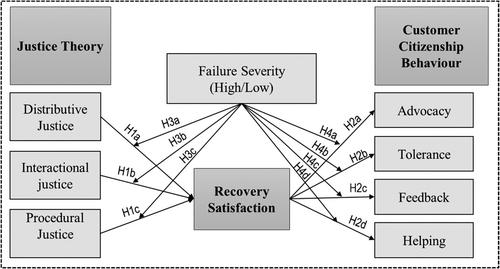
This study examines service failures in the hospitality industry, amplified by the shift to online platforms, and highlights the need for effective online recovery methods. These methods are crucial for retaining existing customers and preventing potential customer loss. Despite its importance, customer citizenship behavior resulting from service recovery must be noticed. This study examines the impact of service failure severity and online recovery methods on customer citizenship behavior, employing six scenarios varying in severity and recovery strategies. Multi-group scanning electron microscope analysis reveals that justice types positively influence recovery satisfaction, enhancing customer citizenship behaviors. Failure severity moderates the relationship between recovery satisfaction and customer citizenship behavior, with recovery satisfaction being more effective in promoting advocacy and tolerance behaviors during low-severity failures. However, this effect diminishes in high-severity failures. Effective recovery strategies can transform negative service failures into positive outcomes for hospitality organizations.
期刊介绍:
International Journal of Tourism Research promotes and enhances research developments in the field of tourism. The journal provides an international platform for debate and dissemination of research findings whilst also facilitating the discussion of new research areas and techniques. IJTR continues to add a vibrant and exciting channel for those interested in tourism and hospitality research developments. The scope of the journal is international and welcomes research that makes original contributions to theories and methodologies. It continues to publish high quality research papers in any area of tourism, including empirical papers on tourism issues. The journal welcomes submissions based upon both primary research and reviews including papers in areas that may not directly be tourism based but concern a topic that is of interest to researchers in the field of tourism, such as economics, marketing, sociology and statistics. All papers are subject to strict double-blind (or triple-blind) peer review by the international research community.




 京公网安备 11010802042870号
京ICP备2023020795号-1
京公网安备 11010802042870号
京ICP备2023020795号-1

 分享
分享
 求助内容:
求助内容: 应助结果提醒方式:
 扫码关注我们
