Enhancing service adaptability: a moderated mediation model of workplace ostracism, robot anthropomorphism, employees’ readiness to change, and performance efficacy
Ataul Karim Patwary, Md Sazzad Hossain, T. Mistry, M. Parvez
{"title":"Enhancing service adaptability: a moderated mediation model of workplace ostracism, robot anthropomorphism, employees’ readiness to change, and performance efficacy","authors":"Ataul Karim Patwary, Md Sazzad Hossain, T. Mistry, M. Parvez","doi":"10.1108/jhtt-12-2023-0437","DOIUrl":null,"url":null,"abstract":"\nPurpose\nThis study aims to analyze workplace ostracism, robot anthropomorphism, employees’ readiness to change and employees’ service adaptive behavior. The moderating role of performance efficacy between employees’ readiness and service adaptive behavior was also assessed.\n\n\nDesign/methodology/approach\nData were collected from 591 restaurant employees in Malaysia. The data were analyzed using partial least squares-structural equation modeling.\n\n\nFindings\nWorkplace ostracism and robot anthropomorphism positively influence employees’ readiness to change and service-adaptive behavior. Employees’ readiness to change mediates the relationship between ostracism, robot anthropomorphism and service-adaptive behavior.\n\n\nResearch limitations/implications\nThis study provides an exclusively applied understanding of robot anthropomorphism and service employee adaptive behavior. In addition to restaurant employees’ readiness to change and collaborate with service robots, a longitudinal study can be conducted to track the advancement of restaurant employees’ technology adaptive behavior over an extended area.\n\n\nOriginality/value\nService robots have mainly been assessed from consumer perspectives in the hospitality industry. This research used the conservation of resources theory to evaluate the human–computer interaction of service robots and restaurant employees. Organizational and individual factors were considered to assess the impact on employees’ service adaptability.\n","PeriodicalId":5,"journal":{"name":"ACS Applied Materials & Interfaces","volume":"22 4","pages":""},"PeriodicalIF":8.2000,"publicationDate":"2024-07-01","publicationTypes":"Journal Article","fieldsOfStudy":null,"isOpenAccess":false,"openAccessPdf":"","citationCount":"0","resultStr":null,"platform":"Semanticscholar","paperid":null,"PeriodicalName":"ACS Applied Materials & Interfaces","FirstCategoryId":"91","ListUrlMain":"https://doi.org/10.1108/jhtt-12-2023-0437","RegionNum":2,"RegionCategory":"材料科学","ArticlePicture":[],"TitleCN":null,"AbstractTextCN":null,"PMCID":null,"EPubDate":"","PubModel":"","JCR":"Q1","JCRName":"MATERIALS SCIENCE, MULTIDISCIPLINARY","Score":null,"Total":0}
引用次数: 0
Abstract
Purpose
This study aims to analyze workplace ostracism, robot anthropomorphism, employees’ readiness to change and employees’ service adaptive behavior. The moderating role of performance efficacy between employees’ readiness and service adaptive behavior was also assessed.
Design/methodology/approach
Data were collected from 591 restaurant employees in Malaysia. The data were analyzed using partial least squares-structural equation modeling.
Findings
Workplace ostracism and robot anthropomorphism positively influence employees’ readiness to change and service-adaptive behavior. Employees’ readiness to change mediates the relationship between ostracism, robot anthropomorphism and service-adaptive behavior.
Research limitations/implications
This study provides an exclusively applied understanding of robot anthropomorphism and service employee adaptive behavior. In addition to restaurant employees’ readiness to change and collaborate with service robots, a longitudinal study can be conducted to track the advancement of restaurant employees’ technology adaptive behavior over an extended area.
Originality/value
Service robots have mainly been assessed from consumer perspectives in the hospitality industry. This research used the conservation of resources theory to evaluate the human–computer interaction of service robots and restaurant employees. Organizational and individual factors were considered to assess the impact on employees’ service adaptability.
期刊介绍:
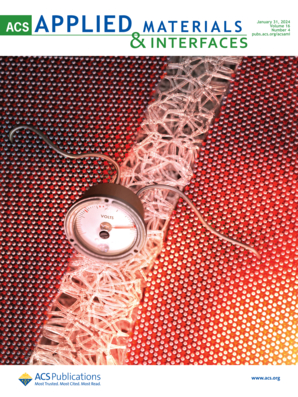
ACS Applied Materials & Interfaces is a leading interdisciplinary journal that brings together chemists, engineers, physicists, and biologists to explore the development and utilization of newly-discovered materials and interfacial processes for specific applications. Our journal has experienced remarkable growth since its establishment in 2009, both in terms of the number of articles published and the impact of the research showcased. We are proud to foster a truly global community, with the majority of published articles originating from outside the United States, reflecting the rapid growth of applied research worldwide.




 京公网安备 11010802042870号
京ICP备2023020795号-1
京公网安备 11010802042870号
京ICP备2023020795号-1

 分享
分享
 求助内容:
求助内容: 应助结果提醒方式:
 扫码关注我们
