{"title":"Research progresses on mitochondrial-targeted biomaterials for bone defect repair","authors":"Shuze Wang, Jialin Liu, Linxi Zhou, Hao Xu, Dan Zhang, Xing Zhang, Qiang Wang, Qing Zhou","doi":"10.1093/rb/rbae082","DOIUrl":null,"url":null,"abstract":"\n In recent years, the regulation of the cell microenvironment has opened up new avenues for bone defect repair. Researchers have developed novel biomaterials to influence the behavior of osteoblasts and immune cells by regulating the microenvironment, aiming to achieve efficient bone repair. Mitochondria, as crucial organelles involved in energy conversion, biosynthesis, and signal transduction, play a vital role in maintaining bone integrity. Dysfunction of mitochondria can have detrimental effects on the transformation of the immune microenvironment and the differentiation of stem cells, thereby hindering bone tissue regeneration. Consequently, targeted therapy strategies focusing on mitochondria have emerged. This approach offers a wide range of applications and reliable therapeutic effects, thereby providing a new treatment option for complex and refractory bone defect diseases. In recent studies, more biomaterials have been used to restore mitochondrial function and promote positive cell differentiation. The main directions are mitochondrial energy metabolism, mitochondrial biogenesis, and mitochondrial quality control. In this review, we investigated the biomaterials used for mitochondria-targeted treatment of bone defect repair in recent years from the perspective of progress and strategies. We also summarized the micro-molecular mechanisms affected by them. Through discussions on energy metabolism, oxidative stress regulation, and autophagy regulation, we emphasized the opportunities and challenges faced by mitochondria-targeted biomaterials, providing vital clues for developing a new generation of bone repair materials.","PeriodicalId":5,"journal":{"name":"ACS Applied Materials & Interfaces","volume":"5 8","pages":""},"PeriodicalIF":8.2000,"publicationDate":"2024-07-01","publicationTypes":"Journal Article","fieldsOfStudy":null,"isOpenAccess":false,"openAccessPdf":"","citationCount":"0","resultStr":null,"platform":"Semanticscholar","paperid":null,"PeriodicalName":"ACS Applied Materials & Interfaces","FirstCategoryId":"5","ListUrlMain":"https://doi.org/10.1093/rb/rbae082","RegionNum":2,"RegionCategory":"材料科学","ArticlePicture":[],"TitleCN":null,"AbstractTextCN":null,"PMCID":null,"EPubDate":"","PubModel":"","JCR":"Q1","JCRName":"MATERIALS SCIENCE, MULTIDISCIPLINARY","Score":null,"Total":0}
引用次数: 0
Abstract
In recent years, the regulation of the cell microenvironment has opened up new avenues for bone defect repair. Researchers have developed novel biomaterials to influence the behavior of osteoblasts and immune cells by regulating the microenvironment, aiming to achieve efficient bone repair. Mitochondria, as crucial organelles involved in energy conversion, biosynthesis, and signal transduction, play a vital role in maintaining bone integrity. Dysfunction of mitochondria can have detrimental effects on the transformation of the immune microenvironment and the differentiation of stem cells, thereby hindering bone tissue regeneration. Consequently, targeted therapy strategies focusing on mitochondria have emerged. This approach offers a wide range of applications and reliable therapeutic effects, thereby providing a new treatment option for complex and refractory bone defect diseases. In recent studies, more biomaterials have been used to restore mitochondrial function and promote positive cell differentiation. The main directions are mitochondrial energy metabolism, mitochondrial biogenesis, and mitochondrial quality control. In this review, we investigated the biomaterials used for mitochondria-targeted treatment of bone defect repair in recent years from the perspective of progress and strategies. We also summarized the micro-molecular mechanisms affected by them. Through discussions on energy metabolism, oxidative stress regulation, and autophagy regulation, we emphasized the opportunities and challenges faced by mitochondria-targeted biomaterials, providing vital clues for developing a new generation of bone repair materials.
期刊介绍:
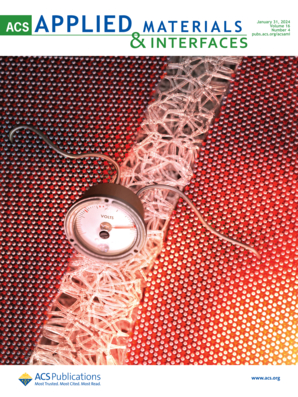
ACS Applied Materials & Interfaces is a leading interdisciplinary journal that brings together chemists, engineers, physicists, and biologists to explore the development and utilization of newly-discovered materials and interfacial processes for specific applications. Our journal has experienced remarkable growth since its establishment in 2009, both in terms of the number of articles published and the impact of the research showcased. We are proud to foster a truly global community, with the majority of published articles originating from outside the United States, reflecting the rapid growth of applied research worldwide.



 京公网安备 11010802042870号
京ICP备2023020795号-1
京公网安备 11010802042870号
京ICP备2023020795号-1

 分享
分享
 求助内容:
求助内容: 应助结果提醒方式:
 扫码关注我们
