{"title":"Understanding customer multi-interactions, trust, social support and voluntary performance in smart restaurants","authors":"Haoyue Jiao, I. Wong, Z. Lin","doi":"10.1108/jhtt-11-2023-0384","DOIUrl":null,"url":null,"abstract":"\nPurpose\nThe study aims to propose a triadic interaction model to assess the effect of customer–customer (C2C), employee–customer and robot–customer interactions on customer voluntary performance in the context of smart dining.\n\n\nDesign/methodology/approach\nAn explanatory sequential mixed methods design was used. First, a quantitative study surveyed Foodom patrons to assess the impact of triadic interactions on customer voluntary performance. The mediating role of trust and social support and the moderating effect of the need to belong were also explored. A post hoc study (Study 2) analyzed online comments to validate and complement the survey findings.\n\n\nFindings\nWhile all interactions promote social support, the C2C interactions significantly correlate with customer trust. Moreover, customer voluntary performance is influenced by both customer trust and social support, while the need to belong remains as a moderator. Findings from Study 2 consolidate and enrich the relationships identified in Study 1.\n\n\nResearch limitations/implications\nThis research reveals that patrons in smart dining still value interactions with employees and other diners. It enriches the stream of work on interaction quality by illuminating how different types of interactions could co-create value for customers, subsequently fostering voluntary behavior in smart dining contexts.\n\n\nOriginality/value\nThis research explores how patrons perceive interactions with robots in smart hospitality, highlighting their impact on trust and social support. It also sheds light on how interactions among robots, employees and customers influence customer voluntary performance, emphasizing the role of the need to belong in moderating relationships in this setting.\n","PeriodicalId":5,"journal":{"name":"ACS Applied Materials & Interfaces","volume":"29 24","pages":""},"PeriodicalIF":8.2000,"publicationDate":"2024-07-22","publicationTypes":"Journal Article","fieldsOfStudy":null,"isOpenAccess":false,"openAccessPdf":"","citationCount":"0","resultStr":null,"platform":"Semanticscholar","paperid":null,"PeriodicalName":"ACS Applied Materials & Interfaces","FirstCategoryId":"91","ListUrlMain":"https://doi.org/10.1108/jhtt-11-2023-0384","RegionNum":2,"RegionCategory":"材料科学","ArticlePicture":[],"TitleCN":null,"AbstractTextCN":null,"PMCID":null,"EPubDate":"","PubModel":"","JCR":"Q1","JCRName":"MATERIALS SCIENCE, MULTIDISCIPLINARY","Score":null,"Total":0}
引用次数: 0
Abstract
Purpose
The study aims to propose a triadic interaction model to assess the effect of customer–customer (C2C), employee–customer and robot–customer interactions on customer voluntary performance in the context of smart dining.
Design/methodology/approach
An explanatory sequential mixed methods design was used. First, a quantitative study surveyed Foodom patrons to assess the impact of triadic interactions on customer voluntary performance. The mediating role of trust and social support and the moderating effect of the need to belong were also explored. A post hoc study (Study 2) analyzed online comments to validate and complement the survey findings.
Findings
While all interactions promote social support, the C2C interactions significantly correlate with customer trust. Moreover, customer voluntary performance is influenced by both customer trust and social support, while the need to belong remains as a moderator. Findings from Study 2 consolidate and enrich the relationships identified in Study 1.
Research limitations/implications
This research reveals that patrons in smart dining still value interactions with employees and other diners. It enriches the stream of work on interaction quality by illuminating how different types of interactions could co-create value for customers, subsequently fostering voluntary behavior in smart dining contexts.
Originality/value
This research explores how patrons perceive interactions with robots in smart hospitality, highlighting their impact on trust and social support. It also sheds light on how interactions among robots, employees and customers influence customer voluntary performance, emphasizing the role of the need to belong in moderating relationships in this setting.
期刊介绍:
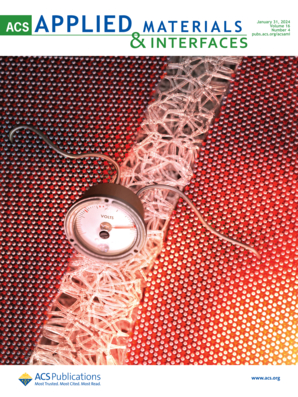
ACS Applied Materials & Interfaces is a leading interdisciplinary journal that brings together chemists, engineers, physicists, and biologists to explore the development and utilization of newly-discovered materials and interfacial processes for specific applications. Our journal has experienced remarkable growth since its establishment in 2009, both in terms of the number of articles published and the impact of the research showcased. We are proud to foster a truly global community, with the majority of published articles originating from outside the United States, reflecting the rapid growth of applied research worldwide.



 京公网安备 11010802042870号
京ICP备2023020795号-1
京公网安备 11010802042870号
京ICP备2023020795号-1

 分享
分享
 求助内容:
求助内容: 应助结果提醒方式:
 扫码关注我们
