Meiling Zhang, Peiming Wu, Ningting Guo, Wenhui Hu, Min Li, Jianhao Shao, Huiying Su, Collins Bagiritima Twebaze, Jianqing Ye, Guangwei Zheng, Zhangang Wang, Yaolin Yang, Hongyan Li, Xupin Zhuang
{"title":"Carboxyl-Modified Nanocellulose Cryogels with a Wide Range and Fast pH-Responsive Switchable Wettability for Oil/Water Separation","authors":"Meiling Zhang, Peiming Wu, Ningting Guo, Wenhui Hu, Min Li, Jianhao Shao, Huiying Su, Collins Bagiritima Twebaze, Jianqing Ye, Guangwei Zheng, Zhangang Wang, Yaolin Yang, Hongyan Li, Xupin Zhuang","doi":"10.1007/s12221-024-00654-w","DOIUrl":null,"url":null,"abstract":"<div><p>In recent years, wettability materials with pH-responsive have attracted increasing attention in oil/water separation applications. However, these materials were limited by the pH range and infiltration time. Herein, a simple operational procedure is proposed to prepare banana nanocellulose cryogels with pH-responsive switchable wettability to realize these outstanding performances. Alkyl-modified cryogels (BCNC-MS) are obtained by adding methyltrimethoxysilane (MTMS) to the banana nanocellulose (BCNF) suspension. BCNC-MS are soaked in the carboxyl-modified solution to produce pH-responsive cryogels (BCNC-MS-SA). The carboxyl-modified solution is made from succinic anhydride (SA), (3-aminopropyl)triethoxysilane (KH550), and N,N-dimethylformamide (DMF) in a molar mass ratio of 1:1:18. The key to achieving the pH-response is the protonation and deprotonation of the carboxyl groups. SEM demonstrates that the modification keeps the three-dimensional porous structure of the cryogel, and the results of EDS, FTIR, and XPS show the success of alkyl and carboxyl modifications. BCNC-MS-SA can realize hydrophilic/underwater oleophobic (θ<sub>water</sub> = 0°) and hydrophobic/underwater oleophilic (maximal θ<sub>water</sub> = 135°) wettability transitions after treatment with different pH solutions. Compared with other pH-responsive oil/water separation materials, BCNC-MS-SA performs well in pH = 1 and pH = 13 environments, and the shortest infiltration time is only 3 s. With a porosity of 93.80%, BCNC-MS-SA possesses excellent adsorption capacity (10–40 g/g), oil/water separation efficiency (> 92%), and adsorption cycle performance (15 cycles) even for viscous oils. Moreover, BCNC-MS-SA has satisfactory stability. Cryogels are made of banana nanocellulose, and they are inexpensive and can be easily degraded. BCNC-MS-SA has great potential in practical applications such as oil removal and purification of oily wastewater.</p></div>","PeriodicalId":557,"journal":{"name":"Fibers and Polymers","volume":"25 9","pages":"3229 - 3243"},"PeriodicalIF":2.3000,"publicationDate":"2024-07-29","publicationTypes":"Journal Article","fieldsOfStudy":null,"isOpenAccess":false,"openAccessPdf":"","citationCount":"0","resultStr":null,"platform":"Semanticscholar","paperid":null,"PeriodicalName":"Fibers and Polymers","FirstCategoryId":"88","ListUrlMain":"https://link.springer.com/article/10.1007/s12221-024-00654-w","RegionNum":4,"RegionCategory":"工程技术","ArticlePicture":[],"TitleCN":null,"AbstractTextCN":null,"PMCID":null,"EPubDate":"","PubModel":"","JCR":"Q1","JCRName":"MATERIALS SCIENCE, TEXTILES","Score":null,"Total":0}
引用次数: 0
Abstract
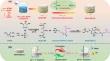
In recent years, wettability materials with pH-responsive have attracted increasing attention in oil/water separation applications. However, these materials were limited by the pH range and infiltration time. Herein, a simple operational procedure is proposed to prepare banana nanocellulose cryogels with pH-responsive switchable wettability to realize these outstanding performances. Alkyl-modified cryogels (BCNC-MS) are obtained by adding methyltrimethoxysilane (MTMS) to the banana nanocellulose (BCNF) suspension. BCNC-MS are soaked in the carboxyl-modified solution to produce pH-responsive cryogels (BCNC-MS-SA). The carboxyl-modified solution is made from succinic anhydride (SA), (3-aminopropyl)triethoxysilane (KH550), and N,N-dimethylformamide (DMF) in a molar mass ratio of 1:1:18. The key to achieving the pH-response is the protonation and deprotonation of the carboxyl groups. SEM demonstrates that the modification keeps the three-dimensional porous structure of the cryogel, and the results of EDS, FTIR, and XPS show the success of alkyl and carboxyl modifications. BCNC-MS-SA can realize hydrophilic/underwater oleophobic (θwater = 0°) and hydrophobic/underwater oleophilic (maximal θwater = 135°) wettability transitions after treatment with different pH solutions. Compared with other pH-responsive oil/water separation materials, BCNC-MS-SA performs well in pH = 1 and pH = 13 environments, and the shortest infiltration time is only 3 s. With a porosity of 93.80%, BCNC-MS-SA possesses excellent adsorption capacity (10–40 g/g), oil/water separation efficiency (> 92%), and adsorption cycle performance (15 cycles) even for viscous oils. Moreover, BCNC-MS-SA has satisfactory stability. Cryogels are made of banana nanocellulose, and they are inexpensive and can be easily degraded. BCNC-MS-SA has great potential in practical applications such as oil removal and purification of oily wastewater.
期刊介绍:
-Chemistry of Fiber Materials, Polymer Reactions and Synthesis-
Physical Properties of Fibers, Polymer Blends and Composites-
Fiber Spinning and Textile Processing, Polymer Physics, Morphology-
Colorants and Dyeing, Polymer Analysis and Characterization-
Chemical Aftertreatment of Textiles, Polymer Processing and Rheology-
Textile and Apparel Science, Functional Polymers



 京公网安备 11010802042870号
京ICP备2023020795号-1
京公网安备 11010802042870号
京ICP备2023020795号-1

 分享
分享
 求助内容:
求助内容: 应助结果提醒方式:
 扫码关注我们
