Ana Pinto, Daniela Correia da Silva, Ana Cardoso, Fátima Fernandes, Cristiano Soares, Patrícia Valentão, Fernanda Fidalgo, Jorge Teixeira
{"title":"Progesterone and brassinosteroids synergistically enhance progesterone removal and antioxidant capacity of Solanum nigrum L.","authors":"Ana Pinto, Daniela Correia da Silva, Ana Cardoso, Fátima Fernandes, Cristiano Soares, Patrícia Valentão, Fernanda Fidalgo, Jorge Teixeira","doi":"10.1007/s12298-024-01496-9","DOIUrl":null,"url":null,"abstract":"<p>Progesterone (PROG) has been detected at various concentrations in the environment and has adverse effects on humans and wildlife. This work evaluated the impact of PROG in <i>Solanum nigrum</i> L. plants, its removal capacity, and how 2,4-epibrassinolide (24-EBL) affects this process. Three treatments were used: (1) control, (2) irrigation with 0.8 µM PROG, and (3) treatment with 0.8 µM PROG after a pre-treatment with a foliar application of 1 µM 2,4-EBL (PROG/24EBL). After 20 days of treatment, no PROG was detected in the nutrient solution or plant tissues, indicating that the PROG was removed and metabolized. Lipid peroxidation significantly decreased in response to PROG in shoots and roots, and this effect was even more significant for both organs of the PROG/24EBL plants. Additionally, both treatments in both organs showed a decrease in H<sub>2</sub>O<sub>2</sub> levels, and both steroid hormones increased the plants’ antioxidant system at both the biochemical and gene expression levels. In conclusion, <i>S. nigrum</i> can swiftly remove PROG without affecting its growth, and the use of 24-EBL synergistically decreases oxidative damage by increasing the activity of the antioxidant system and enhancing plant PROG removal ability.</p>","PeriodicalId":20148,"journal":{"name":"Physiology and Molecular Biology of Plants","volume":"114 1","pages":""},"PeriodicalIF":3.3000,"publicationDate":"2024-08-02","publicationTypes":"Journal Article","fieldsOfStudy":null,"isOpenAccess":false,"openAccessPdf":"","citationCount":"0","resultStr":null,"platform":"Semanticscholar","paperid":null,"PeriodicalName":"Physiology and Molecular Biology of Plants","FirstCategoryId":"99","ListUrlMain":"https://doi.org/10.1007/s12298-024-01496-9","RegionNum":3,"RegionCategory":"生物学","ArticlePicture":[],"TitleCN":null,"AbstractTextCN":null,"PMCID":null,"EPubDate":"","PubModel":"","JCR":"Q1","JCRName":"PLANT SCIENCES","Score":null,"Total":0}
引用次数: 0
Abstract
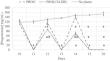
Progesterone (PROG) has been detected at various concentrations in the environment and has adverse effects on humans and wildlife. This work evaluated the impact of PROG in Solanum nigrum L. plants, its removal capacity, and how 2,4-epibrassinolide (24-EBL) affects this process. Three treatments were used: (1) control, (2) irrigation with 0.8 µM PROG, and (3) treatment with 0.8 µM PROG after a pre-treatment with a foliar application of 1 µM 2,4-EBL (PROG/24EBL). After 20 days of treatment, no PROG was detected in the nutrient solution or plant tissues, indicating that the PROG was removed and metabolized. Lipid peroxidation significantly decreased in response to PROG in shoots and roots, and this effect was even more significant for both organs of the PROG/24EBL plants. Additionally, both treatments in both organs showed a decrease in H2O2 levels, and both steroid hormones increased the plants’ antioxidant system at both the biochemical and gene expression levels. In conclusion, S. nigrum can swiftly remove PROG without affecting its growth, and the use of 24-EBL synergistically decreases oxidative damage by increasing the activity of the antioxidant system and enhancing plant PROG removal ability.
期刊介绍:
Founded in 1995, Physiology and Molecular Biology of Plants (PMBP) is a peer reviewed monthly journal co-published by Springer Nature. It contains research and review articles, short communications, commentaries, book reviews etc., in all areas of functional plant biology including, but not limited to plant physiology, biochemistry, molecular genetics, molecular pathology, biophysics, cell and molecular biology, genetics, genomics and bioinformatics. Its integrated and interdisciplinary approach reflects the global growth trajectories in functional plant biology, attracting authors/editors/reviewers from over 98 countries.



 京公网安备 11010802042870号
京ICP备2023020795号-1
京公网安备 11010802042870号
京ICP备2023020795号-1

 分享
分享
 求助内容:
求助内容: 应助结果提醒方式:
 扫码关注我们
