{"title":"The role of science communication in advancing translational gerontology","authors":"Colin Farrelly PhD","doi":"10.1111/jgs.19098","DOIUrl":null,"url":null,"abstract":"<p>“Everyone hopes to live to a ripe old age in a state of good health” (Figure 1). This was the first sentence, in the very first issue, of <i>JAGS</i> in 1953 by the Canadian editor Willard Thompson. Thompson's essay, titled “Aging Comes of Age”,<span><sup>1</sup></span> concisely expressed the ideal aspiration of gerontology and geriatric medicine—<i>the goal of healthy aging</i>. To make this aspiration a reality, Thompson maintained that two major problems had to be addressed. The first was the care of the aging population. The second problem, biological aging itself, required “a concentrated attack on the causes of aging so that ways and means of increasing the life expectancy of people who have reached the age of 65 years may be discovered.” Thompson urged geriatrics to look upon these problems from “the broadest possible view,” and to work closely with other fields which contribute to the welfare of the aging population. And he noted that the causes and prevention of the diseases of late life were problems which deserved special study. From its inception, <i>JAGS</i> encouraged the prioritization of <i>translational gerontology</i>—that is, the development of interventions that target the mechanisms of biological aging in the hopes of extending healthy lifespan. This is now commonly referred to as the <i>Geroscience Hypothesis</i>.<span><sup>2, 3</sup></span></p><p>In 1974 the US Congress passed Public Law 93-296—known as “The Research on Aging Act of 1974”—which amended the Public Health Services Act to create the National Institute on Aging (NIA). Section 2 (1) of the Act identified the study of the aging process, what it described as “a biological process common to all,” as a research area that had “not received levels of research support commensurate to its effects on the lives of every individual.” And Section 2 (3) of the Act noted that research on the aging process could help alleviate the problems of older age by “extending the healthy years of middle life.” Over 70 years have passed since Thompson's first <i>JAGS</i> editorial, and 50 years since the NIA was first created, and effectively communicating the potential benefits of translational gerontology faces significant challenges in the current sociopolitical context. The media's “negativity bias,” coupled with public health's original “War Against Disease” communicative frame and concerns that translational gerontology may increase (rather than decrease) health disparities all threaten to undermine public support for pursuing the Geroscience Hypothesis. Attending to these communicative challenges is particularly important for geriatricians, as they are charged with the care of older populations but also advocate for scientific innovations that increase healthspan.</p><p>Public communication about science occurs along a science-advocacy continuum.<span><sup>4</sup></span> At one end of the continuum is communication that is an honest appraisal of the science, in all its complexity and uncertainty. At the other end of the continuum is “effective” science communication, communication that gets the attention of the audience and helps them comprehend enough of the science to motivate them to support taking appropriate action (e.g., supporting policy changes). To be effective in the political sphere of today's modern democracies, science communication must be able to engage the attention of different stakeholders whose understanding and perception of science is often shaped by the frames deployed by offline and online media (“mediated realities”) rather than directly from scientific facts and theories<span><sup>5</sup></span> (Figure 2). A “frame” is a communication that “organizes everyday reality”,<span><sup>6</sup></span> helping convey the meaning of its message to the stakeholders receiving the message. The dominant frames employed by the media typically involve stories relating to human deaths and suffering. Negativity drives online news consumption.<span><sup>7</sup></span> Sensationalist headlines get the attention of the audience as the dictum “If it bleeds, it leads”<span><sup>8</sup></span> is the <i>modus operandi</i> of modern journalism.</p><p>Health threats from a novel infectious disease or climate change are likely to dominate online and offline news stories because of their novelty and ability to play into the negativity frame. For example, the famous “hockey stick”<span><sup>9</sup></span> paper in <i>Nature</i> in 1998, which depicted global temperatures over the past millennium, was quickly reported in the <i>New York Times</i> with the headline “New Evidence Finds This Is Warmest Century in 600 Years.”<span><sup>10</sup></span> Translational gerontology cannot employ a frame as simple and effective as the hockey stick graph for climate science. Since 1951, the year all state and federal agencies in the United States were required to adopt a standard list of contributing and underlying causes of death (eliminating “old age” as a cause of death),<span><sup>11</sup></span> aging has not officially caused any deaths. This means geroscience advocacy must function in a sociopolitical context where the greatest risk factor for the leading cause of death is ignored.<span><sup>12</sup></span></p><p>The challenge of effectively communicating the societal importance of translational gerontology is made even more difficult because the initial communicative frame employed by public health pioneers during the sanitation revolution of the early twentieth century was one that invoked a “War Against Disease.” Such a communicative frame equated “success” in medical innovation with “saving lives”<span><sup>13</sup></span> from disease mortality versus improving <i>quality of life</i>. When C-E.A Winslow published his 1903 essay “The War Against Disease”,<span><sup>14</sup></span> the three leading causes of death in the United States were pneumonia, tuberculosis and enteritis, and diarrhea.<span><sup>15</sup></span> The public health framing of the significance of sanitation, antibiotics, vaccinations, and improved living conditions was relatively straightforward to convey to stakeholders as the premature death of children was universally considered a tragedy that ought to be avoided. And the longevity benefits accrued from the “War Against Disease” led some demographers to optimistically proclaim that US life expectancy would continue to rise, though others cautioned that further improvements would be harder to make as there was a biological limit to the lifespan and challenges like widespread obesity.<span><sup>16</sup></span></p><p>Some have tried to fit translational gerontology into the square peg of the “War Against Disease” communicative frame by suggesting that aging itself be classified as a disease.<span><sup>17</sup></span> Such a frame risks causing more harm and setbacks for geroscience than it does effectively framing translational gerontology.<span><sup>18</sup></span> This issue recently came to a head when the World Health Organization's International Classification of Diseases (ICD) proposed implementing an extension code for aging related diseases (XT9T), defined as those “caused by pathological processes which persistently lead to the loss of organism's adaptation and progress in older ages.”<span><sup>19</sup></span> A comment published in <i>The Lancet Healthy Longevity</i> detailed why the proposal was not adopted by WHO.<span><sup>20</sup></span> The authors note that, while the intention for including the additional code was to provide a greater focus on the biological aspects of aging which could aid the development of new biological therapies, the greater concern was that it could exacerbate societal ageism by conflating biological aging and chronological aging. Whatever one may think about the “aging is or is not a disease” debate, it is a clear example of how public communication about translational gerontology is <i>political</i> communication.</p><p>This dualistic frame conveys both “honesty” and “effectiveness” about the current health prospects of the world's aging populations, and the current state of knowledge about translational gerontology. And this is done without employing a frame that stigmatizes older persons or pathologizes chronological aging.</p><p>Between 1959 and 2016 US life expectancy increased 9 years, from 69.9 years to 78.9 years.<span><sup>21</sup></span> However, further increases in US life expectancy have not only stalled, life expectancy has actually declined over the past few years. And a much more important measure—healthy life expectancy—has only increased by 0.3 years (65.8 to 66.1 years) for the US population from 2000 to 2019.<span><sup>22</sup></span> This small increase in healthy life expectancy occurred over a 20-year period of unprecedented levels of public investment in biomedical research, as the NIH invests billions each year in pathology research. It was also half a century after President Nixon's declaration of a “war on cancer” and many decades of public health campaigns for lifestyle and behavior changes. Furthermore, “winning” the war against cancer for today's aging populations may have the unintended consequence of an increase in Alzheimer's disease.<span><sup>23</sup></span></p><p>The second key aspect of an honest and effective frame for the Geroscience Hypothesis is to communicate the significance of the knowledge yielded by a century of research on the biology of aging. The foundational research for translational gerontology began a century ago with research examining the impact of dietary restriction on growth and longevity in laboratory rats. By the 1930s credible empirical evidence had established that caloric restriction (CR), a decrease in ad libitum feeding without malnutrition, increased the lifespan of rodents. CR research conducted during the 1970s and 1980s demonstrated conclusively that CR had a major impact on aging by preventing/delaying the incidence of most age-related diseases and pathologies in rodents.<span><sup>24</sup></span></p><p>The impact of CR and different types of (intermittent and periodic)<span><sup>25</sup></span> fasting on human health is something researchers have only recently begun to explore and is still ongoing. Communicating the potential promises and perils of dietary interventions creates its own unique communication challenges for the field of geroscience. Some prominent scientists in the field promote fasting on social media as an “anti-aging” intervention. But this threatens to harm the credibility of gersocience as genetic and environmental variation, coupled with modeling aging in humans with nonhuman species, pose serious challenges in terms of translating the significance of these findings to people.<span><sup>26</sup></span> Intermittent fasting also faces practical challenges, such as the abundance of food and marketing of food, as well as people experiencing hunger, irritability, and a reduced ability to concentrate during periods of food restriction.<span><sup>27</sup></span></p><p>The significance of studies on CR and fasting in humans lies not with the potential to prescribe such burdensome interventions as feasible, long-term population-wide preventative medicine strategies, but such studies can help illuminate how the mechanisms of aging can be altered, so that drugs that mimic the effects of dietary restriction to delay the onset of disease in late life can be safely developed. A number of compounds, including repurposed drugs like metformin and rapamycin as well as novel molecules, are being tested in humans for their impact on the hallmarks of aging.<span><sup>28</sup></span> And the key challenge for the Geroscience Hypothesis moving forward is discovering safe and effective ways to target the mechanisms of aging in humans with interventions that could be made widely accessible to the world's aging populations.</p><p>Slowing aging would be beneficial to those groups which are typically the focus of <i>egalitarian advocacy</i> in public health such as women, those living in regions of the world most vulnerable to the health harms of climate change, and the poor. The majority of older persons in the world, especially at the most advanced ages, are women. But the additional longevity (globally it is 4.8 years) women have often comes with poorer health status compared to age-matched men.<span><sup>29</sup></span> And increases in air pollution and airborne allergens, coupled with an increase in the frequency and severity of heat waves and degradation of water quality will all have a significant health impact on older adults.<span><sup>30</sup></span> Improving healthspan, rather than lifespan, should be conceptualized as a key part of a global health strategy to redress the health threats of a warming planet.<span><sup>31</sup></span> Translational gerontology can help improve the biological resilience of the world's aging populations by slowing down the biological processes that make our minds and bodies more vulnerable to disease. And this is particularly important for those growing up in conditions of socioeconomic disadvantage, as recent research suggests that material hardships and psychological stressors increase the risks of adult diseases by accelerating the rate of biological aging.<span><sup>32</sup></span></p><p>Highlighting these points in the context of advocacy for translational gerontology should not be taken to mean that further action is not needed to directly redress socioeconomic disadvantage itself. The goal of promoting greater equality for the social determinates of health (e.g., education, income and social protection, access to health services, etc.) ought to remain a primary aspiration of public health for aging societies. But gerotherapeutics may offer new potential strategies for combating many of the healthspan disparities that exist today.</p><p>Colin Farrelly was the sole author responsible for writing and editing the manuscript.</p><p>None.</p><p>Not applicable.</p><p>No specific funding was received for this work.</p>","PeriodicalId":17240,"journal":{"name":"Journal of the American Geriatrics Society","volume":"72 12","pages":"3931-3935"},"PeriodicalIF":4.5000,"publicationDate":"2024-08-12","publicationTypes":"Journal Article","fieldsOfStudy":null,"isOpenAccess":false,"openAccessPdf":"https://www.ncbi.nlm.nih.gov/pmc/articles/PMC11637244/pdf/","citationCount":"0","resultStr":null,"platform":"Semanticscholar","paperid":null,"PeriodicalName":"Journal of the American Geriatrics Society","FirstCategoryId":"3","ListUrlMain":"https://agsjournals.onlinelibrary.wiley.com/doi/10.1111/jgs.19098","RegionNum":2,"RegionCategory":"医学","ArticlePicture":[],"TitleCN":null,"AbstractTextCN":null,"PMCID":null,"EPubDate":"","PubModel":"","JCR":"Q1","JCRName":"GERIATRICS & GERONTOLOGY","Score":null,"Total":0}
引用次数: 0
Abstract
“Everyone hopes to live to a ripe old age in a state of good health” (Figure 1). This was the first sentence, in the very first issue, of JAGS in 1953 by the Canadian editor Willard Thompson. Thompson's essay, titled “Aging Comes of Age”,1 concisely expressed the ideal aspiration of gerontology and geriatric medicine—the goal of healthy aging. To make this aspiration a reality, Thompson maintained that two major problems had to be addressed. The first was the care of the aging population. The second problem, biological aging itself, required “a concentrated attack on the causes of aging so that ways and means of increasing the life expectancy of people who have reached the age of 65 years may be discovered.” Thompson urged geriatrics to look upon these problems from “the broadest possible view,” and to work closely with other fields which contribute to the welfare of the aging population. And he noted that the causes and prevention of the diseases of late life were problems which deserved special study. From its inception, JAGS encouraged the prioritization of translational gerontology—that is, the development of interventions that target the mechanisms of biological aging in the hopes of extending healthy lifespan. This is now commonly referred to as the Geroscience Hypothesis.2, 3
In 1974 the US Congress passed Public Law 93-296—known as “The Research on Aging Act of 1974”—which amended the Public Health Services Act to create the National Institute on Aging (NIA). Section 2 (1) of the Act identified the study of the aging process, what it described as “a biological process common to all,” as a research area that had “not received levels of research support commensurate to its effects on the lives of every individual.” And Section 2 (3) of the Act noted that research on the aging process could help alleviate the problems of older age by “extending the healthy years of middle life.” Over 70 years have passed since Thompson's first JAGS editorial, and 50 years since the NIA was first created, and effectively communicating the potential benefits of translational gerontology faces significant challenges in the current sociopolitical context. The media's “negativity bias,” coupled with public health's original “War Against Disease” communicative frame and concerns that translational gerontology may increase (rather than decrease) health disparities all threaten to undermine public support for pursuing the Geroscience Hypothesis. Attending to these communicative challenges is particularly important for geriatricians, as they are charged with the care of older populations but also advocate for scientific innovations that increase healthspan.
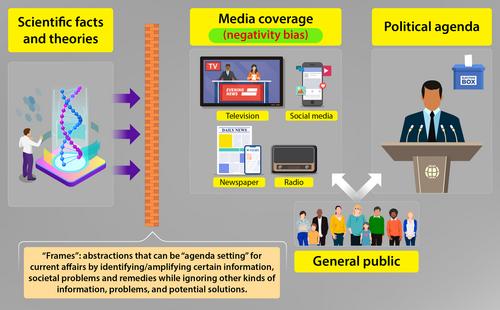
Public communication about science occurs along a science-advocacy continuum.4 At one end of the continuum is communication that is an honest appraisal of the science, in all its complexity and uncertainty. At the other end of the continuum is “effective” science communication, communication that gets the attention of the audience and helps them comprehend enough of the science to motivate them to support taking appropriate action (e.g., supporting policy changes). To be effective in the political sphere of today's modern democracies, science communication must be able to engage the attention of different stakeholders whose understanding and perception of science is often shaped by the frames deployed by offline and online media (“mediated realities”) rather than directly from scientific facts and theories5 (Figure 2). A “frame” is a communication that “organizes everyday reality”,6 helping convey the meaning of its message to the stakeholders receiving the message. The dominant frames employed by the media typically involve stories relating to human deaths and suffering. Negativity drives online news consumption.7 Sensationalist headlines get the attention of the audience as the dictum “If it bleeds, it leads”8 is the modus operandi of modern journalism.
Health threats from a novel infectious disease or climate change are likely to dominate online and offline news stories because of their novelty and ability to play into the negativity frame. For example, the famous “hockey stick”9 paper in Nature in 1998, which depicted global temperatures over the past millennium, was quickly reported in the New York Times with the headline “New Evidence Finds This Is Warmest Century in 600 Years.”10 Translational gerontology cannot employ a frame as simple and effective as the hockey stick graph for climate science. Since 1951, the year all state and federal agencies in the United States were required to adopt a standard list of contributing and underlying causes of death (eliminating “old age” as a cause of death),11 aging has not officially caused any deaths. This means geroscience advocacy must function in a sociopolitical context where the greatest risk factor for the leading cause of death is ignored.12
The challenge of effectively communicating the societal importance of translational gerontology is made even more difficult because the initial communicative frame employed by public health pioneers during the sanitation revolution of the early twentieth century was one that invoked a “War Against Disease.” Such a communicative frame equated “success” in medical innovation with “saving lives”13 from disease mortality versus improving quality of life. When C-E.A Winslow published his 1903 essay “The War Against Disease”,14 the three leading causes of death in the United States were pneumonia, tuberculosis and enteritis, and diarrhea.15 The public health framing of the significance of sanitation, antibiotics, vaccinations, and improved living conditions was relatively straightforward to convey to stakeholders as the premature death of children was universally considered a tragedy that ought to be avoided. And the longevity benefits accrued from the “War Against Disease” led some demographers to optimistically proclaim that US life expectancy would continue to rise, though others cautioned that further improvements would be harder to make as there was a biological limit to the lifespan and challenges like widespread obesity.16
Some have tried to fit translational gerontology into the square peg of the “War Against Disease” communicative frame by suggesting that aging itself be classified as a disease.17 Such a frame risks causing more harm and setbacks for geroscience than it does effectively framing translational gerontology.18 This issue recently came to a head when the World Health Organization's International Classification of Diseases (ICD) proposed implementing an extension code for aging related diseases (XT9T), defined as those “caused by pathological processes which persistently lead to the loss of organism's adaptation and progress in older ages.”19 A comment published in The Lancet Healthy Longevity detailed why the proposal was not adopted by WHO.20 The authors note that, while the intention for including the additional code was to provide a greater focus on the biological aspects of aging which could aid the development of new biological therapies, the greater concern was that it could exacerbate societal ageism by conflating biological aging and chronological aging. Whatever one may think about the “aging is or is not a disease” debate, it is a clear example of how public communication about translational gerontology is political communication.
This dualistic frame conveys both “honesty” and “effectiveness” about the current health prospects of the world's aging populations, and the current state of knowledge about translational gerontology. And this is done without employing a frame that stigmatizes older persons or pathologizes chronological aging.
Between 1959 and 2016 US life expectancy increased 9 years, from 69.9 years to 78.9 years.21 However, further increases in US life expectancy have not only stalled, life expectancy has actually declined over the past few years. And a much more important measure—healthy life expectancy—has only increased by 0.3 years (65.8 to 66.1 years) for the US population from 2000 to 2019.22 This small increase in healthy life expectancy occurred over a 20-year period of unprecedented levels of public investment in biomedical research, as the NIH invests billions each year in pathology research. It was also half a century after President Nixon's declaration of a “war on cancer” and many decades of public health campaigns for lifestyle and behavior changes. Furthermore, “winning” the war against cancer for today's aging populations may have the unintended consequence of an increase in Alzheimer's disease.23
The second key aspect of an honest and effective frame for the Geroscience Hypothesis is to communicate the significance of the knowledge yielded by a century of research on the biology of aging. The foundational research for translational gerontology began a century ago with research examining the impact of dietary restriction on growth and longevity in laboratory rats. By the 1930s credible empirical evidence had established that caloric restriction (CR), a decrease in ad libitum feeding without malnutrition, increased the lifespan of rodents. CR research conducted during the 1970s and 1980s demonstrated conclusively that CR had a major impact on aging by preventing/delaying the incidence of most age-related diseases and pathologies in rodents.24
The impact of CR and different types of (intermittent and periodic)25 fasting on human health is something researchers have only recently begun to explore and is still ongoing. Communicating the potential promises and perils of dietary interventions creates its own unique communication challenges for the field of geroscience. Some prominent scientists in the field promote fasting on social media as an “anti-aging” intervention. But this threatens to harm the credibility of gersocience as genetic and environmental variation, coupled with modeling aging in humans with nonhuman species, pose serious challenges in terms of translating the significance of these findings to people.26 Intermittent fasting also faces practical challenges, such as the abundance of food and marketing of food, as well as people experiencing hunger, irritability, and a reduced ability to concentrate during periods of food restriction.27
The significance of studies on CR and fasting in humans lies not with the potential to prescribe such burdensome interventions as feasible, long-term population-wide preventative medicine strategies, but such studies can help illuminate how the mechanisms of aging can be altered, so that drugs that mimic the effects of dietary restriction to delay the onset of disease in late life can be safely developed. A number of compounds, including repurposed drugs like metformin and rapamycin as well as novel molecules, are being tested in humans for their impact on the hallmarks of aging.28 And the key challenge for the Geroscience Hypothesis moving forward is discovering safe and effective ways to target the mechanisms of aging in humans with interventions that could be made widely accessible to the world's aging populations.
Slowing aging would be beneficial to those groups which are typically the focus of egalitarian advocacy in public health such as women, those living in regions of the world most vulnerable to the health harms of climate change, and the poor. The majority of older persons in the world, especially at the most advanced ages, are women. But the additional longevity (globally it is 4.8 years) women have often comes with poorer health status compared to age-matched men.29 And increases in air pollution and airborne allergens, coupled with an increase in the frequency and severity of heat waves and degradation of water quality will all have a significant health impact on older adults.30 Improving healthspan, rather than lifespan, should be conceptualized as a key part of a global health strategy to redress the health threats of a warming planet.31 Translational gerontology can help improve the biological resilience of the world's aging populations by slowing down the biological processes that make our minds and bodies more vulnerable to disease. And this is particularly important for those growing up in conditions of socioeconomic disadvantage, as recent research suggests that material hardships and psychological stressors increase the risks of adult diseases by accelerating the rate of biological aging.32
Highlighting these points in the context of advocacy for translational gerontology should not be taken to mean that further action is not needed to directly redress socioeconomic disadvantage itself. The goal of promoting greater equality for the social determinates of health (e.g., education, income and social protection, access to health services, etc.) ought to remain a primary aspiration of public health for aging societies. But gerotherapeutics may offer new potential strategies for combating many of the healthspan disparities that exist today.
Colin Farrelly was the sole author responsible for writing and editing the manuscript.
期刊介绍:
Journal of the American Geriatrics Society (JAGS) is the go-to journal for clinical aging research. We provide a diverse, interprofessional community of healthcare professionals with the latest insights on geriatrics education, clinical practice, and public policy—all supporting the high-quality, person-centered care essential to our well-being as we age. Since the publication of our first edition in 1953, JAGS has remained one of the oldest and most impactful journals dedicated exclusively to gerontology and geriatrics.




 京公网安备 11010802042870号
京ICP备2023020795号-1
京公网安备 11010802042870号
京ICP备2023020795号-1

 分享
分享
 求助内容:
求助内容: 应助结果提醒方式:
 扫码关注我们
