{"title":"Complete urethral preservation in robot-assisted radical prostatectomy: step-by-step description of surgical technique","authors":"Tarek Al-Hammouri, Ricardo Almeida-Magana, Lazaros Tzelves, Osama Al-Bermani, Zafer Tandogdu, Jeremy Ockrim, Greg Shaw","doi":"10.1111/bju.16508","DOIUrl":null,"url":null,"abstract":"<p>Robot-assisted radical prostatectomy (RARP) is one of the treatment options for localised clinically significant prostate cancer [<span>1</span>]. However, postoperative urinary incontinence (UI) affects 4–31% of patients 12 months after surgery and is associated with a reduced quality of life [<span>2</span>]. Several surgical strategies have been described to reduce the incidence of UI, including anterior and posterior reconstruction [<span>3</span>], dorsal venous complex and preperitoneal space sparing (PSS) [<span>4</span>], but no consensus exists on the best method to achieve early return of continence.</p><p>Bladder neck preservation (BNP) aims to safeguard the internal sphincter (lisso-sphincter), believed to support passive continence, which was recently supported by a systematic review [<span>5</span>]. This effect could be amplified by increasing the length of the spared intraprostatic urethra to achieve coaptation when intra-abdominal pressure increases [<span>6</span>] (Fig. 1). In fact, a urethral sparing method was described by Tongco et al. [<span>7</span>] in open RPs but was never widely adopted.</p><p>The advantages of robotic surgery allow for improved anatomical dissection, to go beyond the standard BNP and dissect the intraprostatic urethra away from the prostatic tissue in a reproducible way. In this paper, we describe the steps and anatomical landmarks to perform the complete urethral preservation (CUP) technique. Our objective was to evaluate the rate of immediate continence recovery (ICR), and present oncological outcomes in a cohort of patients with a minimum 1-year follow-up (Video 1).</p><p>We retrospectively collected data for patients with prostate cancer who underwent RARP with CUP at University College London Hospitals, from June 2021 to August 2022. Surgeries were performed by a single high-volume urological surgeon (G.S.), and by trainees under supervision, using the da Vinci X/Xi® platform (Intuitive Surgical Inc., Sunnyvale, CA, USA).</p><p>A successful CUP was defined as the incision of the urethra at the proximal end of the verumontanum with direct end-to-end anastomosis to the membranous urethra. Continence outcomes were collected during clinical follow-up. ICR was defined as the absence of leakage and the use of zero pads immediately after urethral catheter removal. Biochemical recurrence (BCR) was defined as a PSA level of 0.2 ng/mL at any point after RARP. All data were collected by a dedicated database manager as part of the prospective audit within the quality assurance programme, additional data specific for this project were collected retrospectively by T.A.H., R.A., G.S., L.T. and O.A. Descriptive statistical analysis was performed using R version 4.3.2 (R Foundation for Statistical Computing, Vienna, Austria).</p><p>A RARP with CUP was performed in 97 patients. Pre- and postoperative key patient characteristics are shown in Table 1. Continence outcomes at different visits are shown in Fig. 3. Detailed numbers and percentages can be found in Table S1. All complications were classified as Clavien–Dindo Grade I–II as shown in Table S2.</p><p>This cohort of patients who underwent RARP with the CUP technique have a high proportion of both ICR and complete continence at 12 months, despite using a strict continence definition. This proportion of ICR is similar to rates (45–69%) previously described with PSS prostatectomy [<span>6</span>]. The CUP technique involves a relatively easy technical modification rather than a major change in approach for those who favour the anterior approach.</p><p>Previous descriptions of urethral preservation employed a retrograde approach starting from the membranous urethra at the apex [<span>9</span>]. However, the maximum length of preservable urethra is limited by the natural distal insertion of the ejaculatory ducts at the verumontanum, as shown in Fig. 1A.</p><p>In our study, the rate of positive margins, particularly basal prostatic margins, and BCR are comparable to our current practice and published meta-analysis [<span>10</span>]. Reassuringly no urethral strictures/contractures and only one case of urinary retention was observed.</p><p>The learning curve for mastering the technique seems feasible. Approximately 10 supervised cases were adequate for our trainees to perform CUP independently. While these initial results are encouraging, we recognise the need for prospective randomised comparative studies to understand the impact of CUP on continence outcomes. Additionally, it is important to formally evaluate the learning curve to achieve consistent CUP quality.</p><p>This technique is not without limitations; we avoid performing CUP in salvage RARP and in patients with a history of BOO surgery, where the bladder neck is deficient. In cases with anterior basal prostate tumours, an oblique approach to the anterior urethra leaves a detrusor cuff and reduces the risk of basal PSM, as described in PSS surgery [<span>11</span>]. In rare cases where MRI locates peri-urethral tumours, or bladder neck invasion is suspected, we do not perform CUP.</p><p>The CUP technique is a reproducible method to achieve early continence recovery. In this case series, we observed a high rate of ICR, without compromising complications or oncological safety. Future research with randomised cohorts would be essential for validating these encouraging findings.</p><p>Authors declare they have no conflict of interest.</p>","PeriodicalId":8985,"journal":{"name":"BJU International","volume":"135 1","pages":"171-175"},"PeriodicalIF":4.4000,"publicationDate":"2024-08-27","publicationTypes":"Journal Article","fieldsOfStudy":null,"isOpenAccess":false,"openAccessPdf":"https://www.ncbi.nlm.nih.gov/pmc/articles/PMC11628903/pdf/","citationCount":"0","resultStr":null,"platform":"Semanticscholar","paperid":null,"PeriodicalName":"BJU International","FirstCategoryId":"3","ListUrlMain":"https://bjui-journals.onlinelibrary.wiley.com/doi/10.1111/bju.16508","RegionNum":2,"RegionCategory":"医学","ArticlePicture":[],"TitleCN":null,"AbstractTextCN":null,"PMCID":null,"EPubDate":"","PubModel":"","JCR":"Q1","JCRName":"UROLOGY & NEPHROLOGY","Score":null,"Total":0}
引用次数: 0
Abstract
Robot-assisted radical prostatectomy (RARP) is one of the treatment options for localised clinically significant prostate cancer [1]. However, postoperative urinary incontinence (UI) affects 4–31% of patients 12 months after surgery and is associated with a reduced quality of life [2]. Several surgical strategies have been described to reduce the incidence of UI, including anterior and posterior reconstruction [3], dorsal venous complex and preperitoneal space sparing (PSS) [4], but no consensus exists on the best method to achieve early return of continence.
Bladder neck preservation (BNP) aims to safeguard the internal sphincter (lisso-sphincter), believed to support passive continence, which was recently supported by a systematic review [5]. This effect could be amplified by increasing the length of the spared intraprostatic urethra to achieve coaptation when intra-abdominal pressure increases [6] (Fig. 1). In fact, a urethral sparing method was described by Tongco et al. [7] in open RPs but was never widely adopted.
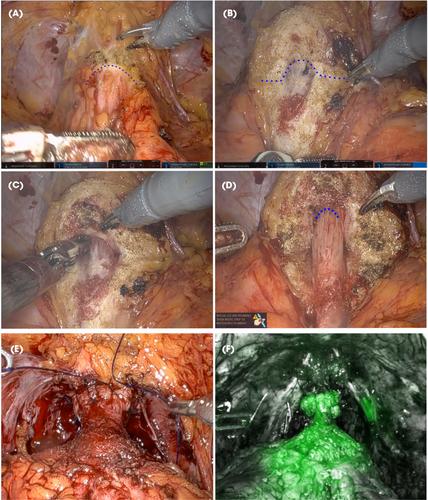
The advantages of robotic surgery allow for improved anatomical dissection, to go beyond the standard BNP and dissect the intraprostatic urethra away from the prostatic tissue in a reproducible way. In this paper, we describe the steps and anatomical landmarks to perform the complete urethral preservation (CUP) technique. Our objective was to evaluate the rate of immediate continence recovery (ICR), and present oncological outcomes in a cohort of patients with a minimum 1-year follow-up (Video 1).
We retrospectively collected data for patients with prostate cancer who underwent RARP with CUP at University College London Hospitals, from June 2021 to August 2022. Surgeries were performed by a single high-volume urological surgeon (G.S.), and by trainees under supervision, using the da Vinci X/Xi® platform (Intuitive Surgical Inc., Sunnyvale, CA, USA).
A successful CUP was defined as the incision of the urethra at the proximal end of the verumontanum with direct end-to-end anastomosis to the membranous urethra. Continence outcomes were collected during clinical follow-up. ICR was defined as the absence of leakage and the use of zero pads immediately after urethral catheter removal. Biochemical recurrence (BCR) was defined as a PSA level of 0.2 ng/mL at any point after RARP. All data were collected by a dedicated database manager as part of the prospective audit within the quality assurance programme, additional data specific for this project were collected retrospectively by T.A.H., R.A., G.S., L.T. and O.A. Descriptive statistical analysis was performed using R version 4.3.2 (R Foundation for Statistical Computing, Vienna, Austria).
A RARP with CUP was performed in 97 patients. Pre- and postoperative key patient characteristics are shown in Table 1. Continence outcomes at different visits are shown in Fig. 3. Detailed numbers and percentages can be found in Table S1. All complications were classified as Clavien–Dindo Grade I–II as shown in Table S2.
This cohort of patients who underwent RARP with the CUP technique have a high proportion of both ICR and complete continence at 12 months, despite using a strict continence definition. This proportion of ICR is similar to rates (45–69%) previously described with PSS prostatectomy [6]. The CUP technique involves a relatively easy technical modification rather than a major change in approach for those who favour the anterior approach.
Previous descriptions of urethral preservation employed a retrograde approach starting from the membranous urethra at the apex [9]. However, the maximum length of preservable urethra is limited by the natural distal insertion of the ejaculatory ducts at the verumontanum, as shown in Fig. 1A.
In our study, the rate of positive margins, particularly basal prostatic margins, and BCR are comparable to our current practice and published meta-analysis [10]. Reassuringly no urethral strictures/contractures and only one case of urinary retention was observed.
The learning curve for mastering the technique seems feasible. Approximately 10 supervised cases were adequate for our trainees to perform CUP independently. While these initial results are encouraging, we recognise the need for prospective randomised comparative studies to understand the impact of CUP on continence outcomes. Additionally, it is important to formally evaluate the learning curve to achieve consistent CUP quality.
This technique is not without limitations; we avoid performing CUP in salvage RARP and in patients with a history of BOO surgery, where the bladder neck is deficient. In cases with anterior basal prostate tumours, an oblique approach to the anterior urethra leaves a detrusor cuff and reduces the risk of basal PSM, as described in PSS surgery [11]. In rare cases where MRI locates peri-urethral tumours, or bladder neck invasion is suspected, we do not perform CUP.
The CUP technique is a reproducible method to achieve early continence recovery. In this case series, we observed a high rate of ICR, without compromising complications or oncological safety. Future research with randomised cohorts would be essential for validating these encouraging findings.
Authors declare they have no conflict of interest.
期刊介绍:
BJUI is one of the most highly respected medical journals in the world, with a truly international range of published papers and appeal. Every issue gives invaluable practical information in the form of original articles, reviews, comments, surgical education articles, and translational science articles in the field of urology. BJUI employs topical sections, and is in full colour, making it easier to browse or search for something specific.





 京公网安备 11010802042870号
京ICP备2023020795号-1
京公网安备 11010802042870号
京ICP备2023020795号-1

 分享
分享
 求助内容:
求助内容: 应助结果提醒方式:
 扫码关注我们
