Transcriptomic analysis reveals interactive effects of polyvinyl chloride microplastics and cadmium on Mytilus galloprovincialis: Insights into non-coding RNA responses and environmental implications
Deliang Yu , Shaochong Liu , Yaqi Yu , Yanhao Wang , Lianzhen Li , Willie J.G.M. Peijnenburg , Yufeng Yuan , Xiao Peng
{"title":"Transcriptomic analysis reveals interactive effects of polyvinyl chloride microplastics and cadmium on Mytilus galloprovincialis: Insights into non-coding RNA responses and environmental implications","authors":"Deliang Yu , Shaochong Liu , Yaqi Yu , Yanhao Wang , Lianzhen Li , Willie J.G.M. Peijnenburg , Yufeng Yuan , Xiao Peng","doi":"10.1016/j.aquatox.2024.107062","DOIUrl":null,"url":null,"abstract":"<div><p>Despite increasing concerns regarding the interactions of microplastic and heavy metal pollution, there is limited knowledge on the molecular responses of marine organisms to these stressors. In this study, we used whole-transcriptome sequencing to investigate the molecular responses of the ecologically and economically important bivalve <em>Mytilus galloprovincialis</em> to individual and combined exposures of environmentally relevant concentrations of PVC microplastics and cadmium (Cd). Our results revealed distinct transcriptional changes in <em>M. galloprovincialis</em>, with significant overlap in the differentially expressed genes between the individual and combined exposure groups. Genes involved in cellular senescence, oxidative stress, and galactose metabolism were differentially expressed. Additionally, key signaling pathways related to apoptosis and drug metabolism were significantly modulated. Notably, the interaction of PVC microplastics and Cd resulted in differential expression of genes involved in drug metabolism and longevity regulating compared to single exposures. This suggests that the interaction between these two stressors may have amplified effects on mussel health. Overall, this comprehensive transcriptomic analysis provides valuable insights into the adaptive and detrimental responses of <em>M. galloprovincialis</em> to PVC microplastics and Cd in the environment.</p></div>","PeriodicalId":248,"journal":{"name":"Aquatic Toxicology","volume":"275 ","pages":"Article 107062"},"PeriodicalIF":4.3000,"publicationDate":"2024-08-31","publicationTypes":"Journal Article","fieldsOfStudy":null,"isOpenAccess":false,"openAccessPdf":"","citationCount":"0","resultStr":null,"platform":"Semanticscholar","paperid":null,"PeriodicalName":"Aquatic Toxicology","FirstCategoryId":"93","ListUrlMain":"https://www.sciencedirect.com/science/article/pii/S0166445X24002327","RegionNum":2,"RegionCategory":"环境科学与生态学","ArticlePicture":[],"TitleCN":null,"AbstractTextCN":null,"PMCID":null,"EPubDate":"","PubModel":"","JCR":"Q1","JCRName":"MARINE & FRESHWATER BIOLOGY","Score":null,"Total":0}
引用次数: 0
Abstract
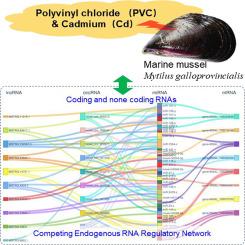
Despite increasing concerns regarding the interactions of microplastic and heavy metal pollution, there is limited knowledge on the molecular responses of marine organisms to these stressors. In this study, we used whole-transcriptome sequencing to investigate the molecular responses of the ecologically and economically important bivalve Mytilus galloprovincialis to individual and combined exposures of environmentally relevant concentrations of PVC microplastics and cadmium (Cd). Our results revealed distinct transcriptional changes in M. galloprovincialis, with significant overlap in the differentially expressed genes between the individual and combined exposure groups. Genes involved in cellular senescence, oxidative stress, and galactose metabolism were differentially expressed. Additionally, key signaling pathways related to apoptosis and drug metabolism were significantly modulated. Notably, the interaction of PVC microplastics and Cd resulted in differential expression of genes involved in drug metabolism and longevity regulating compared to single exposures. This suggests that the interaction between these two stressors may have amplified effects on mussel health. Overall, this comprehensive transcriptomic analysis provides valuable insights into the adaptive and detrimental responses of M. galloprovincialis to PVC microplastics and Cd in the environment.
期刊介绍:
Aquatic Toxicology publishes significant contributions that increase the understanding of the impact of harmful substances (including natural and synthetic chemicals) on aquatic organisms and ecosystems.
Aquatic Toxicology considers both laboratory and field studies with a focus on marine/ freshwater environments. We strive to attract high quality original scientific papers, critical reviews and expert opinion papers in the following areas: Effects of harmful substances on molecular, cellular, sub-organismal, organismal, population, community, and ecosystem level; Toxic Mechanisms; Genetic disturbances, transgenerational effects, behavioral and adaptive responses; Impacts of harmful substances on structure, function of and services provided by aquatic ecosystems; Mixture toxicity assessment; Statistical approaches to predict exposure to and hazards of contaminants
The journal also considers manuscripts in other areas, such as the development of innovative concepts, approaches, and methodologies, which promote the wider application of toxicological datasets to the protection of aquatic environments and inform ecological risk assessments and decision making by relevant authorities.



 京公网安备 11010802042870号
京ICP备2023020795号-1
京公网安备 11010802042870号
京ICP备2023020795号-1

 分享
分享
 求助内容:
求助内容: 应助结果提醒方式:
 扫码关注我们
