Ida G. Lunde , Karoline B. Rypdal , Sophie Van Linthout , Javier Diez , Arantxa González
{"title":"Myocardial fibrosis from the perspective of the extracellular matrix: Mechanisms to clinical impact","authors":"Ida G. Lunde , Karoline B. Rypdal , Sophie Van Linthout , Javier Diez , Arantxa González","doi":"10.1016/j.matbio.2024.08.008","DOIUrl":null,"url":null,"abstract":"<div><p>Fibrosis is defined by the excessive accumulation of extracellular matrix (ECM) and constitutes a central pathophysiological process that underlies tissue dysfunction, across organs, in multiple chronic diseases and during aging. Myocardial fibrosis is a key contributor to dysfunction and failure in numerous diseases of the heart and is a strong predictor of poor clinical outcome and mortality. The excess structural and matricellular ECM proteins deposited by cardiac fibroblasts, is found between cardiomyocytes (interstitial fibrosis), in focal areas where cardiomyocytes have died (replacement fibrosis), and around vessels (perivascular fibrosis). Although myocardial fibrosis has important clinical prognostic value, access to cardiac tissue biopsies for histological evaluation is limited. Despite challenges with sensitivity and specificity, cardiac magnetic resonance imaging (CMR) is the most applicable diagnostic tool in the clinic, and the scientific community is currently actively searching for blood biomarkers reflecting myocardial fibrosis, to complement the imaging techniques. The lack of mechanistic insights into specific pro- and anti-fibrotic molecular pathways has hampered the development of effective treatments to prevent or reverse myocardial fibrosis. Development and implementation of anti-fibrotic therapies is expected to improve patient outcomes and is an urgent medical need. Here, we discuss the importance of the ECM in the heart, the central role of fibrosis in heart disease, and mechanistic pathways likely to impact clinical practice with regards to diagnostics of myocardial fibrosis, risk stratification of patients, and anti-fibrotic therapy.</p></div>","PeriodicalId":49851,"journal":{"name":"Matrix Biology","volume":"134 ","pages":"Pages 1-22"},"PeriodicalIF":4.8000,"publicationDate":"2024-12-01","publicationTypes":"Journal Article","fieldsOfStudy":null,"isOpenAccess":false,"openAccessPdf":"","citationCount":"0","resultStr":null,"platform":"Semanticscholar","paperid":null,"PeriodicalName":"Matrix Biology","FirstCategoryId":"99","ListUrlMain":"https://www.sciencedirect.com/science/article/pii/S0945053X24001100","RegionNum":1,"RegionCategory":"生物学","ArticlePicture":[],"TitleCN":null,"AbstractTextCN":null,"PMCID":null,"EPubDate":"2024/8/29 0:00:00","PubModel":"Epub","JCR":"Q1","JCRName":"BIOCHEMISTRY & MOLECULAR BIOLOGY","Score":null,"Total":0}
引用次数: 0
Abstract
Fibrosis is defined by the excessive accumulation of extracellular matrix (ECM) and constitutes a central pathophysiological process that underlies tissue dysfunction, across organs, in multiple chronic diseases and during aging. Myocardial fibrosis is a key contributor to dysfunction and failure in numerous diseases of the heart and is a strong predictor of poor clinical outcome and mortality. The excess structural and matricellular ECM proteins deposited by cardiac fibroblasts, is found between cardiomyocytes (interstitial fibrosis), in focal areas where cardiomyocytes have died (replacement fibrosis), and around vessels (perivascular fibrosis). Although myocardial fibrosis has important clinical prognostic value, access to cardiac tissue biopsies for histological evaluation is limited. Despite challenges with sensitivity and specificity, cardiac magnetic resonance imaging (CMR) is the most applicable diagnostic tool in the clinic, and the scientific community is currently actively searching for blood biomarkers reflecting myocardial fibrosis, to complement the imaging techniques. The lack of mechanistic insights into specific pro- and anti-fibrotic molecular pathways has hampered the development of effective treatments to prevent or reverse myocardial fibrosis. Development and implementation of anti-fibrotic therapies is expected to improve patient outcomes and is an urgent medical need. Here, we discuss the importance of the ECM in the heart, the central role of fibrosis in heart disease, and mechanistic pathways likely to impact clinical practice with regards to diagnostics of myocardial fibrosis, risk stratification of patients, and anti-fibrotic therapy.
期刊介绍:
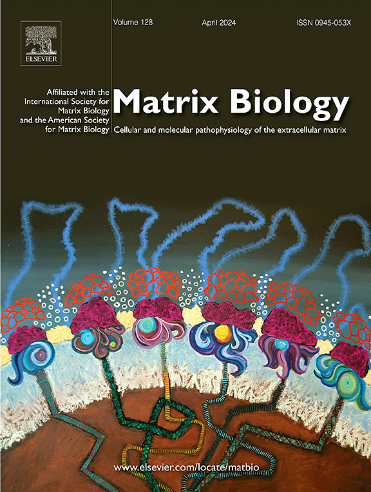
Matrix Biology (established in 1980 as Collagen and Related Research) is a cutting-edge journal that is devoted to publishing the latest results in matrix biology research. We welcome articles that reside at the nexus of understanding the cellular and molecular pathophysiology of the extracellular matrix. Matrix Biology focusses on solving elusive questions, opening new avenues of thought and discovery, and challenging longstanding biological paradigms.



 京公网安备 11010802042870号
京ICP备2023020795号-1
京公网安备 11010802042870号
京ICP备2023020795号-1

 分享
分享
 求助内容:
求助内容: 应助结果提醒方式:
 扫码关注我们
