Suthi Subbarayudu, S Karthick Raja Namasivayam, Jesu Arockiaraj
{"title":"Immunomodulation in Non-traditional Therapies for Methicillin-resistant Staphylococcus aureus (MRSA) Management.","authors":"Suthi Subbarayudu, S Karthick Raja Namasivayam, Jesu Arockiaraj","doi":"10.1007/s00284-024-03875-7","DOIUrl":null,"url":null,"abstract":"<p><p>The rise of methicillin-resistant Staphylococcus aureus (MRSA) poses a significant challenge in clinical settings due to its ability to evade conventional antibiotic treatments. This overview explores the potential of immunomodulatory strategies as alternative therapeutic approaches to combat MRSA infections. Traditional antibiotics are becoming less effective, necessitating innovative solutions that harness the body's immune system to enhance pathogen clearance. Recent advancements in immunotherapy, including the use of antimicrobial peptides, phage therapy, and mechanisms of immune cells, demonstrate promise in enhancing the body's ability to clear MRSA infections. However, the exact interactions between these therapies and immunomodulation are not fully understood, underscoring the need for further research. Hence, this review aims to provide a broad overview of the current understanding of non-traditional therapeutics and their impact on immune responses, which could lead to more effective MRSA treatment strategies. Additionally, combining immunomodulatory agents with existing antibiotics may improve outcomes, particularly for immunocompromised patients or those with chronic infections. As the landscape of antibiotic resistance evolves, the development of effective immunotherapeutic strategies could play a vital role in managing MRSA infections and reducing reliance on traditional antibiotics. Future research must focus on optimizing these approaches and validating their efficacy in diverse clinical populations to address the urgent need for effective MRSA management strategies.</p>","PeriodicalId":11360,"journal":{"name":"Current Microbiology","volume":"81 10","pages":"346"},"PeriodicalIF":2.6000,"publicationDate":"2024-09-06","publicationTypes":"Journal Article","fieldsOfStudy":null,"isOpenAccess":false,"openAccessPdf":"","citationCount":"0","resultStr":null,"platform":"Semanticscholar","paperid":null,"PeriodicalName":"Current Microbiology","FirstCategoryId":"99","ListUrlMain":"https://doi.org/10.1007/s00284-024-03875-7","RegionNum":3,"RegionCategory":"生物学","ArticlePicture":[],"TitleCN":null,"AbstractTextCN":null,"PMCID":null,"EPubDate":"","PubModel":"","JCR":"Q3","JCRName":"MICROBIOLOGY","Score":null,"Total":0}
引用次数: 0
Abstract
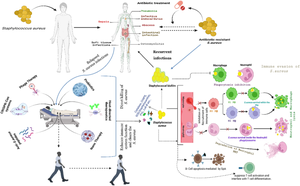
The rise of methicillin-resistant Staphylococcus aureus (MRSA) poses a significant challenge in clinical settings due to its ability to evade conventional antibiotic treatments. This overview explores the potential of immunomodulatory strategies as alternative therapeutic approaches to combat MRSA infections. Traditional antibiotics are becoming less effective, necessitating innovative solutions that harness the body's immune system to enhance pathogen clearance. Recent advancements in immunotherapy, including the use of antimicrobial peptides, phage therapy, and mechanisms of immune cells, demonstrate promise in enhancing the body's ability to clear MRSA infections. However, the exact interactions between these therapies and immunomodulation are not fully understood, underscoring the need for further research. Hence, this review aims to provide a broad overview of the current understanding of non-traditional therapeutics and their impact on immune responses, which could lead to more effective MRSA treatment strategies. Additionally, combining immunomodulatory agents with existing antibiotics may improve outcomes, particularly for immunocompromised patients or those with chronic infections. As the landscape of antibiotic resistance evolves, the development of effective immunotherapeutic strategies could play a vital role in managing MRSA infections and reducing reliance on traditional antibiotics. Future research must focus on optimizing these approaches and validating their efficacy in diverse clinical populations to address the urgent need for effective MRSA management strategies.
期刊介绍:
Current Microbiology is a well-established journal that publishes articles in all aspects of microbial cells and the interactions between the microorganisms, their hosts and the environment.
Current Microbiology publishes original research articles, short communications, reviews and letters to the editor, spanning the following areas:
physiology, biochemistry, genetics, genomics, biotechnology, ecology, evolution, morphology, taxonomy, diagnostic methods, medical and clinical microbiology and immunology as applied to microorganisms.



 京公网安备 11010802042870号
京ICP备2023020795号-1
京公网安备 11010802042870号
京ICP备2023020795号-1

 分享
分享
 求助内容:
求助内容: 应助结果提醒方式:
 扫码关注我们
